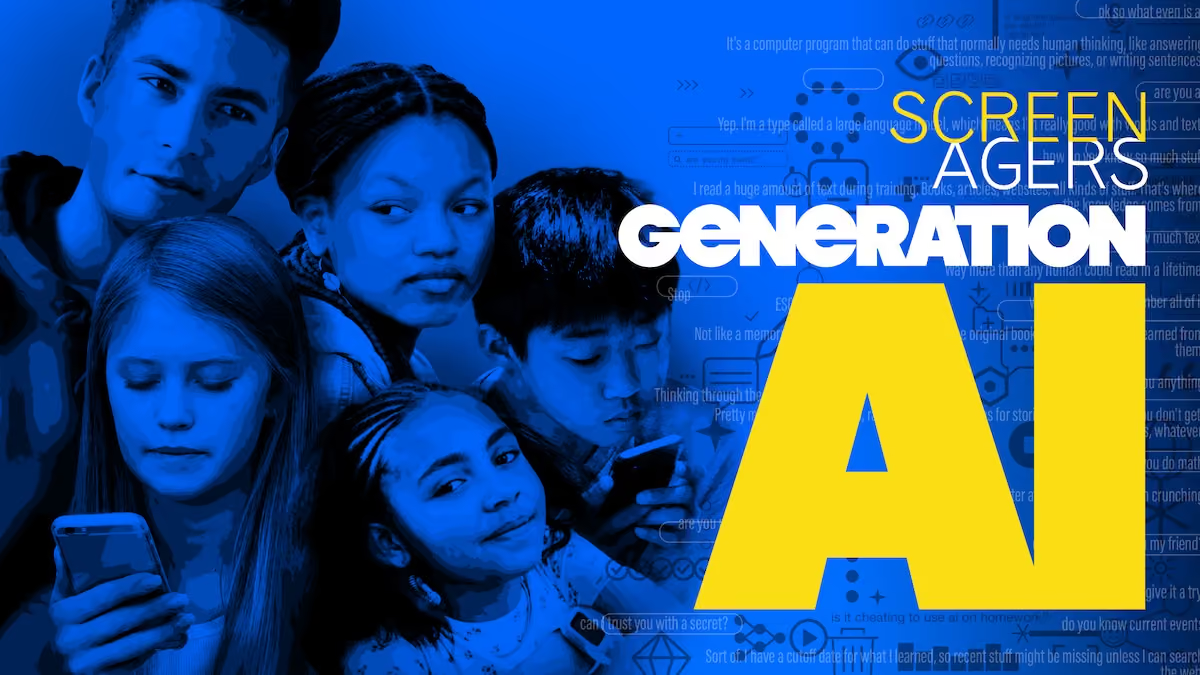
Screenagers: Generation AI explores how artificial intelligence is changing the way young people today learn, relate, and grow up, and how we can help them navigate what's ahead.
Runtimes:
Full Version: tbc
Classroom Version: tbc
Film Team:
Co-Directors/Co-Producers: Delaney Ruston, MD & Lisa Tabb
Info:
Release date: September 2026
Suitable for: Grade 6 up and adults
Available subtitles: tbc
Screenagers: Generation AI examines how artificial intelligence has rapidly entered the lives of young people and what it means for their relationships, learning, and wellbeing.
Just a few years ago, AI in kids' lives barely existed. Today, many are turning to chatbots for advice, friendship, and emotional support. Others use AI to write essays, solve homework, and shape their social lives. And kids are being targeted, from deepfake harassment to AI-generated content designed to encourage harm.
Smartphones, social media, and endless screen time became rampant in children's lives long before society took the harms seriously. We can't afford to repeat that mistake with AI.
Through the stories shared in the film, cutting-edge science and deeply honest insights from adults and youth, the film provides an emotional look at the risks and a look at what we can do right now in their social and academic lives to promote well-being.
It's a wonderful film. Such a great conversation starter and so relatable to every family. Appreciate your ability to make a film that reaches to so many people. Great job!
The event was amazing and really created a sweet community of parents that want to continue these conversations. We are thankful to be a part of a very low-tech Montessori school community but families are still facing these social pressures within their families.
I had the privilege of showing this to my middle years class last year and found it to be an incredible resource/discussion starter. The class was fully engaged, and it was an amazing springboard into topics which are often hard to tackle.
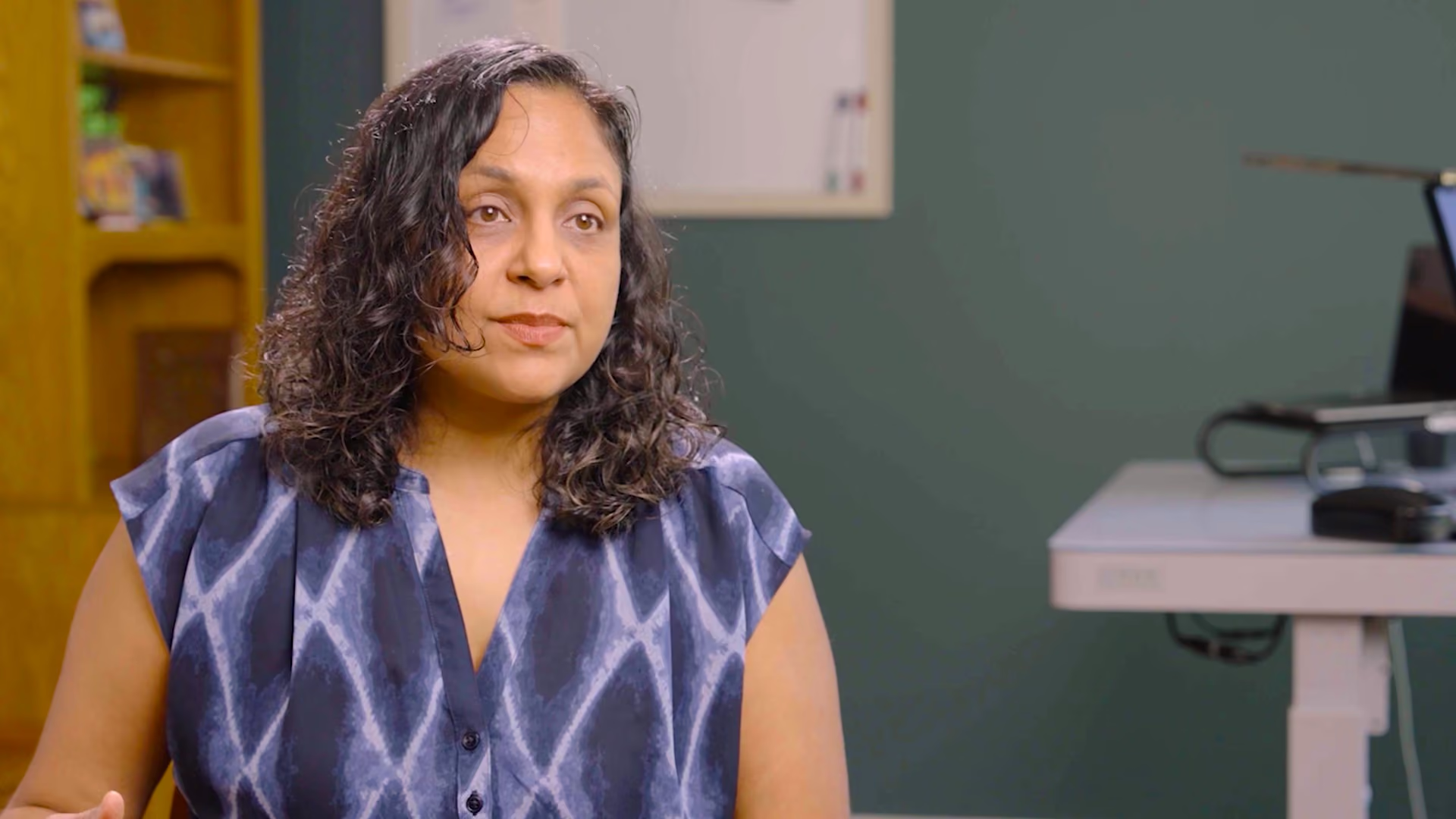
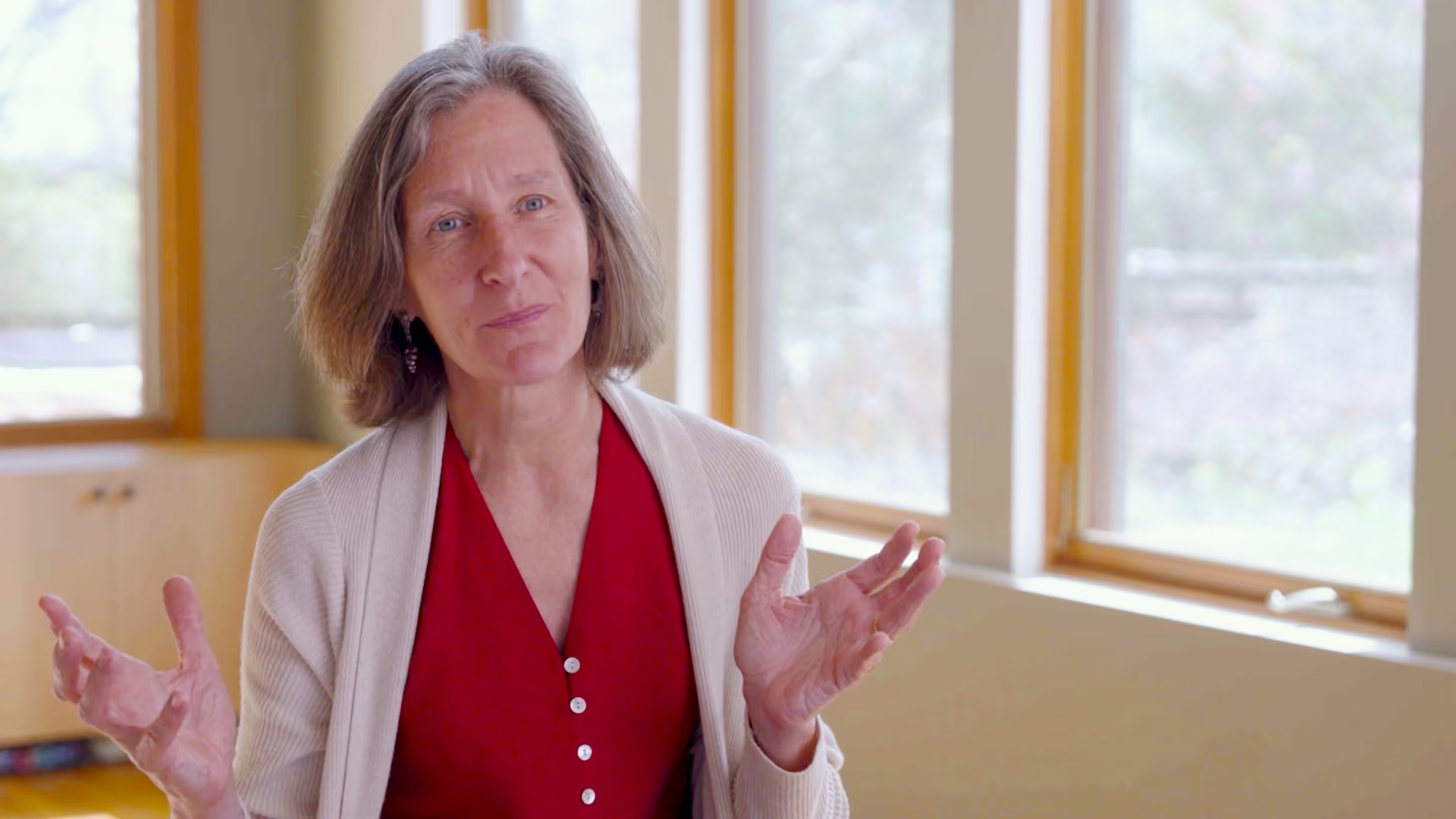
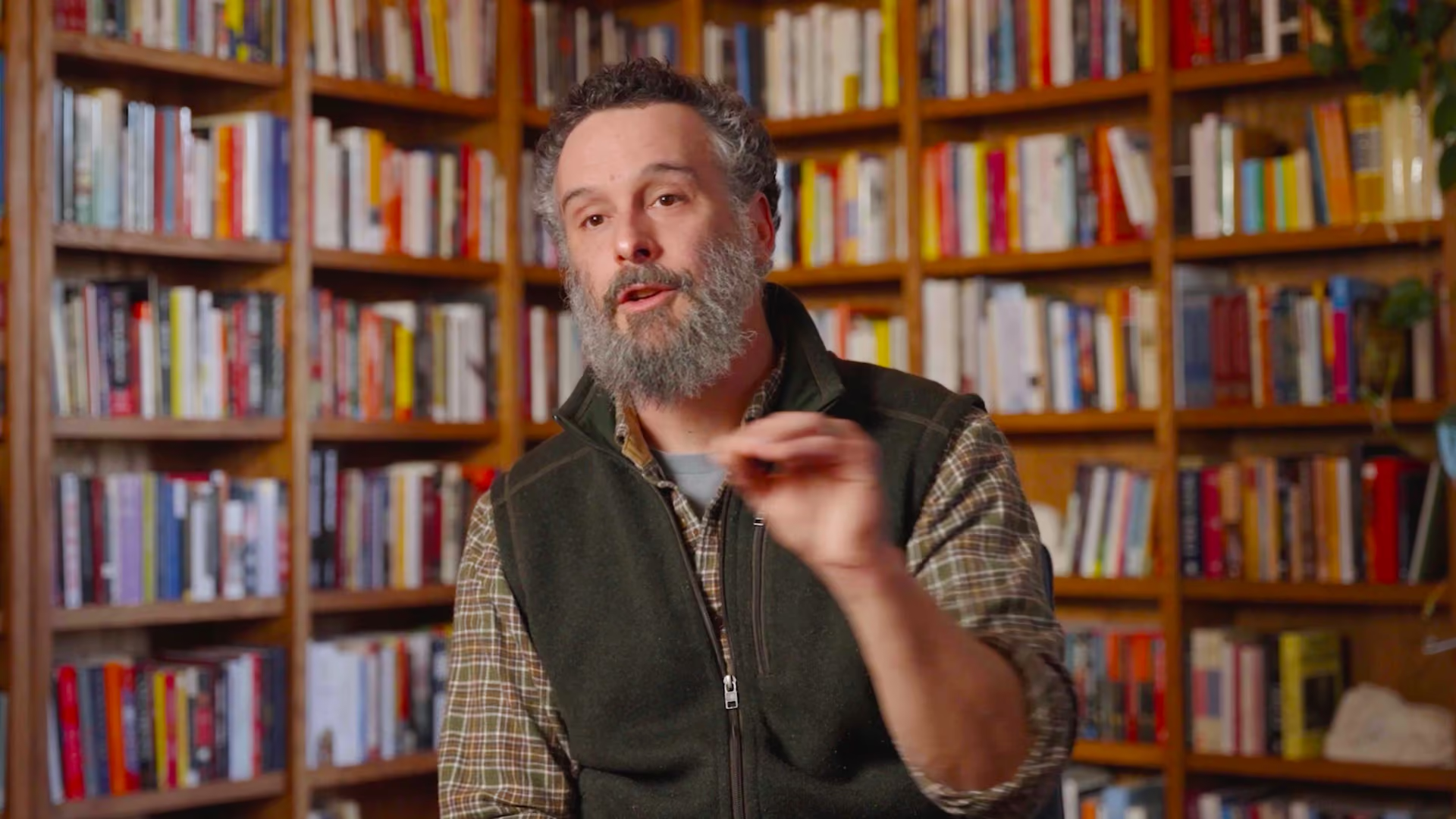
The movie features guidance for youth, parents and educators, along with a range of expert advice:
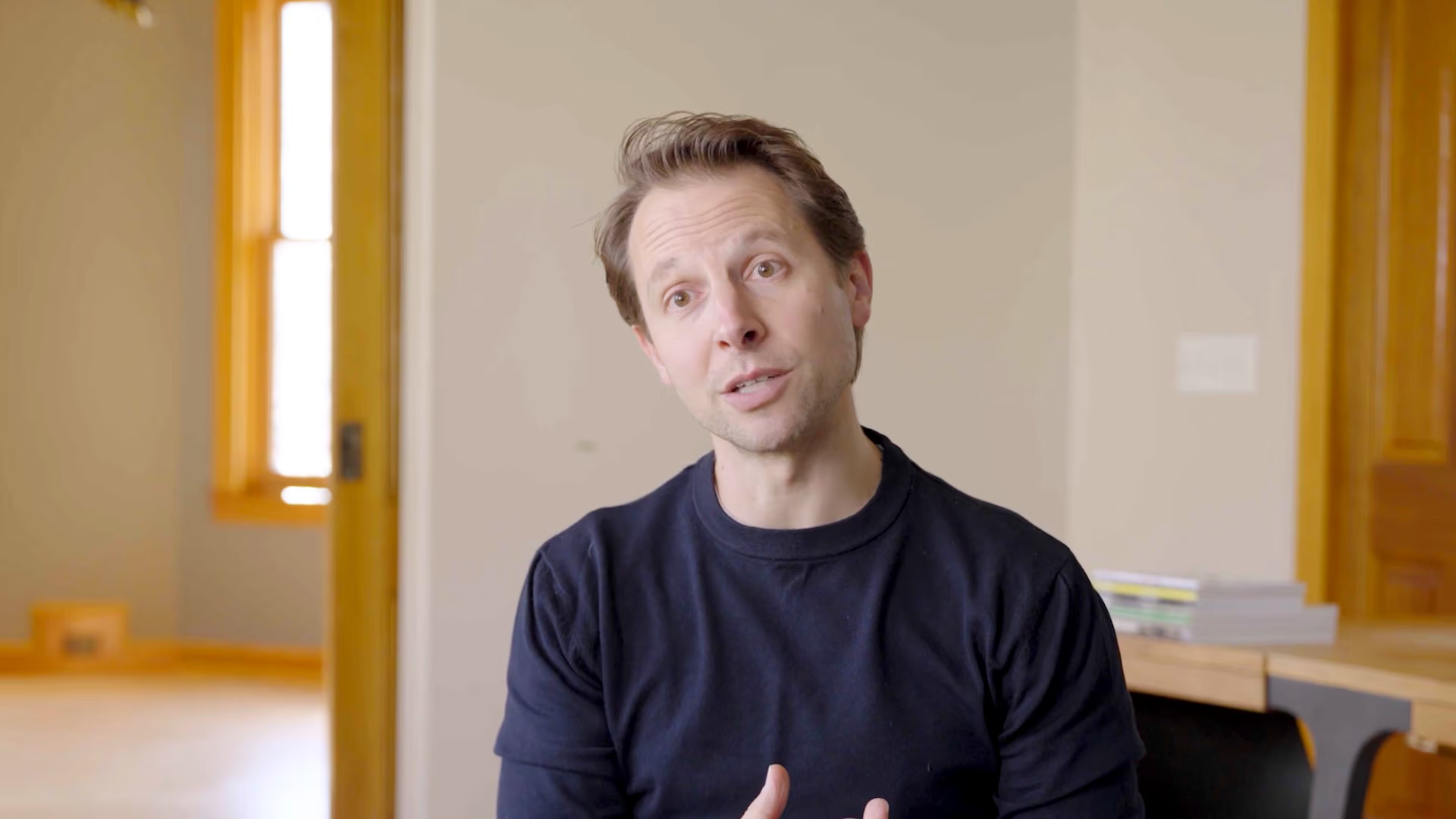
Chief of Stanford Addiction Medicine, Author, Dopamine Nation

Neuroscientist. Author, The Digital Delusion
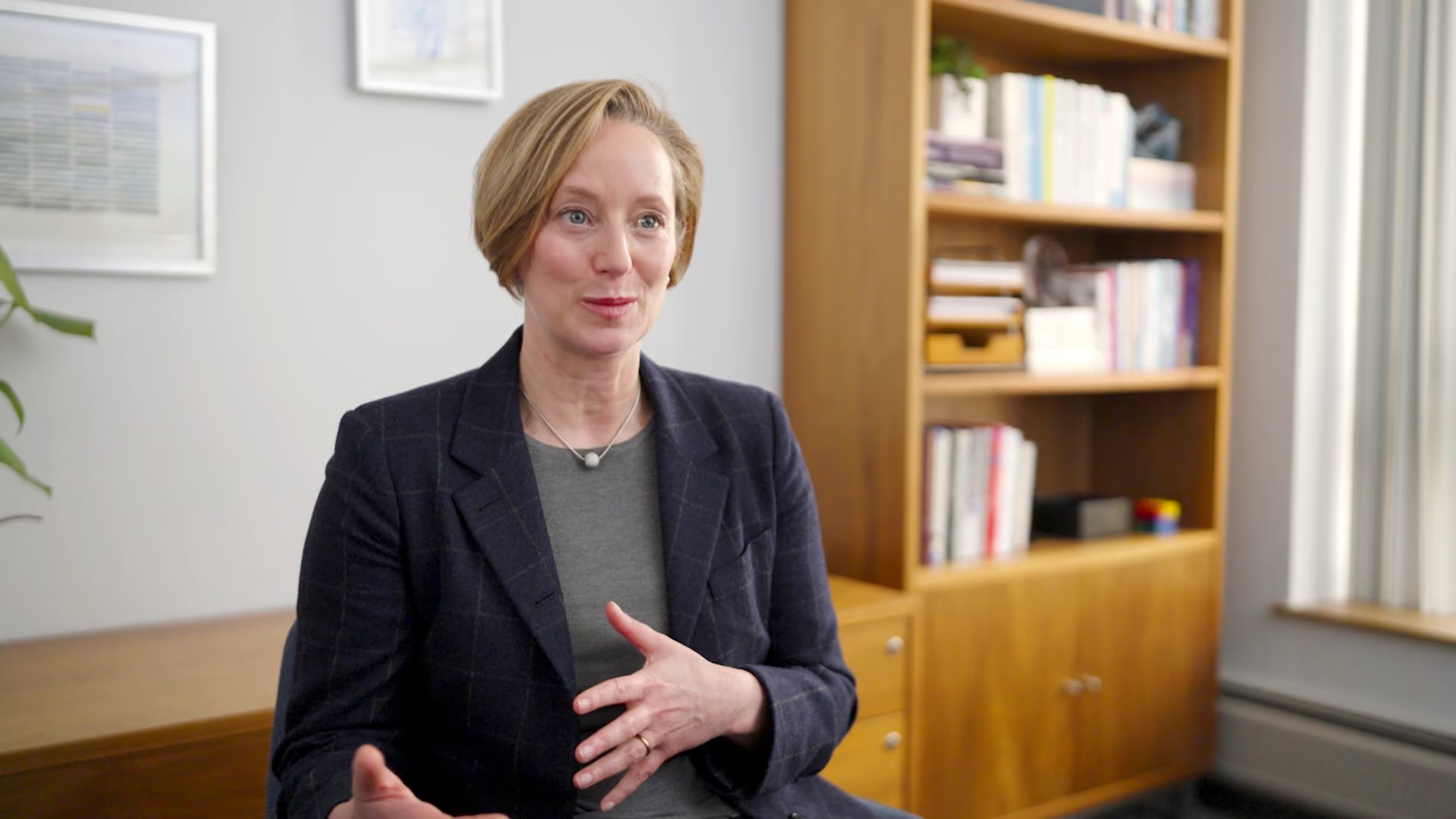
Psychologist. Author, Under Pressure

Chief of Stanford Addiction Medicine, Author, Dopamine Nation

Neuroscientist. Author, The Digital Delusion

Psychologist. Author, Under Pressure

Screenagers: Growing Up in the Digital Age helps school communities better understand how screen time, social media, and digital distractions are shaping young people’s lives.
Across school and community screenings, audiences report high levels of engagement and increased awareness of the ways technology affects mental health, learning, and relationships.
By bringing students, parents, and educators together in the same room, the film creates a shared starting point for conversations about boundaries, balance, and healthy technology use. It also offers practical guidance for parents and aims to inform and empower young people to make thoughtful, independent decisions.
As the foundational film in the Screenagers series, Growing Up in the Digital Age often serves as the first step for schools looking to address digital wellbeing in a thoughtful, research-informed way.

Were engaged by the movie
Thought the movie contained important information
Were motivated to make positive change after watching
Source: 2025 Survey of Member Schools
There are two main ways hosts can show this movie in their school or community:
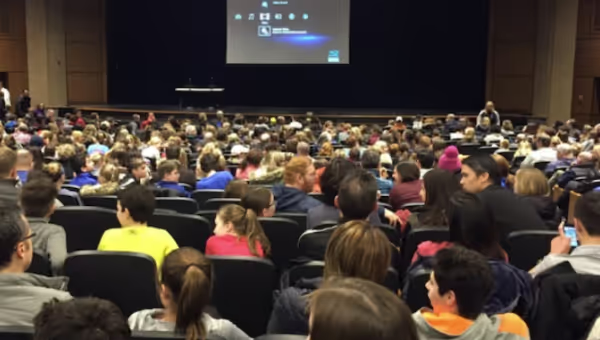
A one-time screening license allows hosts to screen one of our movies once to their school or community on a chosen date.
The Screenagers Project is our online membership platform for schools and other orgs serving youth, giving year-round access to our movies, curriculum and resources.
We also provide all hosts with a range of helpful resources to help them put on an impactful event:
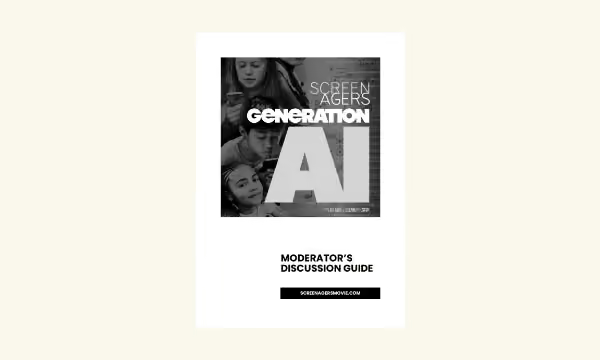
We provide discussion guides to help hosts facilitate meaningful, informed conversations after a screening, supporting reflection, dialogue, and next steps.
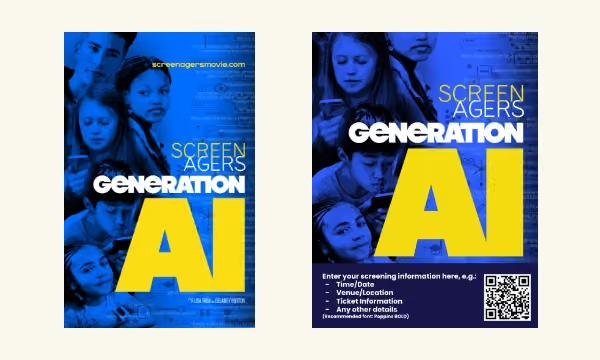
Our marketing pack is available ahead of your event to help you plan and promote your screening. It includes ready-to-use posters, editable templates, social media graphics, and more.
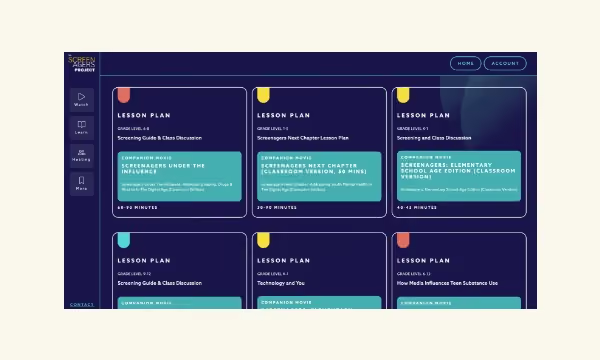
Our membership includes an extensive library of lesson plans educators can use alongside school or classroom screenings. Materials are tailored for grades K–12 and designed to extend learning beyond the film.
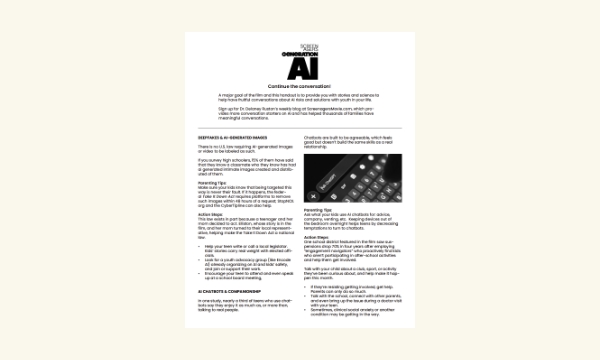
Each film includes printable handouts for attendees, helping families learn more about the film’s themes and continue conversations at home and in the wider community.
Don’t just take our word for it! Here’s what some of our recent hosts had to say about their screenings
Our Screenagers movie event was a success! Your team was very helpful and professional. Screenagers has generated much discussion. We are planning for next year!
The event achieved exactly what we set out to and more. I could not have asked for any better. I received so much positive feedback!
So many people thanked us for having a showing and it seemed like everyone gleaned something from it! Thank you again for walking us through everything and making it easy to have a community event like this.
The parents definitely appreciated the film and walked away with new perspectives. We paired the screening with a panel discussion featuring a clinical child psychologist and an expert on media and children. It was a huge success!
We have been fortunate enough to screen your films multiple times in our schools and community, in partnership with many here in Westborough. It has helped fuel me in my work and as a parent.
The film itself is wonderful, and I was so happy to find the wealth of resources that came along with it. We are glad to have such good support for our work with parents.
Now updated for 25/26 with the latest science, research, and expert insights, Screenagers is an award-winning documentary that dives into the challenges families face in this digital age.
Runtimes: Original Version: 59 Minutes, Classroom Version: 45 Minutes.


Are you watching young people immersed in their screens — scrolling through social media, playing video games, and losing focus with ever-decreasing attention spans?
Physician and filmmaker Delaney Ruston faced this challenge with her own kids and screens. She questioned how this was affecting family dynamics, education, and the mental well-being of young people.
Screenagers: Growing Up in the Digital Age takes a deeply personal and relatable approach. Delaney opens the doors to her own family life and meets with others to explore the messy struggles over social media, video games, academics, and internet addiction.
Through poignant and unexpectedly humorous stories, paired with surprising insights from leading experts, Screenagers: Growing Up in the Digital Age reveals how screens are shaping kids’ development. Most importantly, it offers actionable solutions to help adults empower kids to navigate the digital age and find balance.

Delaney Ruston chose her two career paths of primary care physician and documentary filmmaker for one reason: to help create positive change in people’s lives. Her experiences receiving medical care in free clinics while growing up motivated her to pursue health care. During her medicine residency, she began studying filmmaking for social impact and made her first award-winning film.
For twenty years Delaney has split her time between providing primary care and creating short and feature-length documentaries, such as Screenagers. Examples of her other films include Unlisted: A Story of Schizophrenia about her father and Hidden Pictures about global mental health. These films have been screened widely, aired on PBS, and were at the forefront of advocacy campaigns, including with the World Health Organization. For her work in using films to building movements, Delaney has won several awards including Harvard’s McLean National Council Recognition Award and New York’s Fountain House Advocacy Award.
Delaney trained at Stanford Medical School, followed by a medicine residency at UC San Francisco. She has practiced and taught medicine in diverse settings including faculty positions at The University of Washington School of Medicine and at The Center for Medical Humanities, Bioethics and Compassionate Care at Stony Brook School of Medicine, NY.
Ruston has conducted investigative research in diverse fields—including biophysics at NIH, bioethics, and communication at UCSF and behavioral health as a Fulbright Scholar. She has spent the past six years intensely researching the impact of screen time on youth and solutions for screen time balance.

Delaney is a Stanford-trained physician and long-time social change filmmaker, including the films Screenagers, Screenagers Next Chapter, and Screenagers Under The Influence. Ruston has made several films on mental health topics as well as short films on substance use issues. Ruston has long paired her film work with creating advocacy campaigns, including working with the World Health Organization, and for these efforts, she has received many awards. In addition, Delaney has been a researcher and teacher at top medical universities and has been providing primary care to underserved teens and adults for the past 20 years in Seattle, Washington. Full bio

Lisa Tabb is a distinguished producer with a rich background in digital media and parenting. She co-produced the four Screenagers Movies and co-directed Screenagers Under The Influence: Addressing Vaping, Drugs, and Alcohol. She also co-produces The Screenagers Podcast and edits the “Screenagers’ Tech Talk Tuesday weekly blog. Tabb has made significant contributions to the global discourse on youth screen time, with the films reaching over 10 million individuals in more than 100 countries. Her publishing achievements include Parenting in the Digital Age: A Guide to Calm Conversation. Before her foray into film, she spent 15 years at ABC 7 News in San Francisco, focusing on parenting trends and emerging technologies.

Erik Dugger has edited documentaries including Little White Lie, The Magic Life, Present Perfect, and Supergirl. He was also the supervising editor of the Peabody Award-winning No Le Digas A Nadie. Erik’s work has screened at film festivals including Slamdance, DOC NYC, and the Hamptons International Film Festival. It has also been featured on the Sundance Channel, the Discovery Channel, National Geographic, A&E Biography, as well as PBS’s Independent Lens and POV series.

Geoff Schaaf is a Los Angeles-based award-winning cinematographer with over 35 years of experience. His credits include feature films such as Her Lucky Star, and Midnight Heat, and feature documentaries Eat, Drink, Laugh, The Wall Street Conspiracy and One Germany: The Other Side of the Wall. TV documentaries include Middle Ages, Sharks of Rangiroa and Tour de France. He is currently working on the feature documentary Wounded Warriors. Geoff has 13 Emmy Nominations and 4 Emmy Awards.

Paul Brill has composed over sixty films as well as many TV shows. He has won several Emmys and awards for his music. He has composed films that have screened at Sundance, Tribeca, other top festivals, PBS and HBO. His films include Joan Rivers: A Piece of Work, Freakonomics, The Devil Came on Horseback and Page One: Inside New York Times.

Haidt is a social psychologist at New York University’s Stern School of Business and author of several NYT bestselling books including 2024's, The Anxious Generation.

Distinguished psychology professor at MIT, Turkle studies the social and psychological effects of technology. Named Woman of the Year by Ms. Magazine, she has written five books, including Alone Together and Reclaiming Conversation.

A nationally renowned author and speaker on issues related to teenage girls, Orenstein’s books include The New York Times best-sellers Cinderella Ate My Daughter and School Girls. Her articles have appeared in The New Yorker, O, The Oprah Magazine and Vogue, among others.

Carr, a former contributor to the World Economic Forum’s cloud computing project, has written multiple groundbreaking books on technology and culture, including The Shallows, What the Internet Is Doing to Our Brains and the Pulitzer Prize-nominated The Glass Cage: How Our Computers Are Changing Us.

Christakis is an internationally renowned researcher in child development, having published more than 170 research articles in this area. His work focuses on how early experiences affect children and how parents can improve their children's early learning environments.

Dr. Walker, Chief of Adolescent Medicine at Seattle Children's Hospital, is an authority on teen addictive behaviors. A highly respected pediatrician, Walker is invited to speak to parents and teens across the country about many health issues including addiction prevention.

Nino Ramirez is the director of the Center for Integrative Brain Research at Seattle Children’s Research Institute. A leading brain scientist, Ramirez‘s research team focuses on the effects of screen time on memory and learning.

A clinical psychologist and researcher, Kastner is the author of several highly regarded books including Getting to Calm and Wise-Minded Parenting. She is invited to speak to the media and parent groups nationwide on topics related to family dynamics and child development.

A researcher and leading expert on adolescence, Steinberg is the author of nearly 500 articles on development during the teenage years, and the author, co-author, or editor of 17 books.

Director of Research for the National Institute on Media and the Family. A developmental psychologist, he is also a faculty member in the Psychology Department at Iowa State University.

Director of Sleep Medicine at Boston Children’s Hospital in Boston Massachusetts and Professor of Neurology at Harvard Medical School. She is an internationally-recognized authority on pediatric sleep and the author of over 150 original research and review articles

Hale is the founding editor-in-chief of the Sleep Health Journal and has published over 100 peer-reviewed articles. An expert in the social patterns of sleep and how it contributes to a cycle of inequality in health and well-being.

Co-Founder and Chief Clinical Officer of the reSTART Life, PLLC, Cash has been working in the field of mental health as a private practitioner and specializing in the emerging field of internet and video game addiction over the last 20 years.

A research psychologist and Professor Emeritus in the psychology department at CSU Dominguez Hills. Rosen specializes in multitasking, social networking and adolescent development. He is the author of 7 books.


.avif)


“Amazing documentary… very relevant for parents, teachers and students. Many parents left asking when we were going to show it again because they wanted to bring their friends.”
“As the mother of three kids… we’re all worried about how much is too much. For any of you wrestling with this issue, I loved the documentary. It combines smart insights and practical tips for raising happy, healthy, technologically empowered teens.”
“Screenagers is a very balanced, sympathetic and sane look at the way millions of teens are struggling with phones and games and technology in general.”
“It’s a MUST SEE for anyone with kids in their lives!”
“Students and parents alike loved this film. It addressed everyone’s concerns and opened up important conversations about the impact of screen time.”
“Great way to spark a conversation about one of the most important issues in raising children… also alarmingly applicable to adults.”
“We had a response to this screening like we haven’t seen for other events. I think the best thing it is doing is opening conversations for families and in the communities.”
“Thank you for providing this incredible resource. This documentary has begun some incredible dialogue among families and we are extraordinarily grateful.”
“We are considering showing it again in the spring… one of the best events we have hosted.”