

**Update April 2019 Since we originally published this blog post, a study published in the Journal of the American Academy of Child and Adolescent Psychiatry found “After accounting for seasonal effects and an underlying increasing trend in monthly suicide rates, the overall suicide rate among 10- to 17-year-olds increased significantly in the month immediately following the release of 13 Reasons Why.”
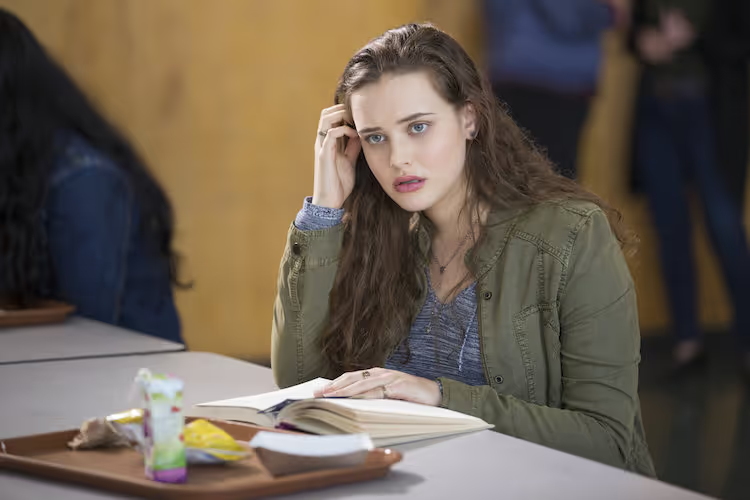
Teens all over the world are streaming the Netflix series, “13 Reasons Why.” The series, based on the young adult novel by Jay Asher, explores hard issues like online bullying, rape, and suicide. Because youth today so often watch shows alone on their personal devices, it is imperative that we engage and have conversations with our teens about these intense subjects. And, you can set controls on your Netflix account that requires a special password each time your child or teen wants to access content you have restricted. Please see how to do this at the bottom of this blog.
In her essay for Teen Vogue, suicide prevention advocate MollyKate Cline expresses concerns over the series’ lack of mental health dialogue and the main character’s disregard from a trusted adult when she goes for help. Cline sees these situations as potential triggers for vulnerable viewers. Also, the vast majority of people who take their lives are dealing with mental health issues, yet the girl in the series is not shown to be dealing with such issues—instead the premise is that others caused her to do it. For these and many other reasons, it is time for us to talk to our kids—whether they have seen the show or not.
I know that the content makers hope their show will bring awareness and acceptance to these serious subjects, but I have concerns that the show’s graphic portrayal of suicide contributes to its glamorization. How will these realistic interpretations impact youth dealing with real suicidal thoughts?
The increase in actual suicides after a widely publicized incident is real and extremely concerning. Called the Werther Effect, the increase in copycat suicides following an incident publicized without information about alternatives and preventions is based on the 18th-century Goethe novel, The Sorrows of Young Werther. Today, doctors and researchers call this suicide contagion.
A major study that looked at the Werther Effect found that suicide rates decreased when the media offered alternative solutions to suicide. When we hear of stories of people who were emotionally struggling but then found ways out of their darkness—supportive people, therapy, new community involvement, etc— those stories can help so many people. Why don’t we hear more of those stories in the media?
I know as a family member, friend, and doctor that it is hard to have conversations about suicidal thoughts. It is an emotional subject, and so many of us have known people who have tragically taken their lives.
FROM NETFLIX https://help.netflix.com/en/node/264
1. Account-level (hard controls)
Require a PIN for specific maturity ratings
Require a PIN for specific TV shows or movies
2. Profile-level (soft controls)
Choose a maturity level for a profile


Learn more about showing our movies in your school or community!
Join Screenagers filmmaker Delaney Ruston MD for our latest Podcast

Learn more about our Screen-Free Sleep campaign at the website!
Our movie made for parents and educators of younger kids
Learn more about showing our movies in your school or community!
Register your interest in bringing our new movie to your school or community
Learn more about showing our movies in your school or community!
Join Screenagers filmmaker Delaney Ruston MD for our latest Podcast
Learn more about our Screen-Free Sleep campaign at the website!
Our movie made for parents and educators of younger kids
Join Screenagers filmmaker Delaney Ruston MD for our latest Podcast
Register your interest in bringing our new movie to your school or community
As we’re about to celebrate 10 years of Screenagers, we want to hear what’s been most helpful and what you’d like to see next.
Please click here to share your thoughts with us in our community survey. It only takes 5–10 minutes, and everyone who completes it will be entered to win one of five $50 Amazon vouchers.
**Update April 2019 Since we originally published this blog post, a study published in the Journal of the American Academy of Child and Adolescent Psychiatry found “After accounting for seasonal effects and an underlying increasing trend in monthly suicide rates, the overall suicide rate among 10- to 17-year-olds increased significantly in the month immediately following the release of 13 Reasons Why.”
Teens all over the world are streaming the Netflix series, “13 Reasons Why.” The series, based on the young adult novel by Jay Asher, explores hard issues like online bullying, rape, and suicide. Because youth today so often watch shows alone on their personal devices, it is imperative that we engage and have conversations with our teens about these intense subjects. And, you can set controls on your Netflix account that requires a special password each time your child or teen wants to access content you have restricted. Please see how to do this at the bottom of this blog.
In her essay for Teen Vogue, suicide prevention advocate MollyKate Cline expresses concerns over the series’ lack of mental health dialogue and the main character’s disregard from a trusted adult when she goes for help. Cline sees these situations as potential triggers for vulnerable viewers. Also, the vast majority of people who take their lives are dealing with mental health issues, yet the girl in the series is not shown to be dealing with such issues—instead the premise is that others caused her to do it. For these and many other reasons, it is time for us to talk to our kids—whether they have seen the show or not.
I know that the content makers hope their show will bring awareness and acceptance to these serious subjects, but I have concerns that the show’s graphic portrayal of suicide contributes to its glamorization. How will these realistic interpretations impact youth dealing with real suicidal thoughts?
The increase in actual suicides after a widely publicized incident is real and extremely concerning. Called the Werther Effect, the increase in copycat suicides following an incident publicized without information about alternatives and preventions is based on the 18th-century Goethe novel, The Sorrows of Young Werther. Today, doctors and researchers call this suicide contagion.
A major study that looked at the Werther Effect found that suicide rates decreased when the media offered alternative solutions to suicide. When we hear of stories of people who were emotionally struggling but then found ways out of their darkness—supportive people, therapy, new community involvement, etc— those stories can help so many people. Why don’t we hear more of those stories in the media?
I know as a family member, friend, and doctor that it is hard to have conversations about suicidal thoughts. It is an emotional subject, and so many of us have known people who have tragically taken their lives.
FROM NETFLIX https://help.netflix.com/en/node/264
1. Account-level (hard controls)
Require a PIN for specific maturity ratings
Require a PIN for specific TV shows or movies
2. Profile-level (soft controls)
Choose a maturity level for a profile
Sign up here to receive the weekly Tech Talk Tuesdays newsletter from Screenagers filmmaker Delaney Ruston MD.
We respect your privacy.
**Update April 2019 Since we originally published this blog post, a study published in the Journal of the American Academy of Child and Adolescent Psychiatry found “After accounting for seasonal effects and an underlying increasing trend in monthly suicide rates, the overall suicide rate among 10- to 17-year-olds increased significantly in the month immediately following the release of 13 Reasons Why.”
Teens all over the world are streaming the Netflix series, “13 Reasons Why.” The series, based on the young adult novel by Jay Asher, explores hard issues like online bullying, rape, and suicide. Because youth today so often watch shows alone on their personal devices, it is imperative that we engage and have conversations with our teens about these intense subjects. And, you can set controls on your Netflix account that requires a special password each time your child or teen wants to access content you have restricted. Please see how to do this at the bottom of this blog.
In her essay for Teen Vogue, suicide prevention advocate MollyKate Cline expresses concerns over the series’ lack of mental health dialogue and the main character’s disregard from a trusted adult when she goes for help. Cline sees these situations as potential triggers for vulnerable viewers. Also, the vast majority of people who take their lives are dealing with mental health issues, yet the girl in the series is not shown to be dealing with such issues—instead the premise is that others caused her to do it. For these and many other reasons, it is time for us to talk to our kids—whether they have seen the show or not.
I know that the content makers hope their show will bring awareness and acceptance to these serious subjects, but I have concerns that the show’s graphic portrayal of suicide contributes to its glamorization. How will these realistic interpretations impact youth dealing with real suicidal thoughts?
The increase in actual suicides after a widely publicized incident is real and extremely concerning. Called the Werther Effect, the increase in copycat suicides following an incident publicized without information about alternatives and preventions is based on the 18th-century Goethe novel, The Sorrows of Young Werther. Today, doctors and researchers call this suicide contagion.
A major study that looked at the Werther Effect found that suicide rates decreased when the media offered alternative solutions to suicide. When we hear of stories of people who were emotionally struggling but then found ways out of their darkness—supportive people, therapy, new community involvement, etc— those stories can help so many people. Why don’t we hear more of those stories in the media?
I know as a family member, friend, and doctor that it is hard to have conversations about suicidal thoughts. It is an emotional subject, and so many of us have known people who have tragically taken their lives.
FROM NETFLIX https://help.netflix.com/en/node/264
1. Account-level (hard controls)
Require a PIN for specific maturity ratings
Require a PIN for specific TV shows or movies
2. Profile-level (soft controls)
Choose a maturity level for a profile
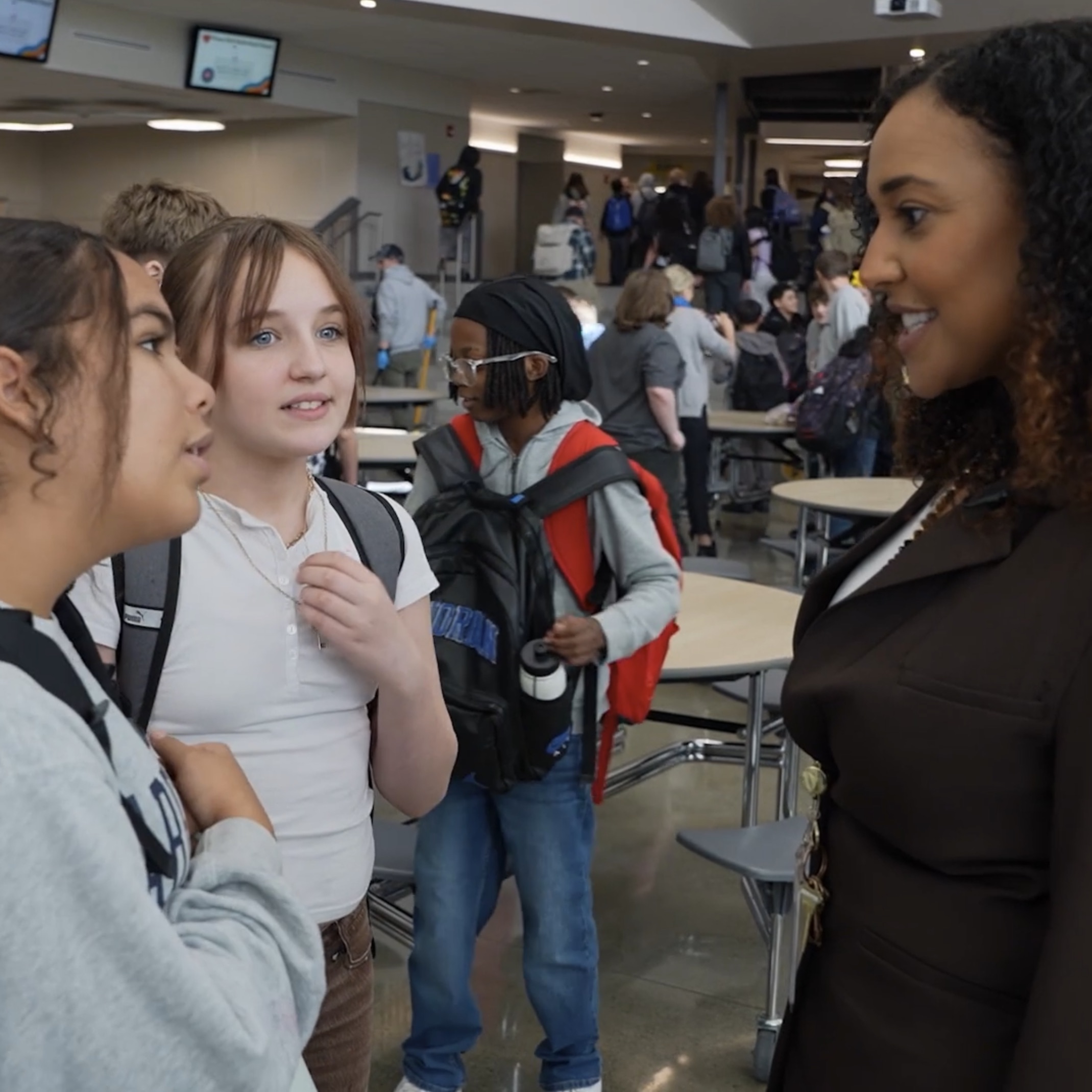
Many kids have nothing to do after school, so they go home to screens and, increasingly, AI chatbots. Spokane Public Schools tackled this by hiring "Engagement Navigators" who proactively find these students and help them get involved, a program we feature in Screenagers: Generation AI. I also share a patient's story, advice for parents whose teens refuse activities, and ways to help other kids get involved.
READ MORE >
Tech journalist Manoush Zomorodi recently shared with Delaney the story behind her new book Body Electric and the citizen science experiment she ran with NPR and Dr. Keith Diaz of Columbia. The 20,000-person study found that five minutes of movement for every thirty minutes of sitting dropped fatigue by up to 28%, lowered blood glucose and blood pressure, and improved focus and mood. Plus, five practical reframes for talking to kids about movement without the eye rolls.
READ MORE >
for more like this, DR. DELANEY RUSTON'S NEW BOOK, PARENTING IN THE SCREEN AGE, IS THE DEFINITIVE GUIDE FOR TODAY’S PARENTS. WITH INSIGHTS ON SCREEN TIME FROM RESEARCHERS, INPUT FROM KIDS & TEENS, THIS BOOK IS PACKED WITH SOLUTIONS FOR HOW TO START AND SUSTAIN PRODUCTIVE FAMILY TALKS ABOUT TECHNOLOGY AND IT’S IMPACT ON OUR MENTAL WELLBEING.