



Last week, Harvard rescinded the acceptances of 10 incoming freshmen for posting racist, sexually offensive material in a Facebook messaging group titled “Harvard memes for horny bourgeois teens.” As intense as the consequence may seem, this is an important reminder that nothing on the web is private, even private chat groups.
A person is responsible for what they post, a lesson our kids and teens might not always appreciate. According to a 2015 survey by the Pew Research Center, 88% of teens surveyed believe that people share too much information about themselves on social media. I am definitely going to ask my teens what they feel is too much information. Also, 75% of teens said they either “frequently” or “occasionally" see people “stirring up drama on social media.” That is a lot of posts and messages that are all about drama!
We know it is popular for teens to have a main Instagram account and then a separate one, that is thought to be private, for closer friends--called a Finsta account. This is a great time to talk about these alternative accounts. Are they really as private as one might think? For some, they create a supportive small group so I would start with the positive—why might a person want a Finstagram?
In talking with younger kids I learned a cool analogy from a teacher I met while doing screenings in Hong Kong. He tells his 1st-grade students to think of the web as the ocean and when you are in it, how important it is to wear your swimsuit.
The action taken by Harvard is a great way to remind your teens about what they choose to post on social media. The students involved probably had no idea their posts would be seen by anyone but themselves, they were in a private chat. But “private chat” is a misnomer. These kids are the cream of the crop, and they didn’t have the wisdom to keep inappropriate messages out of the conversation.
These discussions work best when adults share their experiences and observations--not just asking youth about their experiences. We are all in this together.
** A little tip, I generally print out the TTT to bring to the dinner table since we do not use tech during dinner.
We would love for you to share this TTT any way that works for you, whether that’s on social media or via a newsletter. If you want to send it out in your newsletter we just ask that you credit us and link to our website, and let us know at lisa@screenagersmovie.com.
HOST A SCREENING to help spark change.
FIND EVENT LISTINGS
Do you organize professional development in schools? We now have a 6-hour, 3-part training module. Request more information here Professional Development.
Stay in touch with the Screenagers community on Facebook, Twitter and leave comments below.


Learn more about showing our movies in your school or community!
Join Screenagers filmmaker Delaney Ruston MD for our latest Podcast

Learn more about our Screen-Free Sleep campaign at the website!
Our movie made for parents and educators of younger kids
Learn more about showing our movies in your school or community!
Register your interest in bringing our new movie to your school or community
Learn more about showing our movies in your school or community!
Join Screenagers filmmaker Delaney Ruston MD for our latest Podcast
Learn more about our Screen-Free Sleep campaign at the website!
Our movie made for parents and educators of younger kids
Join Screenagers filmmaker Delaney Ruston MD for our latest Podcast
Register your interest in bringing our new movie to your school or community

As we’re about to celebrate 10 years of Screenagers, we want to hear what’s been most helpful and what you’d like to see next.
Please click here to share your thoughts with us in our community survey. It only takes 5–10 minutes, and everyone who completes it will be entered to win one of five $50 Amazon vouchers.
Last week, Harvard rescinded the acceptances of 10 incoming freshmen for posting racist, sexually offensive material in a Facebook messaging group titled “Harvard memes for horny bourgeois teens.” As intense as the consequence may seem, this is an important reminder that nothing on the web is private, even private chat groups.
A person is responsible for what they post, a lesson our kids and teens might not always appreciate. According to a 2015 survey by the Pew Research Center, 88% of teens surveyed believe that people share too much information about themselves on social media. I am definitely going to ask my teens what they feel is too much information. Also, 75% of teens said they either “frequently” or “occasionally" see people “stirring up drama on social media.” That is a lot of posts and messages that are all about drama!
We know it is popular for teens to have a main Instagram account and then a separate one, that is thought to be private, for closer friends--called a Finsta account. This is a great time to talk about these alternative accounts. Are they really as private as one might think? For some, they create a supportive small group so I would start with the positive—why might a person want a Finstagram?
In talking with younger kids I learned a cool analogy from a teacher I met while doing screenings in Hong Kong. He tells his 1st-grade students to think of the web as the ocean and when you are in it, how important it is to wear your swimsuit.
The action taken by Harvard is a great way to remind your teens about what they choose to post on social media. The students involved probably had no idea their posts would be seen by anyone but themselves, they were in a private chat. But “private chat” is a misnomer. These kids are the cream of the crop, and they didn’t have the wisdom to keep inappropriate messages out of the conversation.
These discussions work best when adults share their experiences and observations--not just asking youth about their experiences. We are all in this together.
** A little tip, I generally print out the TTT to bring to the dinner table since we do not use tech during dinner.
We would love for you to share this TTT any way that works for you, whether that’s on social media or via a newsletter. If you want to send it out in your newsletter we just ask that you credit us and link to our website, and let us know at lisa@screenagersmovie.com.
HOST A SCREENING to help spark change.
FIND EVENT LISTINGS
Do you organize professional development in schools? We now have a 6-hour, 3-part training module. Request more information here Professional Development.
Stay in touch with the Screenagers community on Facebook, Twitter and leave comments below.
Sign up here to receive the weekly Tech Talk Tuesdays newsletter from Screenagers filmmaker Delaney Ruston MD.
We respect your privacy.
Last week, Harvard rescinded the acceptances of 10 incoming freshmen for posting racist, sexually offensive material in a Facebook messaging group titled “Harvard memes for horny bourgeois teens.” As intense as the consequence may seem, this is an important reminder that nothing on the web is private, even private chat groups.
A person is responsible for what they post, a lesson our kids and teens might not always appreciate. According to a 2015 survey by the Pew Research Center, 88% of teens surveyed believe that people share too much information about themselves on social media. I am definitely going to ask my teens what they feel is too much information. Also, 75% of teens said they either “frequently” or “occasionally" see people “stirring up drama on social media.” That is a lot of posts and messages that are all about drama!
We know it is popular for teens to have a main Instagram account and then a separate one, that is thought to be private, for closer friends--called a Finsta account. This is a great time to talk about these alternative accounts. Are they really as private as one might think? For some, they create a supportive small group so I would start with the positive—why might a person want a Finstagram?
In talking with younger kids I learned a cool analogy from a teacher I met while doing screenings in Hong Kong. He tells his 1st-grade students to think of the web as the ocean and when you are in it, how important it is to wear your swimsuit.
The action taken by Harvard is a great way to remind your teens about what they choose to post on social media. The students involved probably had no idea their posts would be seen by anyone but themselves, they were in a private chat. But “private chat” is a misnomer. These kids are the cream of the crop, and they didn’t have the wisdom to keep inappropriate messages out of the conversation.
These discussions work best when adults share their experiences and observations--not just asking youth about their experiences. We are all in this together.
** A little tip, I generally print out the TTT to bring to the dinner table since we do not use tech during dinner.
We would love for you to share this TTT any way that works for you, whether that’s on social media or via a newsletter. If you want to send it out in your newsletter we just ask that you credit us and link to our website, and let us know at lisa@screenagersmovie.com.
HOST A SCREENING to help spark change.
FIND EVENT LISTINGS
Do you organize professional development in schools? We now have a 6-hour, 3-part training module. Request more information here Professional Development.
Stay in touch with the Screenagers community on Facebook, Twitter and leave comments below.

The Los Angeles Unified School District, the second-largest in the country, just approved districtwide screen time limits starting in the 2026–27 school year. Students through 1st grade won't use school devices, grades 2–5 will move from 1-to-1 iPads to shared laptop carts, and older students will face screen time limits with YouTube blocked. Devices also won't be allowed during passing periods, lunch, or recess. Credit goes to the parent- and teacher-led group Schools Beyond Screens, whose organizing and advocacy work helped make it happen.
READ MORE >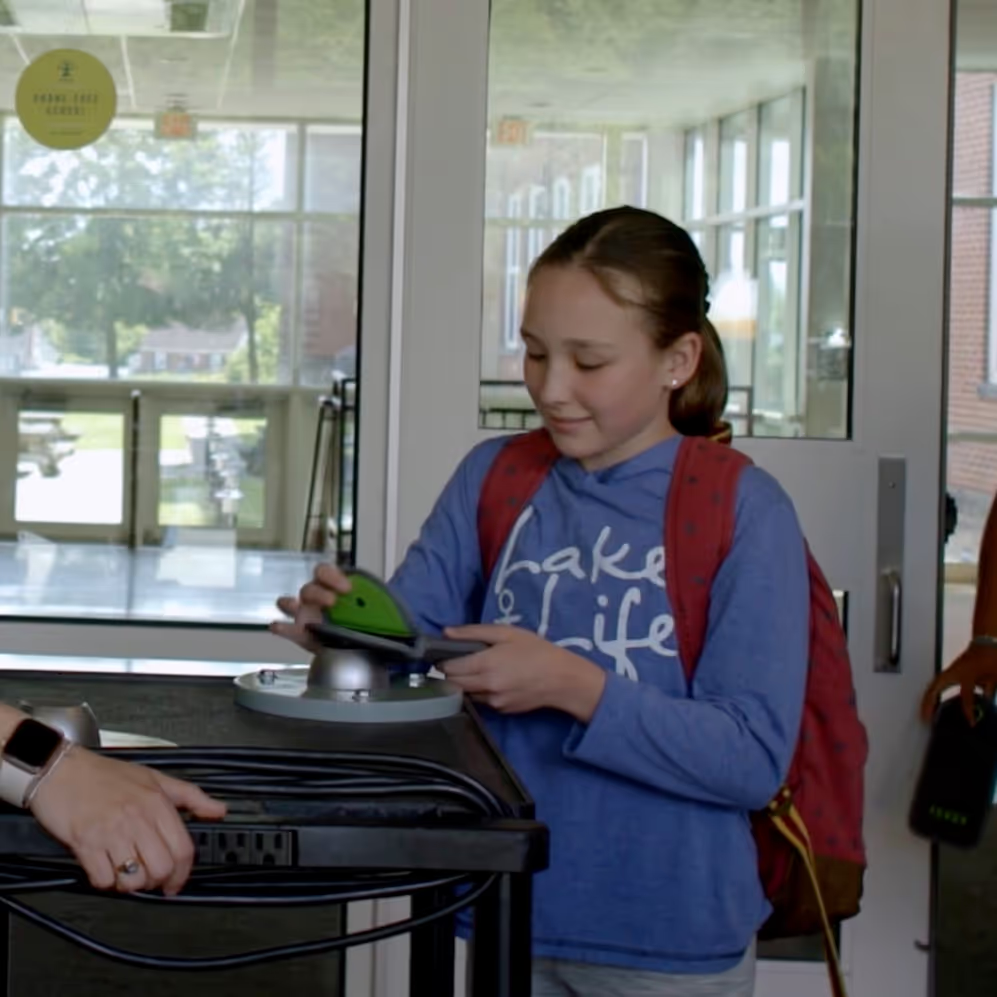
This year, millions of students are experiencing a major shift: school days without phones, smartwatches, or other personal devices. Today we explore the wins, hurdles, and solutions helping schools succeed. We also share our resources that you can use to support technology policy changes in your schools.
READ MORE >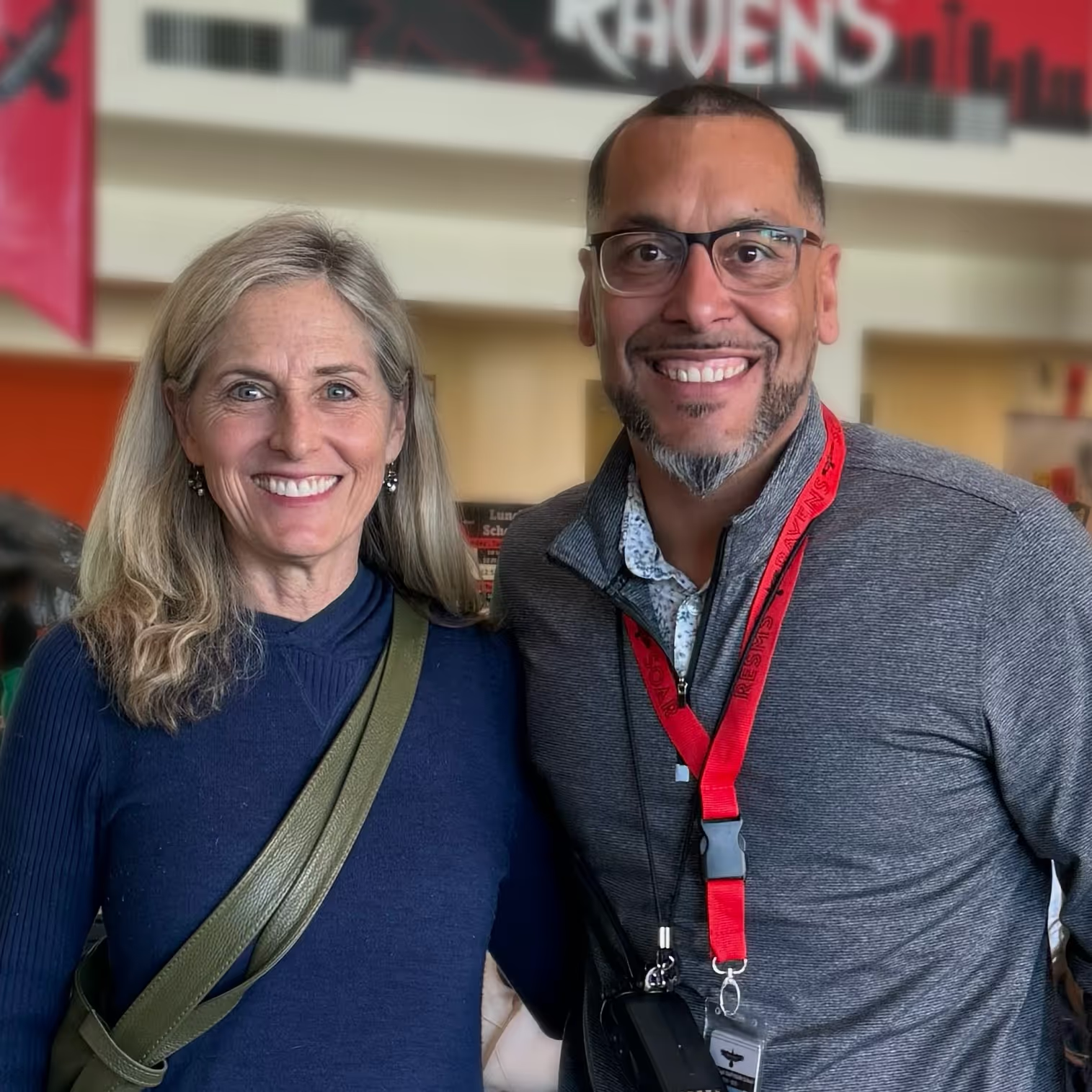
I recently sat down with middle school principal Zach at his school in Washington State. We talked about the challenges Zach and his team faced in his early years as principal when students used phones during school, and how he brought about a powerful transformation by having phones and smartwatches put away in locked pouches for the whole school day. In today’s blog, to raise awareness of the challenges, I share five real examples from Zach of the troubling ways students use phones at school to be unkind.
READ MORE >for more like this, DR. DELANEY RUSTON'S NEW BOOK, PARENTING IN THE SCREEN AGE, IS THE DEFINITIVE GUIDE FOR TODAY’S PARENTS. WITH INSIGHTS ON SCREEN TIME FROM RESEARCHERS, INPUT FROM KIDS & TEENS, THIS BOOK IS PACKED WITH SOLUTIONS FOR HOW TO START AND SUSTAIN PRODUCTIVE FAMILY TALKS ABOUT TECHNOLOGY AND IT’S IMPACT ON OUR MENTAL WELLBEING.