



Some families are exploring a new, Wi-Fi-enabled landline phone that allows kids to communicate without screens. This blog explains how the phone works, why parents value its simplicity and built-in controls, and how groups of families are adopting it together to reduce pressure around smartphones. A parent conversation highlights shared buy-in, voice-only communication, and giving kids more independence while delaying personal devices.
Recently, my neighbor told me how excited she was about a new Wi-Fi-enabled landline phone called Tin Can. Currently, this is the only company making these.
This is a new product for families who don’t have landlines (i.e., 99% of us) and want their kids to be able to communicate via a “phone” without any screens.
There are two phones with Tin Can: either the corded one we all know from the past, or one similar that looks like a toy. It works like a regular phone. A person picks up the phone, dials, and then talks via a handset connected to a base via a cord.
Parents use an app on their own phone to set up and approve the phone numbers the child is allowed to call or receive calls from. It is truly all about recreating how it used to be, talking on a phone.
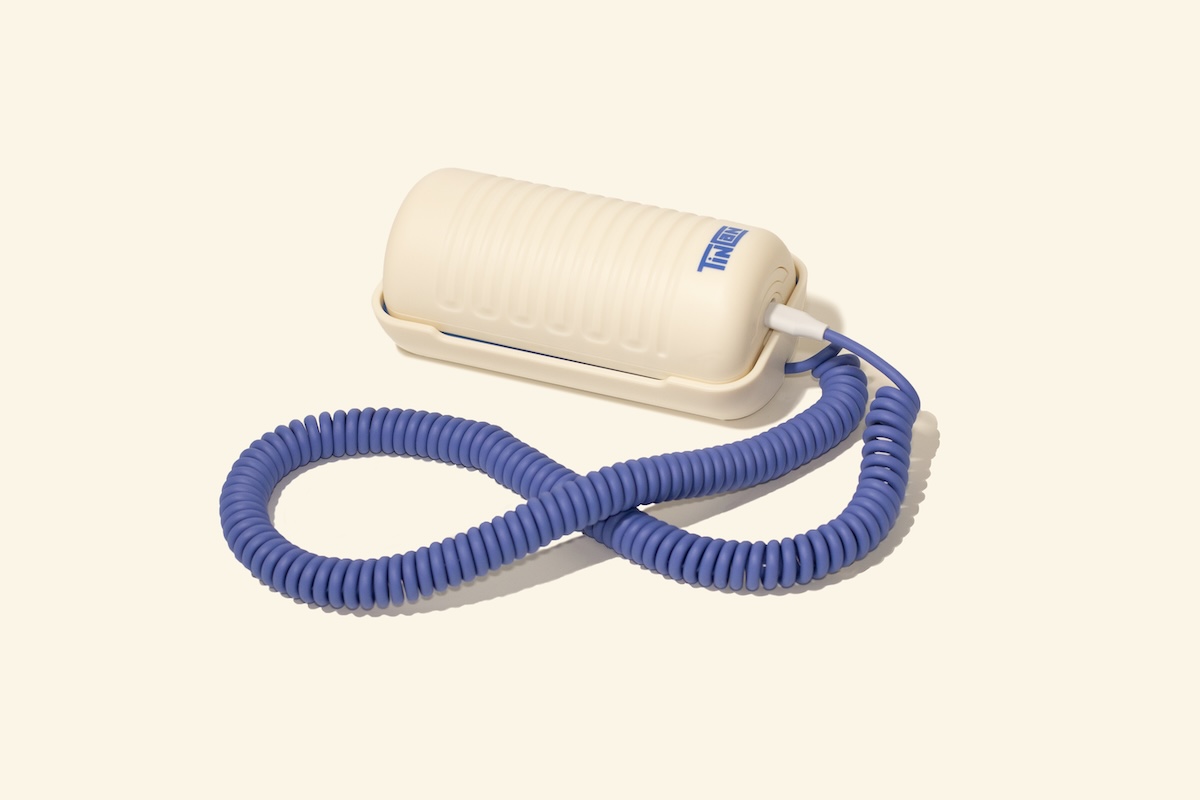
On Tin Can’s website, the two phone models are priced at $75, and you use your existing home Wi-Fi. There is no extra internet cost. There is an optional monthly service fee of $9.99 if you want your child to be able to call their friends who do not have a Tin Can phone.
You may have heard of another product called Uma, but it’s not a real phone for making or receiving calls over Wi-Fi or a cellular network. Rather, it is a kid-oriented toy smartphone with a camera, games, and music. They do not have internet browsing, and they won’t connect to Wi-Fi or cellular networks. Again, it is not about making or receiving calls.


Learn more about showing our movies in your school or community!
Join Screenagers filmmaker Delaney Ruston MD for our latest Podcast

Learn more about our Screen-Free Sleep campaign at the website!
Our movie made for parents and educators of younger kids
Learn more about showing our movies in your school or community!
Register your interest in bringing our new movie to your school or community
Here is a transcript of a conversation I had with the neighbor who has the 7- and 9-year-olds and is getting a Tin Can, and who has had her kids' friends' parents say they are going to do the same thing.
Delaney: What are you getting for your kids?
Neighbor: We're getting a Tin Can. It's a landline phone that connects to wifi, and a bunch of their friends are getting one too. And so we're doing it as a group of friends so that the kids can have a way that they can call each other and not have a smartphone.
Delaney: Or do it on an iPad?
Neighbor: Exactly. So there's no visual to it. It's literally the old-school corded phone that will live in the living room or in the kitchen. There's one they have to share. They have to call and ring up like, “Hello, Mrs. Johnson, is Timmy there?” To learn how to communicate with adults and communicate without the distractions of a screen in front of you.
Delaney: And why do you need the other families to do the same thing?
Neighbor: Well, I wanna have buy-in from them so that there are not incentives where another kid has a smartphone, and my kid has the old school corded phone.
So if we're all doing it together, there's buy-in. It's a group doing it together.
Delaney: Do you plug in cell phone numbers into the phone?
Neighbor: You can. You can call Tin Cans for free, but you can also call other phone numbers. And so they each have their own phone numbers. The parent has control. So it's on my app, and I can say what phone numbers can be called out and ones that can be called in, which ones are accepted.
They can't call phone numbers that aren't approved. They can dial 911, which is helpful if there is an emergency. So we can have a list of phone numbers that they can call. They can get their friends' numbers, and we can say, “Okay, who is this? Do we approve this to be on the list that you can call?”
Delaney: And they can call you. If you guys go out.
Neighbor: They can call us. They can call their grandparents. They can call, but we have to add it to the list on the app; otherwise, they can't call it. They'll have their phone list of who they want to call, and it'll live by the phone.
Delaney: Why not just get (something like) an ATT phone line?
Neighbor: I looked into that. We have Comcast Xfinity, and it is really hard to get them to come and install a landline.
Delaney: Got it. So that's why this market of landlines is happening.
Neighbor: It will hook into your Ethernet cable or your existing wifi, which is what we have. So it is the ease of access to it. And then there's also the security, where you have to have the phone number approved to be able to dial out or dial in.
Delaney: Have you talked to them (your children) about getting this?
Neighbor: They don't know. They keep asking, “Can we call our friends?” Anytime we've done a phone call, we only call on the phone. We don't FaceTime.
Delaney: And there's nothing wrong with FaceTime.
Neighbor: Not at all. No. No. There's something so nostalgic to me about having the phone time like when I was young, and I think that's a piece of it. That was all of our youth. And so we want that for our kids.
And that's what this market is tapping into with the Tin Cans. I'm excited to see where it goes.
Delaney: How has the reception been from other parents?
Neighbor: I think we're all very excited, and we're very excited to have an option that's not a smartphone.
Learn more about showing our movies in your school or community!
Join Screenagers filmmaker Delaney Ruston MD for our latest Podcast
Learn more about our Screen-Free Sleep campaign at the website!
Our movie made for parents and educators of younger kids
Join Screenagers filmmaker Delaney Ruston MD for our latest Podcast
Register your interest in bringing our new movie to your school or community
Subscribe to our YouTube Channel! We add new videos regularly and you'll find over 100 videos covering parenting advice, guidance, podcasts, movie clips and more. Here's our most recent:

As we’re about to celebrate 10 years of Screenagers, we want to hear what’s been most helpful and what you’d like to see next.
Please click here to share your thoughts with us in our community survey. It only takes 5–10 minutes, and everyone who completes it will be entered to win one of five $50 Amazon vouchers.
Recently, my neighbor told me how excited she was about a new Wi-Fi-enabled landline phone called Tin Can. Currently, this is the only company making these.
This is a new product for families who don’t have landlines (i.e., 99% of us) and want their kids to be able to communicate via a “phone” without any screens.
There are two phones with Tin Can: either the corded one we all know from the past, or one similar that looks like a toy. It works like a regular phone. A person picks up the phone, dials, and then talks via a handset connected to a base via a cord.
Parents use an app on their own phone to set up and approve the phone numbers the child is allowed to call or receive calls from. It is truly all about recreating how it used to be, talking on a phone.
On Tin Can’s website, the two phone models are priced at $75, and you use your existing home Wi-Fi. There is no extra internet cost. There is an optional monthly service fee of $9.99 if you want your child to be able to call their friends who do not have a Tin Can phone.
You may have heard of another product called Uma, but it’s not a real phone for making or receiving calls over Wi-Fi or a cellular network. Rather, it is a kid-oriented toy smartphone with a camera, games, and music. They do not have internet browsing, and they won’t connect to Wi-Fi or cellular networks. Again, it is not about making or receiving calls.
Here is a transcript of a conversation I had with the neighbor who has the 7- and 9-year-olds and is getting a Tin Can, and who has had her kids' friends' parents say they are going to do the same thing.
Delaney: What are you getting for your kids?
Neighbor: We're getting a Tin Can. It's a landline phone that connects to wifi, and a bunch of their friends are getting one too. And so we're doing it as a group of friends so that the kids can have a way that they can call each other and not have a smartphone.
Delaney: Or do it on an iPad?
Neighbor: Exactly. So there's no visual to it. It's literally the old-school corded phone that will live in the living room or in the kitchen. There's one they have to share. They have to call and ring up like, “Hello, Mrs. Johnson, is Timmy there?” To learn how to communicate with adults and communicate without the distractions of a screen in front of you.
Delaney: And why do you need the other families to do the same thing?
Neighbor: Well, I wanna have buy-in from them so that there are not incentives where another kid has a smartphone, and my kid has the old school corded phone.
So if we're all doing it together, there's buy-in. It's a group doing it together.
Delaney: Do you plug in cell phone numbers into the phone?
Neighbor: You can. You can call Tin Cans for free, but you can also call other phone numbers. And so they each have their own phone numbers. The parent has control. So it's on my app, and I can say what phone numbers can be called out and ones that can be called in, which ones are accepted.
They can't call phone numbers that aren't approved. They can dial 911, which is helpful if there is an emergency. So we can have a list of phone numbers that they can call. They can get their friends' numbers, and we can say, “Okay, who is this? Do we approve this to be on the list that you can call?”
Delaney: And they can call you. If you guys go out.
Neighbor: They can call us. They can call their grandparents. They can call, but we have to add it to the list on the app; otherwise, they can't call it. They'll have their phone list of who they want to call, and it'll live by the phone.
Delaney: Why not just get (something like) an ATT phone line?
Neighbor: I looked into that. We have Comcast Xfinity, and it is really hard to get them to come and install a landline.
Delaney: Got it. So that's why this market of landlines is happening.
Neighbor: It will hook into your Ethernet cable or your existing wifi, which is what we have. So it is the ease of access to it. And then there's also the security, where you have to have the phone number approved to be able to dial out or dial in.
Delaney: Have you talked to them (your children) about getting this?
Neighbor: They don't know. They keep asking, “Can we call our friends?” Anytime we've done a phone call, we only call on the phone. We don't FaceTime.
Delaney: And there's nothing wrong with FaceTime.
Neighbor: Not at all. No. No. There's something so nostalgic to me about having the phone time like when I was young, and I think that's a piece of it. That was all of our youth. And so we want that for our kids.
And that's what this market is tapping into with the Tin Cans. I'm excited to see where it goes.
Delaney: How has the reception been from other parents?
Neighbor: I think we're all very excited, and we're very excited to have an option that's not a smartphone.
Subscribe to our YouTube Channel! We add new videos regularly and you'll find over 100 videos covering parenting advice, guidance, podcasts, movie clips and more. Here's our most recent:
Sign up here to receive the weekly Tech Talk Tuesdays newsletter from Screenagers filmmaker Delaney Ruston MD.
We respect your privacy.
Recently, my neighbor told me how excited she was about a new Wi-Fi-enabled landline phone called Tin Can. Currently, this is the only company making these.
This is a new product for families who don’t have landlines (i.e., 99% of us) and want their kids to be able to communicate via a “phone” without any screens.
There are two phones with Tin Can: either the corded one we all know from the past, or one similar that looks like a toy. It works like a regular phone. A person picks up the phone, dials, and then talks via a handset connected to a base via a cord.
Parents use an app on their own phone to set up and approve the phone numbers the child is allowed to call or receive calls from. It is truly all about recreating how it used to be, talking on a phone.
On Tin Can’s website, the two phone models are priced at $75, and you use your existing home Wi-Fi. There is no extra internet cost. There is an optional monthly service fee of $9.99 if you want your child to be able to call their friends who do not have a Tin Can phone.
You may have heard of another product called Uma, but it’s not a real phone for making or receiving calls over Wi-Fi or a cellular network. Rather, it is a kid-oriented toy smartphone with a camera, games, and music. They do not have internet browsing, and they won’t connect to Wi-Fi or cellular networks. Again, it is not about making or receiving calls.
With World Cup noise and summer earbuds in full swing, I want to talk about hearing loss in kids. Research shows many of us listen longer and louder than the WHO considers safe, and damaged inner-ear hair cells never grow back. My advice: keep volume around 60 decibels, take listening breaks, use noise-canceling or over-ear headphones, test your hearing.
READ MORE >
Delaney's annual summer podcast roundup is here, a hand-picked list of great episodes for the whole family. This year she's got recommendations spanning music, history, science, and ethics, plus a few surprise picks from a 3rd-grader she met at a lemonade stand. Each comes with a note on why it's worth a listen.
READ MORE >for more like this, DR. DELANEY RUSTON'S NEW BOOK, PARENTING IN THE SCREEN AGE, IS THE DEFINITIVE GUIDE FOR TODAY’S PARENTS. WITH INSIGHTS ON SCREEN TIME FROM RESEARCHERS, INPUT FROM KIDS & TEENS, THIS BOOK IS PACKED WITH SOLUTIONS FOR HOW TO START AND SUSTAIN PRODUCTIVE FAMILY TALKS ABOUT TECHNOLOGY AND IT’S IMPACT ON OUR MENTAL WELLBEING.