


Psychologist Jean Twenge explains how parental controls can support healthier tech use by protecting sleep, limiting late night device access, and reducing kids’ exposure to content they are not developmentally ready to handle. She discusses why third party parental control tools are often more effective and easier to use than built in options, while acknowledging that no system is perfect. Clear boundaries, combined with technology based limits, can reduce ongoing conflict and make screen time rules easier to enforce.
Yesterday on my podcast Parenting in the Screen Age, I released my interview with psychologist and researcher Jean Twenge, author of the new book 10 Rules for Raising Kids in a High-Tech World.
Jean has spent decades studying generational shifts, teen mental health, and screen use, and she is also parenting three teenagers herself.
Our conversation was practical, research-based, and deeply validating for parents who are trying to do the right thing in a very challenging digital environment.
Among many topics, Jean and I talked about parental controls, and today I’m sharing some takeaways in this blog post.
So here are three takeaways:
Jean and I are in full agreement that having devices out of the bedroom is fundamental for our kids’ mental health and a host of other benefits.
In fact, of Jean’s ten rules, this is the number one she is sharing as she promotes her book. Our Screen-Free Sleep campaign is right in line with Jean’s research and recommendations.
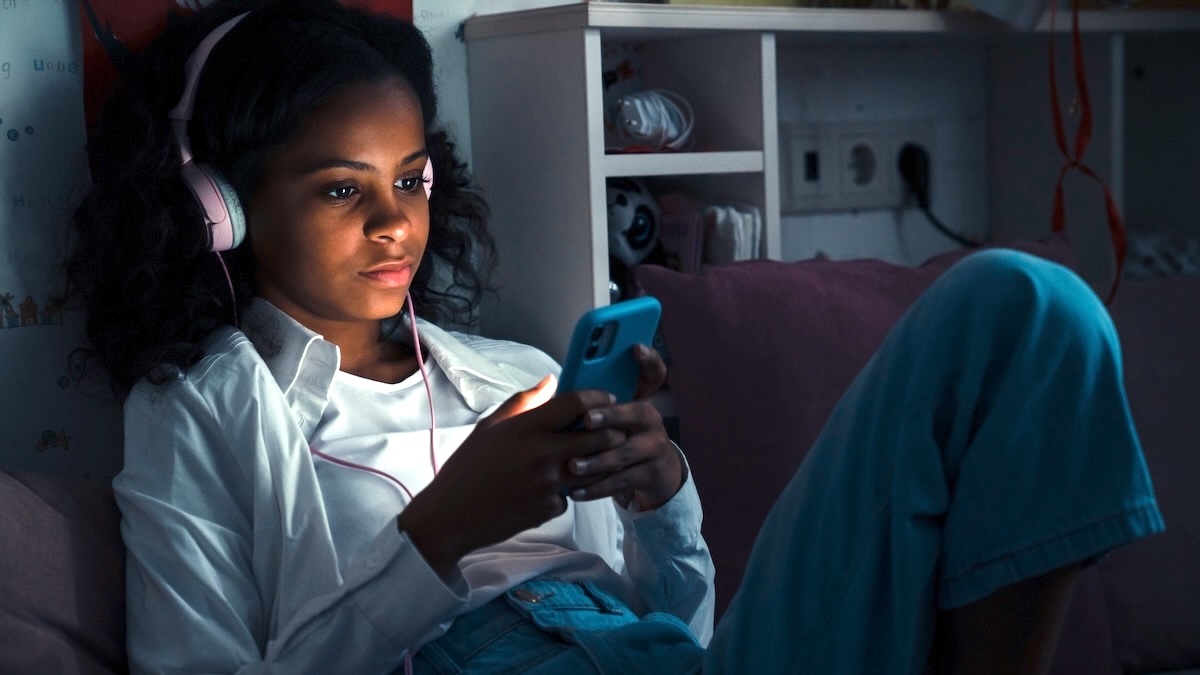
What’s especially interesting is that Jean also suggests not only removing devices from bedrooms, but adding parental controls that make devices inaccessible at night.
This extra layer can help in cases when a device isn’t turned in, and it can also reduce sneaking or late-night use.


Learn more about showing our movies in your school or community!
Join Screenagers filmmaker Delaney Ruston MD for our latest Podcast

Learn more about our Screen-Free Sleep campaign at the website!
Our movie made for parents and educators of younger kids
Learn more about showing our movies in your school or community!
Register your interest in bringing our new movie to your school or community
Jean recommends third-party parental control software, despite wishing it weren’t necessary.
These tools allow parents to more easily block social media, monitor usage, set time limits, and receive reports, offering a clearer picture of what kids are actually encountering online.
No system is perfect, but doing nothing leaves kids exposed to content they are simply not developmentally ready to handle.
Built-in device controls can help, but Jean points out that they’re often difficult to set up, time-consuming, and not comprehensive enough on their own.
Jean shared that she uses Qustodio on her children’s laptops, noting that although no system is perfect, having controls built into the technology itself reduces constant conflict and better protects kids from unrestricted access.
She explained that she tested multiple options and landed on Qustodio because it worked on Mac laptops (many others didn’t), allowed her to block entire categories such as social media, and provided daily reports so she could see what was actually happening.
She also shares that it’s not perfect. Snapchat wasn’t initially categorized as social media, so it had to be manually blocked. Also, time-limit tracking wasn’t always accurate, and there were glitches along with unhelpful customer support.
Still, Jean emphasizes that one initial pushback can prevent hundreds of smaller, ongoing battles later.
If you haven’t listened to the full interview, I encourage you to do so.
And if you’re feeling behind or overwhelmed, please know this: it’s never too late to reset boundaries. You can, in fact, put the genie back in the bottle, and doing so may save countless struggles down the road.
1. Ask this question: True or False? In one study, 20% of teens who have phones were on them between midnight and 5 a.m., some school nights. Answer: False, it was actually almost 60%! (Common Sense Media)
2. What if social and entertainment time on tech wasn’t unlimited, but instead cost a fair amount based on how much someone planned to use? This could discourage overuse among kids and teens and reduce the need for parents to constantly intervene. What do you think? How might this be helpful, and where could it create problems?
Learn more about showing our movies in your school or community!
Join Screenagers filmmaker Delaney Ruston MD for our latest Podcast
Learn more about our Screen-Free Sleep campaign at the website!
Our movie made for parents and educators of younger kids
Join Screenagers filmmaker Delaney Ruston MD for our latest Podcast
Register your interest in bringing our new movie to your school or community
Subscribe to our YouTube Channel! We add new videos regularly and you'll find over 100 videos covering parenting advice, guidance, podcasts, movie clips and more. Here's our most recent:

As we’re about to celebrate 10 years of Screenagers, we want to hear what’s been most helpful and what you’d like to see next.
Please click here to share your thoughts with us in our community survey. It only takes 5–10 minutes, and everyone who completes it will be entered to win one of five $50 Amazon vouchers.
Yesterday on my podcast Parenting in the Screen Age, I released my interview with psychologist and researcher Jean Twenge, author of the new book 10 Rules for Raising Kids in a High-Tech World.
Jean has spent decades studying generational shifts, teen mental health, and screen use, and she is also parenting three teenagers herself.
Our conversation was practical, research-based, and deeply validating for parents who are trying to do the right thing in a very challenging digital environment.
Among many topics, Jean and I talked about parental controls, and today I’m sharing some takeaways in this blog post.
So here are three takeaways:
Jean and I are in full agreement that having devices out of the bedroom is fundamental for our kids’ mental health and a host of other benefits.
In fact, of Jean’s ten rules, this is the number one she is sharing as she promotes her book. Our Screen-Free Sleep campaign is right in line with Jean’s research and recommendations.
What’s especially interesting is that Jean also suggests not only removing devices from bedrooms, but adding parental controls that make devices inaccessible at night.
This extra layer can help in cases when a device isn’t turned in, and it can also reduce sneaking or late-night use.
Jean recommends third-party parental control software, despite wishing it weren’t necessary.
These tools allow parents to more easily block social media, monitor usage, set time limits, and receive reports, offering a clearer picture of what kids are actually encountering online.
No system is perfect, but doing nothing leaves kids exposed to content they are simply not developmentally ready to handle.
Built-in device controls can help, but Jean points out that they’re often difficult to set up, time-consuming, and not comprehensive enough on their own.
Jean shared that she uses Qustodio on her children’s laptops, noting that although no system is perfect, having controls built into the technology itself reduces constant conflict and better protects kids from unrestricted access.
She explained that she tested multiple options and landed on Qustodio because it worked on Mac laptops (many others didn’t), allowed her to block entire categories such as social media, and provided daily reports so she could see what was actually happening.
She also shares that it’s not perfect. Snapchat wasn’t initially categorized as social media, so it had to be manually blocked. Also, time-limit tracking wasn’t always accurate, and there were glitches along with unhelpful customer support.
Still, Jean emphasizes that one initial pushback can prevent hundreds of smaller, ongoing battles later.
If you haven’t listened to the full interview, I encourage you to do so.
And if you’re feeling behind or overwhelmed, please know this: it’s never too late to reset boundaries. You can, in fact, put the genie back in the bottle, and doing so may save countless struggles down the road.
1. Ask this question: True or False? In one study, 20% of teens who have phones were on them between midnight and 5 a.m., some school nights. Answer: False, it was actually almost 60%! (Common Sense Media)
2. What if social and entertainment time on tech wasn’t unlimited, but instead cost a fair amount based on how much someone planned to use? This could discourage overuse among kids and teens and reduce the need for parents to constantly intervene. What do you think? How might this be helpful, and where could it create problems?
Subscribe to our YouTube Channel! We add new videos regularly and you'll find over 100 videos covering parenting advice, guidance, podcasts, movie clips and more. Here's our most recent:
Sign up here to receive the weekly Tech Talk Tuesdays newsletter from Screenagers filmmaker Delaney Ruston MD.
We respect your privacy.
Yesterday on my podcast Parenting in the Screen Age, I released my interview with psychologist and researcher Jean Twenge, author of the new book 10 Rules for Raising Kids in a High-Tech World.
Jean has spent decades studying generational shifts, teen mental health, and screen use, and she is also parenting three teenagers herself.
Our conversation was practical, research-based, and deeply validating for parents who are trying to do the right thing in a very challenging digital environment.
Among many topics, Jean and I talked about parental controls, and today I’m sharing some takeaways in this blog post.
So here are three takeaways:
Jean and I are in full agreement that having devices out of the bedroom is fundamental for our kids’ mental health and a host of other benefits.
In fact, of Jean’s ten rules, this is the number one she is sharing as she promotes her book. Our Screen-Free Sleep campaign is right in line with Jean’s research and recommendations.
What’s especially interesting is that Jean also suggests not only removing devices from bedrooms, but adding parental controls that make devices inaccessible at night.
This extra layer can help in cases when a device isn’t turned in, and it can also reduce sneaking or late-night use.

I've been noticing the ways I can be rude, in person and on my phone. This week I share two recent examples of my own, plus why correcting myself out loud strengthens self-awareness. The talk that follows isn't about your kid. It's about you going first.
READ MORE >
An Oakland library has started lending out sports equipment and games alongside books, so families can borrow gear to use at nearby parks. It is a reminder that borrowing and lending between families is a simple way to fill a summer afternoon without a screen, while quietly modelling generosity and humility. We are out of practice at asking, but the person on the other end is usually glad to help.
READ MORE >
E-readers are convenient, but there are three reasons to lean toward paper books this summer. First, e-readers are screens, and the pull of everything else you could do on one makes it harder to stay immersed. Second, a large meta-analysis found people understand and remember slightly better on paper, especially with longer texts. Third, easy access to endless book samples makes it too tempting to jump ship rather than work through the slower parts, since reading, unlike TikTok, is about delayed gratification.
READ MORE >for more like this, DR. DELANEY RUSTON'S NEW BOOK, PARENTING IN THE SCREEN AGE, IS THE DEFINITIVE GUIDE FOR TODAY’S PARENTS. WITH INSIGHTS ON SCREEN TIME FROM RESEARCHERS, INPUT FROM KIDS & TEENS, THIS BOOK IS PACKED WITH SOLUTIONS FOR HOW TO START AND SUSTAIN PRODUCTIVE FAMILY TALKS ABOUT TECHNOLOGY AND IT’S IMPACT ON OUR MENTAL WELLBEING.