


Emotions are often challenging and confusing, and it truly baffles me why we don’t spend more time in schools and homes discussing this reality with our youth.
In filming Screenagers NEXT CHAPTER, which in part explores the science of emotions, I asked a 7-year-old girl to list all the feelings she could think of. She rattled off her list of words such as “angry,” “sad,” and then she said "bold." Suddenly she stopped, tilted her head and looked at me inquisitively, and asked, "Is bold a feeling?" I did a double-take. Was it? Right then and there, I was reminded of how confusing feelings are, no matter one’s age.
Feelings can be pesky annoyances all the way to fiendish liars. For example, depression can often say lead people to believe lies such as, “You are the only person who has this,” or, “You are a flawed individual, and you better not tell anyone what you are feeling, for they will surely think less of you,” and, “This is your fault, you are good for nothing, and you deserve to feel awful.” There are many more lies depression tells, and anxiety tells quite a few as well.
Throughout my 25 years in medicine, I frequently get reminded of how people’s fear of telling others about the hard emotions they are dealing with means they do not get support and treatment. Many individuals have told me that their emotional challenges began in their teen years, but they never felt okay to talk about it with others. When someone tells me that I am the first person they have confided in about their struggles, my heart always aches, thinking about how they have had to suffer not just from the feelings but from the extra burden of feeling so alone.
Youth have long received all sorts of messages through television shows and movies about what feelings are okay to talk about and which are not. I think about all the shows in which characters are shown displaying anger but rarely express emotions such as guilt, regret, sadness, or fear, to name just a few.
Now, in addition to shows, there is the whole new landscape of social media. Ask any young person if they think there is a lot of filtering of emotions happening on social media apps, and they will give you an impassioned “yes” and tell you that it is not just other people who do this, but that they also partake.
One eighth-grader told me:
"I remember in a time of my life where I wanted people to know that I was happy. Let me just show this to the entire world how happy I am. I would post over and over and over again until I almost believed it myself when I obviously wasn't very happy. But I wanted to be. I wanted to be happy so bad, but I just wasn't."
Meanwhile, we know from research — including brain imaging studies — that all emotions, from the pleasant to the uncomfortable, are experienced at a much higher intensity in the teen years. That is why I think of this time of life as a true emotional landmine. For example, our kids might be a click away from seeing a post that feels like a huge slight and then spiral into intensely painful emotions that can last for weeks. Friends may have posted a picture without her. Maybe she found out people talked about her in a group chat where she didn’t get included.
Here are some ideas for ways parents can help:
Did you, as a parent, in the past or maybe currently, have emotions that you have been hesitant to tell others because your brain has told you a story that probably is not true. For example, when you were young and feeling intensely insecure about your height, did you think that telling someone about your feelings would make you look “weak”? In fact, it would have been quite the opposite; talking about our uncomfortable emotions helps us be less pulled by them and helps us get support, including being introduced to new ways of framing a situation (in fact, Cognitive Behavioral Therapy and therapy, in general, is a lot about helping people to reframe their inner stories to help them suffer less).
Talking about the ways males and females are displayed in shows regarding expectations about emotions is so important. Start with the shows and videos they watch.
I recall how frustrated I was that my son was glued to the series “Arrow,” which is about a superhero — who, of course, never talks about feelings or shows any emotions. The whole idea of a male hero who is stoic beyond belief consumed him.
I worked to stay calm and to ask him questions about his take on the superhero and how he felt about the messages the show was sending. It was useful to ask what he thought a younger kid would learn from it. So, if Chase was 11, I might ask, “What do you think an 8-year-old might take away from the show about what it means to be a real man?”
Media literacy also must include video games that now contribute hours of messaging to our kids and teens about emotionless males. Many people get killed in games, yet no emotions get expressed, and negative consequences do not get shown (other than perhaps losing a round).
Ask your kids questions like how often they think a person’s post is in line with their true emotional life. Teens tell me often that when they are not feeling good, they purposely post photos where they look good in the hopes of getting lots of likes as a way to boost their mood. This strategy may help in some ways, but there can be downsides.
Click here if you are interested in hosting an ONLINE screening for your community.
Click here if you want to attend an ONLINE screening.
Click here for information about Dr. Ruston’s new book, Parenting in the Screen Age
Subscribe to Dr. Ruston’s Screenagers Podcast.


Learn more about showing our movies in your school or community!
Join Screenagers filmmaker Delaney Ruston MD for our latest Podcast

Learn more about our Screen-Free Sleep campaign at the website!
Our movie made for parents and educators of younger kids
Learn more about showing our movies in your school or community!
Register your interest in bringing our new movie to your school or community
Learn more about showing our movies in your school or community!
Join Screenagers filmmaker Delaney Ruston MD for our latest Podcast
Learn more about our Screen-Free Sleep campaign at the website!
Our movie made for parents and educators of younger kids
Join Screenagers filmmaker Delaney Ruston MD for our latest Podcast
Register your interest in bringing our new movie to your school or community

As we’re about to celebrate 10 years of Screenagers, we want to hear what’s been most helpful and what you’d like to see next.
Please click here to share your thoughts with us in our community survey. It only takes 5–10 minutes, and everyone who completes it will be entered to win one of five $50 Amazon vouchers.
Emotions are often challenging and confusing, and it truly baffles me why we don’t spend more time in schools and homes discussing this reality with our youth.
In filming Screenagers NEXT CHAPTER, which in part explores the science of emotions, I asked a 7-year-old girl to list all the feelings she could think of. She rattled off her list of words such as “angry,” “sad,” and then she said "bold." Suddenly she stopped, tilted her head and looked at me inquisitively, and asked, "Is bold a feeling?" I did a double-take. Was it? Right then and there, I was reminded of how confusing feelings are, no matter one’s age.
Feelings can be pesky annoyances all the way to fiendish liars. For example, depression can often say lead people to believe lies such as, “You are the only person who has this,” or, “You are a flawed individual, and you better not tell anyone what you are feeling, for they will surely think less of you,” and, “This is your fault, you are good for nothing, and you deserve to feel awful.” There are many more lies depression tells, and anxiety tells quite a few as well.
Throughout my 25 years in medicine, I frequently get reminded of how people’s fear of telling others about the hard emotions they are dealing with means they do not get support and treatment. Many individuals have told me that their emotional challenges began in their teen years, but they never felt okay to talk about it with others. When someone tells me that I am the first person they have confided in about their struggles, my heart always aches, thinking about how they have had to suffer not just from the feelings but from the extra burden of feeling so alone.
Youth have long received all sorts of messages through television shows and movies about what feelings are okay to talk about and which are not. I think about all the shows in which characters are shown displaying anger but rarely express emotions such as guilt, regret, sadness, or fear, to name just a few.
Now, in addition to shows, there is the whole new landscape of social media. Ask any young person if they think there is a lot of filtering of emotions happening on social media apps, and they will give you an impassioned “yes” and tell you that it is not just other people who do this, but that they also partake.
One eighth-grader told me:
"I remember in a time of my life where I wanted people to know that I was happy. Let me just show this to the entire world how happy I am. I would post over and over and over again until I almost believed it myself when I obviously wasn't very happy. But I wanted to be. I wanted to be happy so bad, but I just wasn't."
Meanwhile, we know from research — including brain imaging studies — that all emotions, from the pleasant to the uncomfortable, are experienced at a much higher intensity in the teen years. That is why I think of this time of life as a true emotional landmine. For example, our kids might be a click away from seeing a post that feels like a huge slight and then spiral into intensely painful emotions that can last for weeks. Friends may have posted a picture without her. Maybe she found out people talked about her in a group chat where she didn’t get included.
Here are some ideas for ways parents can help:
Did you, as a parent, in the past or maybe currently, have emotions that you have been hesitant to tell others because your brain has told you a story that probably is not true. For example, when you were young and feeling intensely insecure about your height, did you think that telling someone about your feelings would make you look “weak”? In fact, it would have been quite the opposite; talking about our uncomfortable emotions helps us be less pulled by them and helps us get support, including being introduced to new ways of framing a situation (in fact, Cognitive Behavioral Therapy and therapy, in general, is a lot about helping people to reframe their inner stories to help them suffer less).
Talking about the ways males and females are displayed in shows regarding expectations about emotions is so important. Start with the shows and videos they watch.
I recall how frustrated I was that my son was glued to the series “Arrow,” which is about a superhero — who, of course, never talks about feelings or shows any emotions. The whole idea of a male hero who is stoic beyond belief consumed him.
I worked to stay calm and to ask him questions about his take on the superhero and how he felt about the messages the show was sending. It was useful to ask what he thought a younger kid would learn from it. So, if Chase was 11, I might ask, “What do you think an 8-year-old might take away from the show about what it means to be a real man?”
Media literacy also must include video games that now contribute hours of messaging to our kids and teens about emotionless males. Many people get killed in games, yet no emotions get expressed, and negative consequences do not get shown (other than perhaps losing a round).
Ask your kids questions like how often they think a person’s post is in line with their true emotional life. Teens tell me often that when they are not feeling good, they purposely post photos where they look good in the hopes of getting lots of likes as a way to boost their mood. This strategy may help in some ways, but there can be downsides.
Click here if you are interested in hosting an ONLINE screening for your community.
Click here if you want to attend an ONLINE screening.
Click here for information about Dr. Ruston’s new book, Parenting in the Screen Age
Subscribe to Dr. Ruston’s Screenagers Podcast.
Sign up here to receive the weekly Tech Talk Tuesdays newsletter from Screenagers filmmaker Delaney Ruston MD.
We respect your privacy.
Emotions are often challenging and confusing, and it truly baffles me why we don’t spend more time in schools and homes discussing this reality with our youth.
In filming Screenagers NEXT CHAPTER, which in part explores the science of emotions, I asked a 7-year-old girl to list all the feelings she could think of. She rattled off her list of words such as “angry,” “sad,” and then she said "bold." Suddenly she stopped, tilted her head and looked at me inquisitively, and asked, "Is bold a feeling?" I did a double-take. Was it? Right then and there, I was reminded of how confusing feelings are, no matter one’s age.
Feelings can be pesky annoyances all the way to fiendish liars. For example, depression can often say lead people to believe lies such as, “You are the only person who has this,” or, “You are a flawed individual, and you better not tell anyone what you are feeling, for they will surely think less of you,” and, “This is your fault, you are good for nothing, and you deserve to feel awful.” There are many more lies depression tells, and anxiety tells quite a few as well.
Throughout my 25 years in medicine, I frequently get reminded of how people’s fear of telling others about the hard emotions they are dealing with means they do not get support and treatment. Many individuals have told me that their emotional challenges began in their teen years, but they never felt okay to talk about it with others. When someone tells me that I am the first person they have confided in about their struggles, my heart always aches, thinking about how they have had to suffer not just from the feelings but from the extra burden of feeling so alone.
Youth have long received all sorts of messages through television shows and movies about what feelings are okay to talk about and which are not. I think about all the shows in which characters are shown displaying anger but rarely express emotions such as guilt, regret, sadness, or fear, to name just a few.
Now, in addition to shows, there is the whole new landscape of social media. Ask any young person if they think there is a lot of filtering of emotions happening on social media apps, and they will give you an impassioned “yes” and tell you that it is not just other people who do this, but that they also partake.
One eighth-grader told me:
"I remember in a time of my life where I wanted people to know that I was happy. Let me just show this to the entire world how happy I am. I would post over and over and over again until I almost believed it myself when I obviously wasn't very happy. But I wanted to be. I wanted to be happy so bad, but I just wasn't."
Meanwhile, we know from research — including brain imaging studies — that all emotions, from the pleasant to the uncomfortable, are experienced at a much higher intensity in the teen years. That is why I think of this time of life as a true emotional landmine. For example, our kids might be a click away from seeing a post that feels like a huge slight and then spiral into intensely painful emotions that can last for weeks. Friends may have posted a picture without her. Maybe she found out people talked about her in a group chat where she didn’t get included.
Here are some ideas for ways parents can help:
Did you, as a parent, in the past or maybe currently, have emotions that you have been hesitant to tell others because your brain has told you a story that probably is not true. For example, when you were young and feeling intensely insecure about your height, did you think that telling someone about your feelings would make you look “weak”? In fact, it would have been quite the opposite; talking about our uncomfortable emotions helps us be less pulled by them and helps us get support, including being introduced to new ways of framing a situation (in fact, Cognitive Behavioral Therapy and therapy, in general, is a lot about helping people to reframe their inner stories to help them suffer less).
Talking about the ways males and females are displayed in shows regarding expectations about emotions is so important. Start with the shows and videos they watch.
I recall how frustrated I was that my son was glued to the series “Arrow,” which is about a superhero — who, of course, never talks about feelings or shows any emotions. The whole idea of a male hero who is stoic beyond belief consumed him.
I worked to stay calm and to ask him questions about his take on the superhero and how he felt about the messages the show was sending. It was useful to ask what he thought a younger kid would learn from it. So, if Chase was 11, I might ask, “What do you think an 8-year-old might take away from the show about what it means to be a real man?”
Media literacy also must include video games that now contribute hours of messaging to our kids and teens about emotionless males. Many people get killed in games, yet no emotions get expressed, and negative consequences do not get shown (other than perhaps losing a round).
Ask your kids questions like how often they think a person’s post is in line with their true emotional life. Teens tell me often that when they are not feeling good, they purposely post photos where they look good in the hopes of getting lots of likes as a way to boost their mood. This strategy may help in some ways, but there can be downsides.
Click here if you are interested in hosting an ONLINE screening for your community.
Click here if you want to attend an ONLINE screening.
Click here for information about Dr. Ruston’s new book, Parenting in the Screen Age
Subscribe to Dr. Ruston’s Screenagers Podcast.
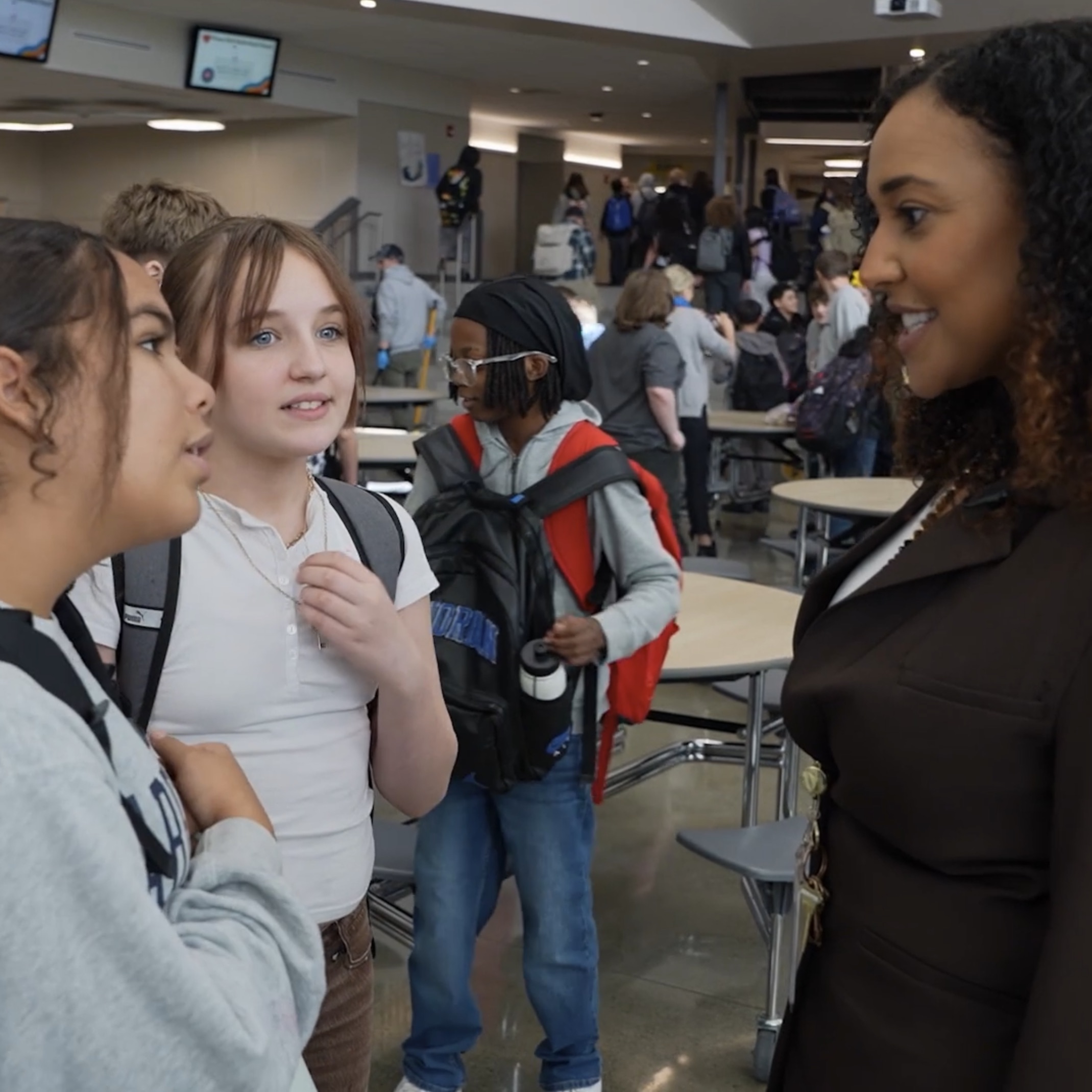
Many kids have nothing to do after school, so they go home to screens and, increasingly, AI chatbots. Spokane Public Schools tackled this by hiring "Engagement Navigators" who proactively find these students and help them get involved, a program we feature in Screenagers: Generation AI. I also share a patient's story, advice for parents whose teens refuse activities, and ways to help other kids get involved.
READ MORE >
Tech journalist Manoush Zomorodi recently shared with Delaney the story behind her new book Body Electric and the citizen science experiment she ran with NPR and Dr. Keith Diaz of Columbia. The 20,000-person study found that five minutes of movement for every thirty minutes of sitting dropped fatigue by up to 28%, lowered blood glucose and blood pressure, and improved focus and mood. Plus, five practical reframes for talking to kids about movement without the eye rolls.
READ MORE >
for more like this, DR. DELANEY RUSTON'S NEW BOOK, PARENTING IN THE SCREEN AGE, IS THE DEFINITIVE GUIDE FOR TODAY’S PARENTS. WITH INSIGHTS ON SCREEN TIME FROM RESEARCHERS, INPUT FROM KIDS & TEENS, THIS BOOK IS PACKED WITH SOLUTIONS FOR HOW TO START AND SUSTAIN PRODUCTIVE FAMILY TALKS ABOUT TECHNOLOGY AND IT’S IMPACT ON OUR MENTAL WELLBEING.