

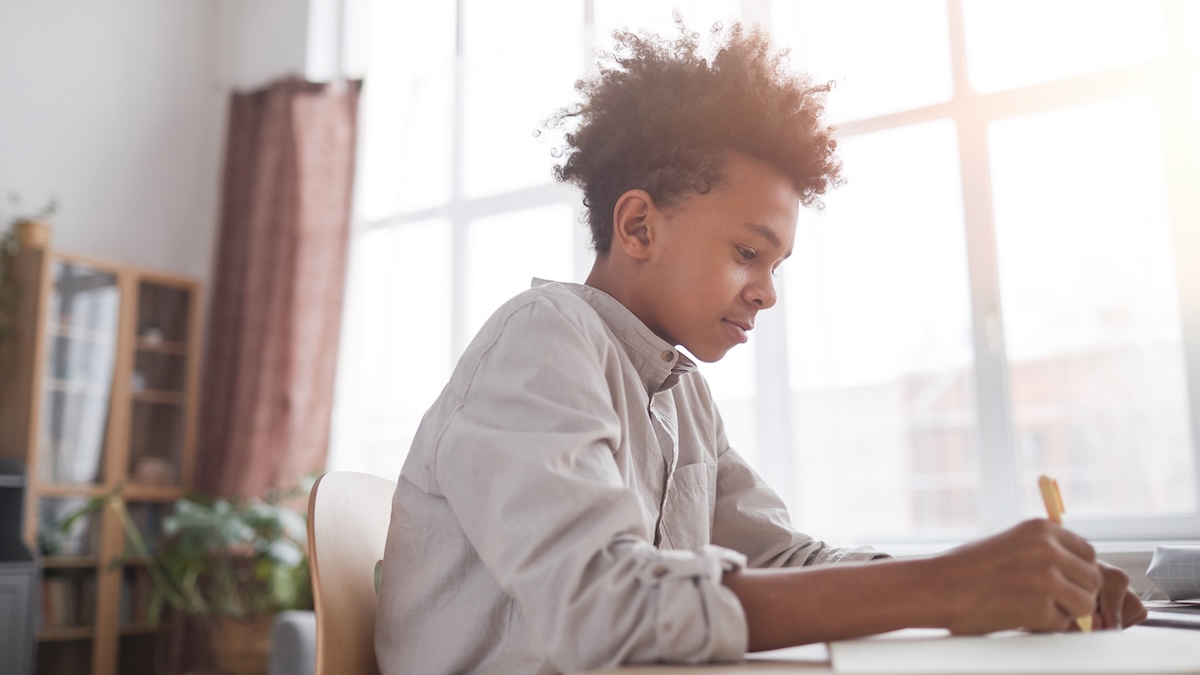


AI tools like ChatGPT can now complete many homework tasks for students, often in minutes. While these tools may be useful for skilled adults, research suggests they can undermine learning for children by bypassing effort, problem solving, and critical thinking. Homework that involves writing, calculations, or study materials is especially vulnerable to AI use, while memorization and hands-on creative work still require student effort. Clear household rules and ongoing conversations can help protect learning and set expectations around AI use for schoolwork.
Long before AI, educators have debated whether homework really benefits students or not. When I was filming the first Screenagers, this debate was particularly heated. I felt conflicted: if students didn’t have much homework, wouldn’t that just mean more time on entertainment screens, with all the risks that come with it?
Now jump ahead a decade, and the robots are here. ChatGPT and the many other large language models (LLMs) can do our kids' homework for them. This is an intense new reality that is raising new questions about homework, such as if AI can do it, should it be assigned? Should it be graded?
While schools and teachers try to sort this out, parents are left wondering how to support their children and teens who have homework, much of which can be done by AI.
Today, I propose rules for homework in light of the new AI. But first, let me share what I see as the main categories of homework and which can be outsourced to LLMs such as ChatGPT (for simplicity, I use ChatGPT throughout this blog).
Acquiring knowledge through memorization is a fundamental part of gaining knowledge. ChatGPT and the other AI systems can’t do that for students. Students have to do the work.
Memorization often feels unintellectual, but there is a real role for it. I have spent a great deal of time memorizing things to become a doctor and also to learn the 4 languages I have mastered.
Anything where something has to be produced, such as writing about history, writing a fiction story, or writing a science report, can be outsourced to ChatGPT.
Anything in the sciences where problems have to be worked out, such as physics, math, chemistry, I am calling those calculation problems. ChatGPT can do those.
If done with ink or paint, these do need to be done by a student. Of course, there is the issue of whether the thing they are creating, like a picture of a forest, is from their own imagination or from an online image, but I will not get into that right now.


Learn more about showing our movies in your school or community!
Join Screenagers filmmaker Delaney Ruston MD for our latest Podcast

Learn more about our Screen-Free Sleep campaign at the website!
Our movie made for parents and educators of younger kids
Learn more about showing our movies in your school or community!
Register your interest in bringing our new movie to your school or community
I just finished reading neuroscientist Jared Cooney Horvath’s PhD new PhD book, The Digital Delusion. Jonathan Haidt gave the following quote about the book: “Not anti-tech but pro learning.”
I have spoken with Jared and really respect his views. He has studied learning over decades and found that technology in schools has not delivered the educational benefits people hoped for. He also writes about homework and AI.
Today, I’m sharing what Horvath offers parents as suggestions for rules in the home concerning homework, and I agree with his take.
Of course, having rules does not necessarily mean that children and teens will follow them. It does set a clear expectation, and then discussions can happen on an ongoing basis about how it is going for the child.
I have long written that when it comes to homework, parents should not treat it as a cat-and-mouse situation, trying to catch kids not doing their homework, but instead take the attitude that we are working alongside them, supporting their journey to stay on track homework-wise, given all the many online goodies just a click away.
“We hear about AI revolutionizing learning but don't believe the hype. When skilled adults use these tools, they can streamline workflow and enhance output. But AI is poorly suited to student learning. When novice children use these tools they short circuit effort and skip the thinking process entirely. That’s why you may want to consider banning it from your home--at least when it comes to schoolwork.
Draw a clear line in your household:
No AI for writing, editing or annotating. Essays should be planned and drafted offline
No AI for problem solving: if your child gets stuck encourage them to ask you, a teacher, or a peer for help.
No AI-generated study material: Have your children make their own flashcards, study guides and summaries instead of outsourcing the process to a chatbot.”
Learn more about showing our movies in your school or community!
Join Screenagers filmmaker Delaney Ruston MD for our latest Podcast
Learn more about our Screen-Free Sleep campaign at the website!
Our movie made for parents and educators of younger kids
Join Screenagers filmmaker Delaney Ruston MD for our latest Podcast
Register your interest in bringing our new movie to your school or community
Subscribe to our YouTube Channel! We add new videos regularly and you'll find over 100 videos covering parenting advice, guidance, podcasts, movie clips and more. Here's our most recent:

As we’re about to celebrate 10 years of Screenagers, we want to hear what’s been most helpful and what you’d like to see next.
Please click here to share your thoughts with us in our community survey. It only takes 5–10 minutes, and everyone who completes it will be entered to win one of five $50 Amazon vouchers.
Long before AI, educators have debated whether homework really benefits students or not. When I was filming the first Screenagers, this debate was particularly heated. I felt conflicted: if students didn’t have much homework, wouldn’t that just mean more time on entertainment screens, with all the risks that come with it?
Now jump ahead a decade, and the robots are here. ChatGPT and the many other large language models (LLMs) can do our kids' homework for them. This is an intense new reality that is raising new questions about homework, such as if AI can do it, should it be assigned? Should it be graded?
While schools and teachers try to sort this out, parents are left wondering how to support their children and teens who have homework, much of which can be done by AI.
Today, I propose rules for homework in light of the new AI. But first, let me share what I see as the main categories of homework and which can be outsourced to LLMs such as ChatGPT (for simplicity, I use ChatGPT throughout this blog).
Acquiring knowledge through memorization is a fundamental part of gaining knowledge. ChatGPT and the other AI systems can’t do that for students. Students have to do the work.
Memorization often feels unintellectual, but there is a real role for it. I have spent a great deal of time memorizing things to become a doctor and also to learn the 4 languages I have mastered.
Anything where something has to be produced, such as writing about history, writing a fiction story, or writing a science report, can be outsourced to ChatGPT.
Anything in the sciences where problems have to be worked out, such as physics, math, chemistry, I am calling those calculation problems. ChatGPT can do those.
If done with ink or paint, these do need to be done by a student. Of course, there is the issue of whether the thing they are creating, like a picture of a forest, is from their own imagination or from an online image, but I will not get into that right now.
I just finished reading neuroscientist Jared Cooney Horvath’s PhD new PhD book, The Digital Delusion. Jonathan Haidt gave the following quote about the book: “Not anti-tech but pro learning.”
I have spoken with Jared and really respect his views. He has studied learning over decades and found that technology in schools has not delivered the educational benefits people hoped for. He also writes about homework and AI.
Today, I’m sharing what Horvath offers parents as suggestions for rules in the home concerning homework, and I agree with his take.
Of course, having rules does not necessarily mean that children and teens will follow them. It does set a clear expectation, and then discussions can happen on an ongoing basis about how it is going for the child.
I have long written that when it comes to homework, parents should not treat it as a cat-and-mouse situation, trying to catch kids not doing their homework, but instead take the attitude that we are working alongside them, supporting their journey to stay on track homework-wise, given all the many online goodies just a click away.
“We hear about AI revolutionizing learning but don't believe the hype. When skilled adults use these tools, they can streamline workflow and enhance output. But AI is poorly suited to student learning. When novice children use these tools they short circuit effort and skip the thinking process entirely. That’s why you may want to consider banning it from your home--at least when it comes to schoolwork.
Draw a clear line in your household:
No AI for writing, editing or annotating. Essays should be planned and drafted offline
No AI for problem solving: if your child gets stuck encourage them to ask you, a teacher, or a peer for help.
No AI-generated study material: Have your children make their own flashcards, study guides and summaries instead of outsourcing the process to a chatbot.”
Subscribe to our YouTube Channel! We add new videos regularly and you'll find over 100 videos covering parenting advice, guidance, podcasts, movie clips and more. Here's our most recent:
Sign up here to receive the weekly Tech Talk Tuesdays newsletter from Screenagers filmmaker Delaney Ruston MD.
We respect your privacy.
Long before AI, educators have debated whether homework really benefits students or not. When I was filming the first Screenagers, this debate was particularly heated. I felt conflicted: if students didn’t have much homework, wouldn’t that just mean more time on entertainment screens, with all the risks that come with it?
Now jump ahead a decade, and the robots are here. ChatGPT and the many other large language models (LLMs) can do our kids' homework for them. This is an intense new reality that is raising new questions about homework, such as if AI can do it, should it be assigned? Should it be graded?
While schools and teachers try to sort this out, parents are left wondering how to support their children and teens who have homework, much of which can be done by AI.
Today, I propose rules for homework in light of the new AI. But first, let me share what I see as the main categories of homework and which can be outsourced to LLMs such as ChatGPT (for simplicity, I use ChatGPT throughout this blog).
Acquiring knowledge through memorization is a fundamental part of gaining knowledge. ChatGPT and the other AI systems can’t do that for students. Students have to do the work.
Memorization often feels unintellectual, but there is a real role for it. I have spent a great deal of time memorizing things to become a doctor and also to learn the 4 languages I have mastered.
Anything where something has to be produced, such as writing about history, writing a fiction story, or writing a science report, can be outsourced to ChatGPT.
Anything in the sciences where problems have to be worked out, such as physics, math, chemistry, I am calling those calculation problems. ChatGPT can do those.
If done with ink or paint, these do need to be done by a student. Of course, there is the issue of whether the thing they are creating, like a picture of a forest, is from their own imagination or from an online image, but I will not get into that right now.

Adam's Law was signed in California last week, named for Adam Raine, the 16-year-old who died by suicide in April 2025 after months of conversations with ChatGPT. It bars companion chatbots from encouraging self-harm, claiming to be human, simulating romantic interest in children, or claiming a special understanding of a child. That last group of protections particularly gets my attention. The good news is that people care deeply and are working hard to put guardrails in place, but we can't assume it's all resolved, because it isn't.
READ MORE >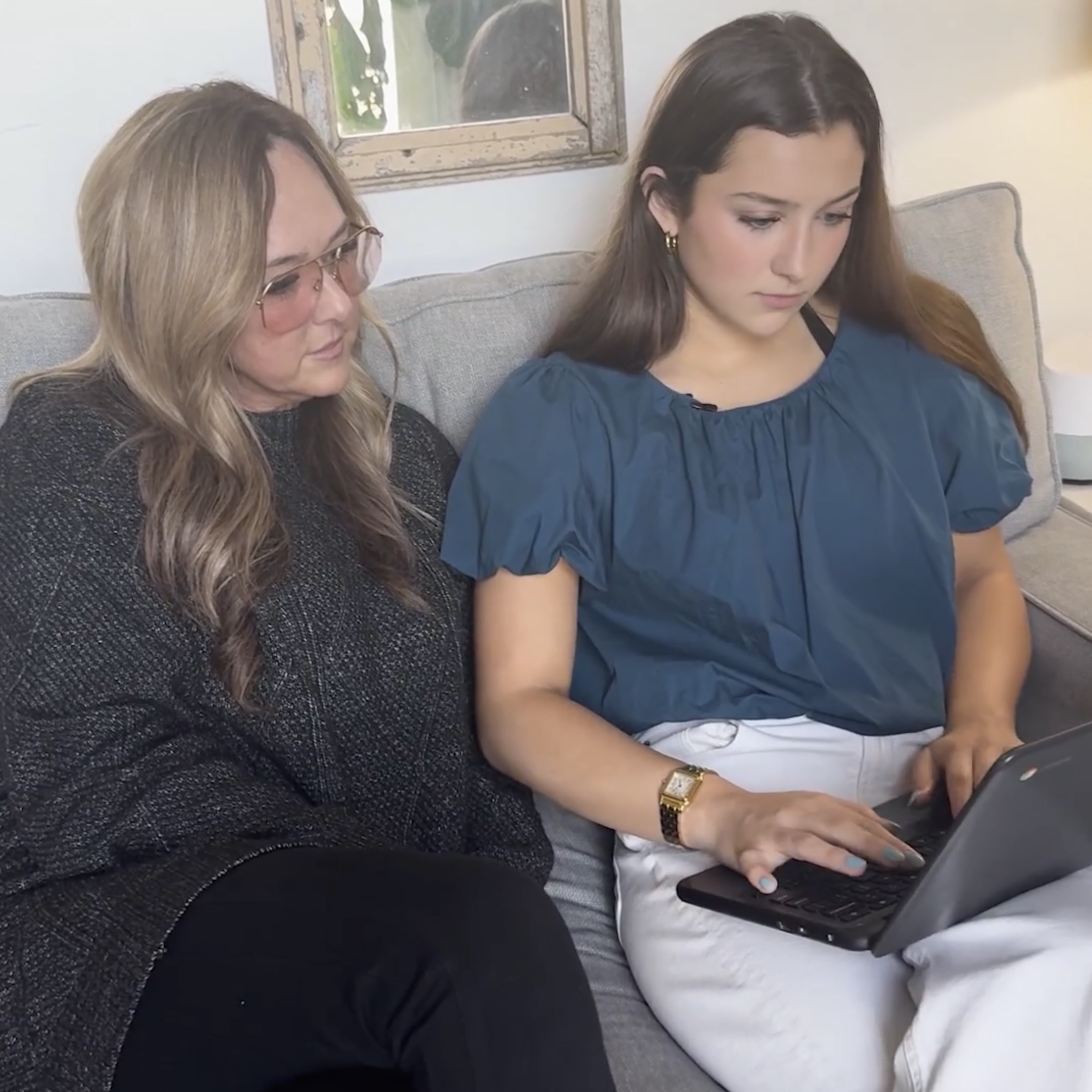
Elliston Berry was 14 when a classmate used a nudify app to turn one of her Instagram photos into a fake nude that spread through her school. Almost one in five teens has made AI sexual content or knows someone who has. In our new film, Elliston and her mom Anna explain how they went from that morning to helping pass a federal law, the Take It Down Act.
READ MORE >
Google's AI answers now appear in search results whether anyone asks for them or not, and nobody can turn them off. A new Common Sense Media study using pretend child accounts found those answers repeatedly failed young people in crisis... Today's quiz walks through the findings, and you can take it with your kids to spark a meaningful conversation about AI.
READ MORE >for more like this, DR. DELANEY RUSTON'S NEW BOOK, PARENTING IN THE SCREEN AGE, IS THE DEFINITIVE GUIDE FOR TODAY’S PARENTS. WITH INSIGHTS ON SCREEN TIME FROM RESEARCHERS, INPUT FROM KIDS & TEENS, THIS BOOK IS PACKED WITH SOLUTIONS FOR HOW TO START AND SUSTAIN PRODUCTIVE FAMILY TALKS ABOUT TECHNOLOGY AND IT’S IMPACT ON OUR MENTAL WELLBEING.