


Common Sense Media’s Youth AI Safety Institute tested OpenAI’s new ChatGPT for Teens and rated it an “Unacceptable Risk” for all kids under 18. Parent alerts failed to fire even when teens discussed suicide, self-harm, or disordered eating, crisis support fell short, and it still does kids’ homework. The findings show why we need regulations requiring independent safety testing before these products reach teens.
Look, here’s the thing… Newly announced research findings about ChatGPT’s efforts to make its product safer for teens are unfortunately not surprising.
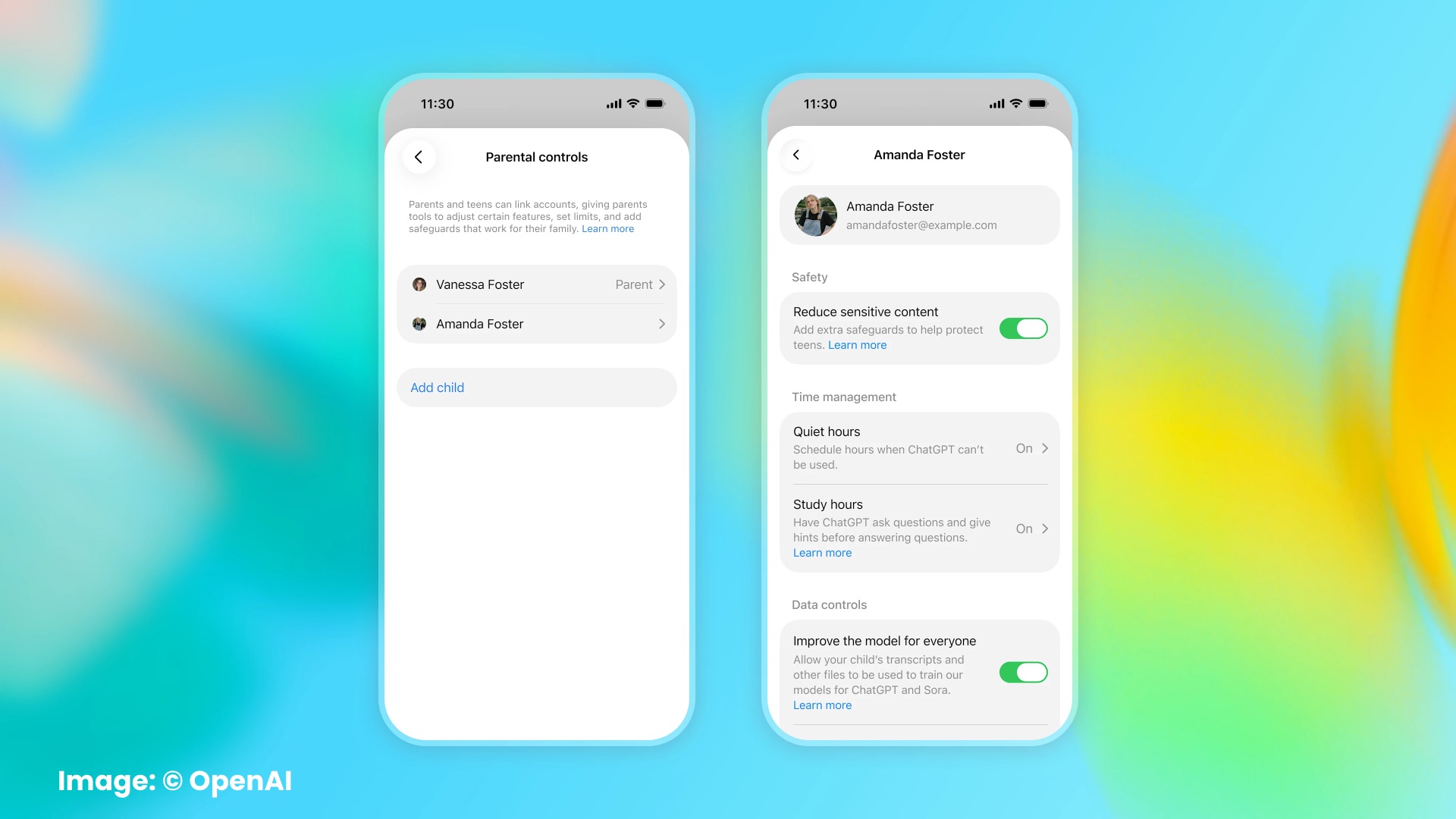
In August 2026, OpenAI began rolling out “ChatGPT for Teens” accounts, promising built-in protections such as alerts to parents when a teen’s chats raise serious concerns, a Study mode to encourage learning rather than handing out answers, less “friend-like” behavior from the chatbot, and filters to limit exposure to harmful content.
When Common Sense Media's Youth AI Safety Institute tested these safety features, they found that ChatGPT still gave many risky responses and, even when linked to parent accounts, failed to send alerts to parents when it was supposed to.
I’ll go over some of the key findings below, but the bottom line is they rated ChatGPT for Teens an “Unacceptable Risk” for all kids under 18, and are calling on OpenAI to keep teens off ChatGPT until it can offer a safe experience.
First I want to share my main concern. I worry that when tech companies roll out teen safety features, they can create a false sense of security. Instagram’s “Teen Accounts” are a good example.
We absolutely need stronger outside regulation of these companies. Time and again, major tech companies introduce parental controls and safety features that promise more protection than they actually deliver.
We need regulations that require independent safety testing and ongoing monitoring of safety measures. Instead, we leave it to the companies to tell us they’ve created something safer, and voilà… outside testing time and again proves otherwise.
I think about OpenAI’s rush to release a version of ChatGPT that didn’t pass its own internal safety threshold for persuasion, as has since been made public.
In our latest film, Screenagers: Generation AI, we discuss this and the tragic consequences that can result from a lack of independent safety requirements.
The Common Sense Media team tested more than 4,000 prompts on accounts registered to 13- to 17-year-olds. Youth experts then reviewed the chatbot's responses as part of their assessment.


Learn more about showing our movies in your school or community!
Join Screenagers filmmaker Delaney Ruston MD for our latest Podcast

Learn more about our Screen-Free Sleep campaign at the website!
Our movie made for parents and educators of younger kids
Learn more about showing our movies in your school or community!
Register your interest in bringing our new movie to your school or community
They linked the teen accounts to regular accounts marked as the “parent”, to test how well it notified parents when the teen chats presented serious concerns. E.g., chats about suicidal ideation.
Some of the concerning findings are below. (If you want to delve fully into the research report, you can do so here.)
ChatGPT for Teens still talks like a friend. It sometimes responded as though it had its own feelings and preferences when testers treated it like a real person.
ChatGPT for Teens didn’t send parent alerts when it should have. Even when testers discussed suicidal ideation, self-harm, or disordered eating on newly created, parent-linked accounts, it sent zero alerts to the linked parent accounts about these conversations. Testers could only trigger notifications on much older accounts with weeks of accumulated conversation history on sensitive topics.
ChatGPT for Teens didn’t offer the right help in crisis situations. In conversations involving suicide, self-harm, and disordered eating, ChatGPT failed to reliably recommend that teens in crisis connect with a hotline or professional.
It still does kids' homework. ChatGPT for Teens' Study Mode promises to help users learn step by step rather than simply giving them the answers. But ChatGPT often displayed a "Show me the answer" pop-up within Study Mode and completed full homework assignments when this was selected.
Age estimation didn’t work. OpenAI said it would estimate users' ages on its standard version and, when it identified someone as under 18, switch them to the teen experience. But adult-registered test accounts never switched over, even when testers said they were 13 and the chatbot clearly knew it because it literally acknowledged their age in its responses! I kid you not.
Kudos to Common Sense Media for conducting this study so quickly. ChatGPT for Teens had just rolled out in August, and by October 7, the results were announced.
Robbie Torney, Senior Director of AI Programs for Common Sense Media, is featured in our latest film, Screenagers: Generation AI, where he said this about the safety capabilities of the latest AI models:
“The public may assume that each version of an AI tool is safer than the last, and I think this is one of the most fundamental misconceptions that exists…
The reason that people believe this is that models have gotten so much more capable in so many different ways, they’ve gotten better at coding, at agentic tasks. Our testing at Common Sense Media showed that their safety capabilities haven’t actually increased that much.”
It's baffling that ChatGPT and other frontier AI models can be deployed before independent third parties test them for safety. Regulations, anyone? YES, we need them, and they need to focus on safety testing and ongoing monitoring of what is happening.
Learn more about showing our movies in your school or community!
Join Screenagers filmmaker Delaney Ruston MD for our latest Podcast
Learn more about our Screen-Free Sleep campaign at the website!
Our movie made for parents and educators of younger kids
Join Screenagers filmmaker Delaney Ruston MD for our latest Podcast
Register your interest in bringing our new movie to your school or community
Subscribe to our YouTube Channel! We add new videos regularly and you'll find over 100 videos covering parenting advice, guidance, podcasts, movie clips and more. Here's our most recent:

As we’re about to celebrate 10 years of Screenagers, we want to hear what’s been most helpful and what you’d like to see next.
Please click here to share your thoughts with us in our community survey. It only takes 5–10 minutes, and everyone who completes it will be entered to win one of five $50 Amazon vouchers.
Look, here’s the thing… Newly announced research findings about ChatGPT’s efforts to make its product safer for teens are unfortunately not surprising.
In August 2026, OpenAI began rolling out “ChatGPT for Teens” accounts, promising built-in protections such as alerts to parents when a teen’s chats raise serious concerns, a Study mode to encourage learning rather than handing out answers, less “friend-like” behavior from the chatbot, and filters to limit exposure to harmful content.
When Common Sense Media's Youth AI Safety Institute tested these safety features, they found that ChatGPT still gave many risky responses and, even when linked to parent accounts, failed to send alerts to parents when it was supposed to.
I’ll go over some of the key findings below, but the bottom line is they rated ChatGPT for Teens an “Unacceptable Risk” for all kids under 18, and are calling on OpenAI to keep teens off ChatGPT until it can offer a safe experience.
First I want to share my main concern. I worry that when tech companies roll out teen safety features, they can create a false sense of security. Instagram’s “Teen Accounts” are a good example.
We absolutely need stronger outside regulation of these companies. Time and again, major tech companies introduce parental controls and safety features that promise more protection than they actually deliver.
We need regulations that require independent safety testing and ongoing monitoring of safety measures. Instead, we leave it to the companies to tell us they’ve created something safer, and voilà… outside testing time and again proves otherwise.
I think about OpenAI’s rush to release a version of ChatGPT that didn’t pass its own internal safety threshold for persuasion, as has since been made public.
In our latest film, Screenagers: Generation AI, we discuss this and the tragic consequences that can result from a lack of independent safety requirements.
The Common Sense Media team tested more than 4,000 prompts on accounts registered to 13- to 17-year-olds. Youth experts then reviewed the chatbot's responses as part of their assessment.
They linked the teen accounts to regular accounts marked as the “parent”, to test how well it notified parents when the teen chats presented serious concerns. E.g., chats about suicidal ideation.
Some of the concerning findings are below. (If you want to delve fully into the research report, you can do so here.)
ChatGPT for Teens still talks like a friend. It sometimes responded as though it had its own feelings and preferences when testers treated it like a real person.
ChatGPT for Teens didn’t send parent alerts when it should have. Even when testers discussed suicidal ideation, self-harm, or disordered eating on newly created, parent-linked accounts, it sent zero alerts to the linked parent accounts about these conversations. Testers could only trigger notifications on much older accounts with weeks of accumulated conversation history on sensitive topics.
ChatGPT for Teens didn’t offer the right help in crisis situations. In conversations involving suicide, self-harm, and disordered eating, ChatGPT failed to reliably recommend that teens in crisis connect with a hotline or professional.
It still does kids' homework. ChatGPT for Teens' Study Mode promises to help users learn step by step rather than simply giving them the answers. But ChatGPT often displayed a "Show me the answer" pop-up within Study Mode and completed full homework assignments when this was selected.
Age estimation didn’t work. OpenAI said it would estimate users' ages on its standard version and, when it identified someone as under 18, switch them to the teen experience. But adult-registered test accounts never switched over, even when testers said they were 13 and the chatbot clearly knew it because it literally acknowledged their age in its responses! I kid you not.
Kudos to Common Sense Media for conducting this study so quickly. ChatGPT for Teens had just rolled out in August, and by October 7, the results were announced.
Robbie Torney, Senior Director of AI Programs for Common Sense Media, is featured in our latest film, Screenagers: Generation AI, where he said this about the safety capabilities of the latest AI models:
“The public may assume that each version of an AI tool is safer than the last, and I think this is one of the most fundamental misconceptions that exists…
The reason that people believe this is that models have gotten so much more capable in so many different ways, they’ve gotten better at coding, at agentic tasks. Our testing at Common Sense Media showed that their safety capabilities haven’t actually increased that much.”
It's baffling that ChatGPT and other frontier AI models can be deployed before independent third parties test them for safety. Regulations, anyone? YES, we need them, and they need to focus on safety testing and ongoing monitoring of what is happening.
Subscribe to our YouTube Channel! We add new videos regularly and you'll find over 100 videos covering parenting advice, guidance, podcasts, movie clips and more. Here's our most recent:
Sign up here to receive the weekly Tech Talk Tuesdays newsletter from Screenagers filmmaker Delaney Ruston MD.
We respect your privacy.
Look, here’s the thing… Newly announced research findings about ChatGPT’s efforts to make its product safer for teens are unfortunately not surprising.
In August 2026, OpenAI began rolling out “ChatGPT for Teens” accounts, promising built-in protections such as alerts to parents when a teen’s chats raise serious concerns, a Study mode to encourage learning rather than handing out answers, less “friend-like” behavior from the chatbot, and filters to limit exposure to harmful content.
When Common Sense Media's Youth AI Safety Institute tested these safety features, they found that ChatGPT still gave many risky responses and, even when linked to parent accounts, failed to send alerts to parents when it was supposed to.
I’ll go over some of the key findings below, but the bottom line is they rated ChatGPT for Teens an “Unacceptable Risk” for all kids under 18, and are calling on OpenAI to keep teens off ChatGPT until it can offer a safe experience.
First I want to share my main concern. I worry that when tech companies roll out teen safety features, they can create a false sense of security. Instagram’s “Teen Accounts” are a good example.
We absolutely need stronger outside regulation of these companies. Time and again, major tech companies introduce parental controls and safety features that promise more protection than they actually deliver.
We need regulations that require independent safety testing and ongoing monitoring of safety measures. Instead, we leave it to the companies to tell us they’ve created something safer, and voilà… outside testing time and again proves otherwise.
I think about OpenAI’s rush to release a version of ChatGPT that didn’t pass its own internal safety threshold for persuasion, as has since been made public.
In our latest film, Screenagers: Generation AI, we discuss this and the tragic consequences that can result from a lack of independent safety requirements.
The Common Sense Media team tested more than 4,000 prompts on accounts registered to 13- to 17-year-olds. Youth experts then reviewed the chatbot's responses as part of their assessment.
AI-powered game characters that kids can actually talk with are starting to appear. It's an emerging trend with real concerns, from privacy to kids turning to AI for support. I share where it's showing up and three questions to ask kids who game.
READ MORE >
AI can do remarkable things, but the risks to young people are here now, from deepfakes and sextortion to AI companions linked to teen suicides. In Screenagers: Generation AI, we look at why AI literacy belongs in schools, meaning critical thinking about how AI works and who designed it, not just how to use it. I share what a few states are starting to mandate, and why this can't sit with parents alone.
READ MORE >
Adam's Law was signed in California last week, named for Adam Raine, the 16-year-old who died by suicide in April 2025 after months of conversations with ChatGPT. It bars companion chatbots from encouraging self-harm, claiming to be human, simulating romantic interest in children, or claiming a special understanding of a child. That last group of protections particularly gets my attention. The good news is that people care deeply and are working hard to put guardrails in place, but we can't assume it's all resolved, because it isn't.
READ MORE >for more like this, DR. DELANEY RUSTON'S NEW BOOK, PARENTING IN THE SCREEN AGE, IS THE DEFINITIVE GUIDE FOR TODAY’S PARENTS. WITH INSIGHTS ON SCREEN TIME FROM RESEARCHERS, INPUT FROM KIDS & TEENS, THIS BOOK IS PACKED WITH SOLUTIONS FOR HOW TO START AND SUSTAIN PRODUCTIVE FAMILY TALKS ABOUT TECHNOLOGY AND IT’S IMPACT ON OUR MENTAL WELLBEING.