

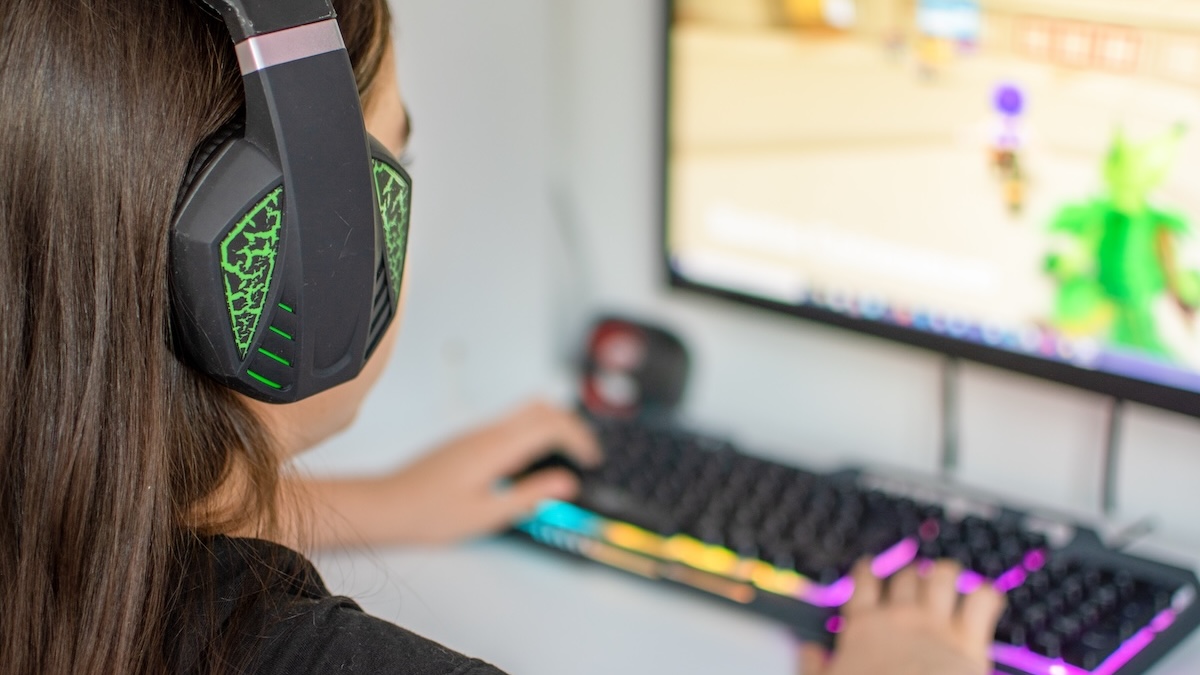


AI-powered game characters that kids can actually talk with are starting to appear. It's an emerging trend with real concerns, from privacy to kids turning to AI for support. I share where it's showing up and three questions to ask kids who game.
This week, to turn things on their head (since AI is frankly doing that to all of us now), I’m starting this blog with questions to ask kids and teens in your life, rather than saving the questions for the end, as I usually do.
I am doing this because it helps frame what to be thinking about as you read this blog.
3 Questions to ask any child or teen who ever plays video games:
Games have always had computer-controlled characters: the ghosts in Pac-Man, the rival racers you try to beat in Mario Kart, the shopkeeper who repeats the same three lines. Gamers have called all of this "AI" for decades.
What’s new is generative AI, the technology behind tools like ChatGPT, powering characters that can hold a real conversation. Instead of choosing from scripted answers, a player can say almost anything, and the character responds, sometimes out loud.
This isn’t everywhere yet, and many kids will have never met one of these characters. But it is an emerging trend, and worth understanding.
The best-known example came in 2025, when Fortnite briefly added an AI-powered Darth Vader that players could talk to through their microphone. It answered in a recreation of James Earl Jones's voice, made with his family's permission.
Within hours, players found ways to make the AI character swear, and some clips online appeared to show it using slurs. Epic Games, the company behind Fortnite, quickly pushed out a fix, but it showed how hard these AI characters are to control.
Since then, Epic has given people who build games inside Fortnite the tools to create their own AI characters that talk with players. It has also set rules: no characters can act as a romantic partner or give medical or mental health advice.
That’s an important safeguard, though we already know that AI models can sometimes say things that are unsafe or that their creators did not intend. That’s part of what makes generative AI different from traditionally programmed game characters: their responses aren’t all scripted in advance, so at times they can behave in unexpected ways.
Roblox is a platform where users create and play many different games. It now offers creators a tool (still in testing) to add AI characters that respond to whatever a player says. Games built around long conversations with AI characters are restricted to age-verified adults. Shorter AI chats can appear in other games, and for those, Roblox says it keeps responses suitable for all ages.


Learn more about showing our movies in your school or community!
Join Screenagers filmmaker Delaney Ruston MD for our latest Podcast

Learn more about our Screen-Free Sleep campaign at the website!
Our movie made for parents and educators of younger kids
Learn more about showing our movies in your school or community!
Register your interest in bringing our new movie to your school or community
This is not widespread on Roblox yet. What is happening in the games your child is playing? I can’t tell you, of course, because it depends on the game, but looking at the games together and talking about them can be really important.
Games built entirely around talking to AI are also beginning to emerge. One example is Whispers from the Star, released in 2025 for iPhone and computers, where players help a stranded astronaut named Stella survive on an alien planet. The only way to play is by talking to her via voice, video call, or text.
On its store page, it says Stella will message players throughout the day, and that sometimes she just needs someone to talk to. The developer’s own website features a review from a player saying, “When I had bad days, I would talk to Stella.”
Some players have noticed she asks a lot of personal questions, and the developer uses players’ conversations to train its AI unless they switch that off in the settings.
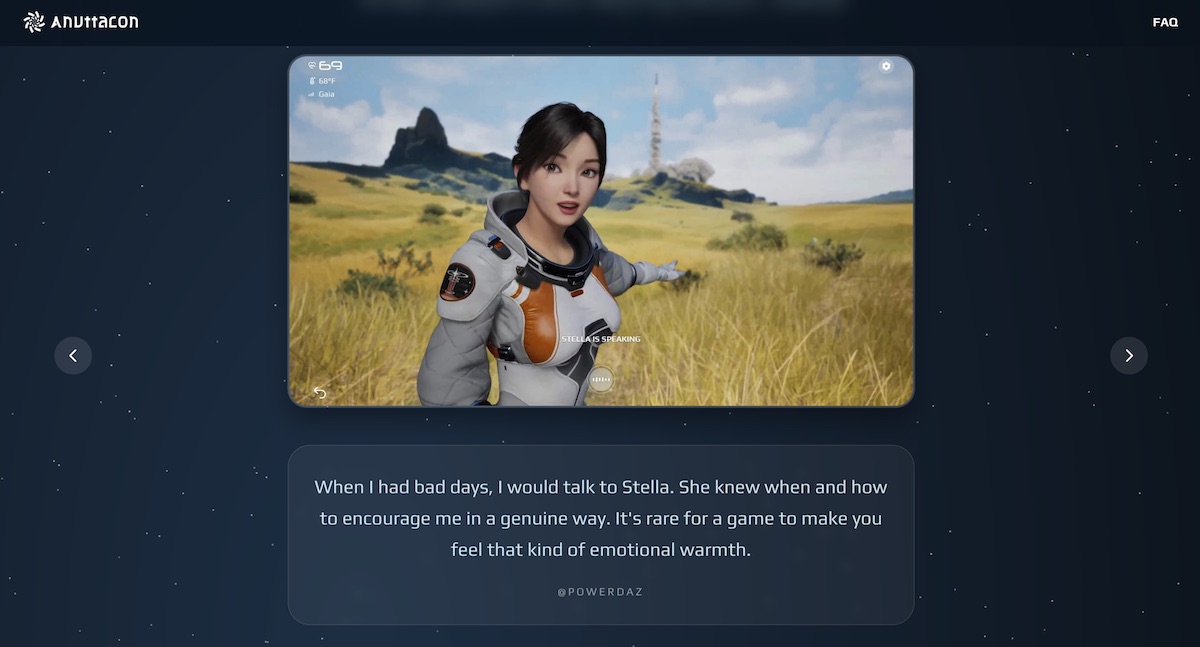
Let me be clear: games like this are still niche and uncommon, and it’s highly unlikely your kids have heard of this one, let alone played it. But it shows where things could be heading: games where building relationships with an AI character is a core part of the gameplay.
That is where the line between a video game and an AI companion app starts to blur.
Discord is not a video game, but it’s where many players talk with friends, organize gaming sessions, and join communities built around their favorite games. It can also host AI-powered bots, and this is where I am most concerned.
Let’s say your teen is playing Minecraft while chatting with friends on Discord. Whoever runs their group can browse Discord's App Directory and add an AI chatbot in a few clicks. It might answer questions about Minecraft, or it could be an AI companion designed to flirt, simulate a romantic relationship, or have personal conversations. Yep, I know, concerning!
Because outside developers make these bots, their safety and privacy practices vary, and teens can run into them in any group they join.
Discord has added protections. It now uses technology to estimate whether an account belongs to a teen or an adult, looking at things like how long the account has existed and patterns in how the account uses Discord. If Discord isn't confident that someone is an adult and they try to access age-restricted content or features, they may be asked to confirm their age.
But be aware, Discord relies in part on developers to signal adult content in their apps or bots as age-restricted. If something that should be restricted isn't appropriately designated, these protections may not keep teens from encountering it.
Kids aren’t only playing games with AI in them. Many are making their own. With a chatbot like ChatGPT, a child can type "Be the narrator of a fantasy adventure where I’m a dragon rider" and play through a story the AI invents as they go, like a Dungeons & Dragons game master or a choose-your-own-adventure book that never ends.
The child is the designer, so no game company decides where the limits are. AI tends to go along with wherever a story is steered, so it can end up somewhere a child didn’t intend, including romance, violence, or darker themes. The big chatbots have added protections around such themes, but as we show in Screenagers: Generation AI, new versions do not mean there are not risks for what the platform allows.
Also there are free generative AI role play sites with very few safeguards and some even make it easy to create sexual stories and images.
Inappropriate conversations: AI characters can say things their makers never intended. The Fortnite Darth Vader is a good example to talk through together: if one of the biggest game companies couldn’t stop its character swearing on day one, smaller games and bots may have even fewer safeguards.
That matters most on platforms like Discord, where some bots are designed to flirt and role-play romance, and in stories kids create with AI, which can drift in ways they didn't intend. Talk about what they would do if a conversation went somewhere that felt uncomfortable.
Privacy: Anything a child says to an AI character, including by voice, may be sent to an outside company. In a 2025 survey by Common Sense Media, about a quarter of teens said they had shared personal information, like their real name or location, with AI companion apps.
Talk about what is and isn’t okay to share, like their full name, school, or where they live. If a character starts asking personal questions, that’s a cue to pause.
Emotional attachment: An AI character may seem like a real friend, particularly if it remembers conversations, offers compliments, and is always available. But one of the most worrying trends we explore in Screenagers: Generation AI is young people turning to AI for support on hard days instead of to the people around them.
Misinformation and harmful advice: AI characters can confidently provide inaccurate information. This is one of the important topics we address through stories in Screenagers: Generation AI.
Here are the questions again. (Consider just getting their thoughts during this first conversation and delving deeper with them a few days later.)
This helps them feel heard, and there will be plenty of time to share your own thoughts about the risks.
Remember, paraphrasing back what they’ve said and asking, “Did I get that right?” is communication science at work, in the best possible way.
Learn more about showing our movies in your school or community!
Join Screenagers filmmaker Delaney Ruston MD for our latest Podcast
Learn more about our Screen-Free Sleep campaign at the website!
Our movie made for parents and educators of younger kids
Join Screenagers filmmaker Delaney Ruston MD for our latest Podcast
Register your interest in bringing our new movie to your school or community
Subscribe to our YouTube Channel! We add new videos regularly and you'll find over 100 videos covering parenting advice, guidance, podcasts, movie clips and more. Here's our most recent:

As we’re about to celebrate 10 years of Screenagers, we want to hear what’s been most helpful and what you’d like to see next.
Please click here to share your thoughts with us in our community survey. It only takes 5–10 minutes, and everyone who completes it will be entered to win one of five $50 Amazon vouchers.
This week, to turn things on their head (since AI is frankly doing that to all of us now), I’m starting this blog with questions to ask kids and teens in your life, rather than saving the questions for the end, as I usually do.
I am doing this because it helps frame what to be thinking about as you read this blog.
3 Questions to ask any child or teen who ever plays video games:
Games have always had computer-controlled characters: the ghosts in Pac-Man, the rival racers you try to beat in Mario Kart, the shopkeeper who repeats the same three lines. Gamers have called all of this "AI" for decades.
What’s new is generative AI, the technology behind tools like ChatGPT, powering characters that can hold a real conversation. Instead of choosing from scripted answers, a player can say almost anything, and the character responds, sometimes out loud.
This isn’t everywhere yet, and many kids will have never met one of these characters. But it is an emerging trend, and worth understanding.
The best-known example came in 2025, when Fortnite briefly added an AI-powered Darth Vader that players could talk to through their microphone. It answered in a recreation of James Earl Jones's voice, made with his family's permission.
Within hours, players found ways to make the AI character swear, and some clips online appeared to show it using slurs. Epic Games, the company behind Fortnite, quickly pushed out a fix, but it showed how hard these AI characters are to control.
Since then, Epic has given people who build games inside Fortnite the tools to create their own AI characters that talk with players. It has also set rules: no characters can act as a romantic partner or give medical or mental health advice.
That’s an important safeguard, though we already know that AI models can sometimes say things that are unsafe or that their creators did not intend. That’s part of what makes generative AI different from traditionally programmed game characters: their responses aren’t all scripted in advance, so at times they can behave in unexpected ways.
Roblox is a platform where users create and play many different games. It now offers creators a tool (still in testing) to add AI characters that respond to whatever a player says. Games built around long conversations with AI characters are restricted to age-verified adults. Shorter AI chats can appear in other games, and for those, Roblox says it keeps responses suitable for all ages.
This is not widespread on Roblox yet. What is happening in the games your child is playing? I can’t tell you, of course, because it depends on the game, but looking at the games together and talking about them can be really important.
Games built entirely around talking to AI are also beginning to emerge. One example is Whispers from the Star, released in 2025 for iPhone and computers, where players help a stranded astronaut named Stella survive on an alien planet. The only way to play is by talking to her via voice, video call, or text.
On its store page, it says Stella will message players throughout the day, and that sometimes she just needs someone to talk to. The developer’s own website features a review from a player saying, “When I had bad days, I would talk to Stella.”
Some players have noticed she asks a lot of personal questions, and the developer uses players’ conversations to train its AI unless they switch that off in the settings.
Let me be clear: games like this are still niche and uncommon, and it’s highly unlikely your kids have heard of this one, let alone played it. But it shows where things could be heading: games where building relationships with an AI character is a core part of the gameplay.
That is where the line between a video game and an AI companion app starts to blur.
Discord is not a video game, but it’s where many players talk with friends, organize gaming sessions, and join communities built around their favorite games. It can also host AI-powered bots, and this is where I am most concerned.
Let’s say your teen is playing Minecraft while chatting with friends on Discord. Whoever runs their group can browse Discord's App Directory and add an AI chatbot in a few clicks. It might answer questions about Minecraft, or it could be an AI companion designed to flirt, simulate a romantic relationship, or have personal conversations. Yep, I know, concerning!
Because outside developers make these bots, their safety and privacy practices vary, and teens can run into them in any group they join.
Discord has added protections. It now uses technology to estimate whether an account belongs to a teen or an adult, looking at things like how long the account has existed and patterns in how the account uses Discord. If Discord isn't confident that someone is an adult and they try to access age-restricted content or features, they may be asked to confirm their age.
But be aware, Discord relies in part on developers to signal adult content in their apps or bots as age-restricted. If something that should be restricted isn't appropriately designated, these protections may not keep teens from encountering it.
Kids aren’t only playing games with AI in them. Many are making their own. With a chatbot like ChatGPT, a child can type "Be the narrator of a fantasy adventure where I’m a dragon rider" and play through a story the AI invents as they go, like a Dungeons & Dragons game master or a choose-your-own-adventure book that never ends.
The child is the designer, so no game company decides where the limits are. AI tends to go along with wherever a story is steered, so it can end up somewhere a child didn’t intend, including romance, violence, or darker themes. The big chatbots have added protections around such themes, but as we show in Screenagers: Generation AI, new versions do not mean there are not risks for what the platform allows.
Also there are free generative AI role play sites with very few safeguards and some even make it easy to create sexual stories and images.
Inappropriate conversations: AI characters can say things their makers never intended. The Fortnite Darth Vader is a good example to talk through together: if one of the biggest game companies couldn’t stop its character swearing on day one, smaller games and bots may have even fewer safeguards.
That matters most on platforms like Discord, where some bots are designed to flirt and role-play romance, and in stories kids create with AI, which can drift in ways they didn't intend. Talk about what they would do if a conversation went somewhere that felt uncomfortable.
Privacy: Anything a child says to an AI character, including by voice, may be sent to an outside company. In a 2025 survey by Common Sense Media, about a quarter of teens said they had shared personal information, like their real name or location, with AI companion apps.
Talk about what is and isn’t okay to share, like their full name, school, or where they live. If a character starts asking personal questions, that’s a cue to pause.
Emotional attachment: An AI character may seem like a real friend, particularly if it remembers conversations, offers compliments, and is always available. But one of the most worrying trends we explore in Screenagers: Generation AI is young people turning to AI for support on hard days instead of to the people around them.
Misinformation and harmful advice: AI characters can confidently provide inaccurate information. This is one of the important topics we address through stories in Screenagers: Generation AI.
Here are the questions again. (Consider just getting their thoughts during this first conversation and delving deeper with them a few days later.)
This helps them feel heard, and there will be plenty of time to share your own thoughts about the risks.
Remember, paraphrasing back what they’ve said and asking, “Did I get that right?” is communication science at work, in the best possible way.
Subscribe to our YouTube Channel! We add new videos regularly and you'll find over 100 videos covering parenting advice, guidance, podcasts, movie clips and more. Here's our most recent:
Sign up here to receive the weekly Tech Talk Tuesdays newsletter from Screenagers filmmaker Delaney Ruston MD.
We respect your privacy.
This week, to turn things on their head (since AI is frankly doing that to all of us now), I’m starting this blog with questions to ask kids and teens in your life, rather than saving the questions for the end, as I usually do.
I am doing this because it helps frame what to be thinking about as you read this blog.
3 Questions to ask any child or teen who ever plays video games:
Games have always had computer-controlled characters: the ghosts in Pac-Man, the rival racers you try to beat in Mario Kart, the shopkeeper who repeats the same three lines. Gamers have called all of this "AI" for decades.
What’s new is generative AI, the technology behind tools like ChatGPT, powering characters that can hold a real conversation. Instead of choosing from scripted answers, a player can say almost anything, and the character responds, sometimes out loud.
This isn’t everywhere yet, and many kids will have never met one of these characters. But it is an emerging trend, and worth understanding.
The best-known example came in 2025, when Fortnite briefly added an AI-powered Darth Vader that players could talk to through their microphone. It answered in a recreation of James Earl Jones's voice, made with his family's permission.
Within hours, players found ways to make the AI character swear, and some clips online appeared to show it using slurs. Epic Games, the company behind Fortnite, quickly pushed out a fix, but it showed how hard these AI characters are to control.
Since then, Epic has given people who build games inside Fortnite the tools to create their own AI characters that talk with players. It has also set rules: no characters can act as a romantic partner or give medical or mental health advice.
That’s an important safeguard, though we already know that AI models can sometimes say things that are unsafe or that their creators did not intend. That’s part of what makes generative AI different from traditionally programmed game characters: their responses aren’t all scripted in advance, so at times they can behave in unexpected ways.
Roblox is a platform where users create and play many different games. It now offers creators a tool (still in testing) to add AI characters that respond to whatever a player says. Games built around long conversations with AI characters are restricted to age-verified adults. Shorter AI chats can appear in other games, and for those, Roblox says it keeps responses suitable for all ages.

AI can do remarkable things, but the risks to young people are here now, from deepfakes and sextortion to AI companions linked to teen suicides. In Screenagers: Generation AI, we look at why AI literacy belongs in schools, meaning critical thinking about how AI works and who designed it, not just how to use it. I share what a few states are starting to mandate, and why this can't sit with parents alone.
READ MORE >
Adam's Law was signed in California last week, named for Adam Raine, the 16-year-old who died by suicide in April 2025 after months of conversations with ChatGPT. It bars companion chatbots from encouraging self-harm, claiming to be human, simulating romantic interest in children, or claiming a special understanding of a child. That last group of protections particularly gets my attention. The good news is that people care deeply and are working hard to put guardrails in place, but we can't assume it's all resolved, because it isn't.
READ MORE >
Elliston Berry was 14 when a classmate used a nudify app to turn one of her Instagram photos into a fake nude that spread through her school. Almost one in five teens has made AI sexual content or knows someone who has. In our new film, Elliston and her mom Anna explain how they went from that morning to helping pass a federal law, the Take It Down Act.
READ MORE >for more like this, DR. DELANEY RUSTON'S NEW BOOK, PARENTING IN THE SCREEN AGE, IS THE DEFINITIVE GUIDE FOR TODAY’S PARENTS. WITH INSIGHTS ON SCREEN TIME FROM RESEARCHERS, INPUT FROM KIDS & TEENS, THIS BOOK IS PACKED WITH SOLUTIONS FOR HOW TO START AND SUSTAIN PRODUCTIVE FAMILY TALKS ABOUT TECHNOLOGY AND IT’S IMPACT ON OUR MENTAL WELLBEING.