Mental Health & Wellbeing

Movement Breaks, Screen Time, and Talking to Kids About It All

a school gathering to watch screenagers
June 2, 2026
4
min read
Delaney Ruston, MD
a school gathering to watch screenagers

In Summary

Tech journalist Manoush Zomorodi recently shared with Delaney the story behind her new book Body Electric and the citizen science experiment she ran with NPR and Dr. Keith Diaz of Columbia. The 20,000-person study found that five minutes of movement for every thirty minutes of sitting dropped fatigue by up to 28%, lowered blood glucose and blood pressure, and improved focus and mood. Plus, five practical reframes for talking to kids about movement without the eye rolls.

I recently had the pleasure of sitting down with Manoush Zomorodi, the brilliant tech journalist and host of TED Radio Hour, to talk about her new book Body Electric. (Listen to our conversation here in my latest podcast episode)

Manoush has spent years helping people think critically about their relationship with technology, from her early days at New Tech City and Note to Self to her "Bored and Brilliant" experiment with NPR listeners. She's the kind of thinker who doesn't just report on a problem; she builds a community around solving it. 

Her latest focus is something that affects every single one of us who spends long hours in front of a screen: what all that sitting is actually doing to our bodies, and what we can do about it.

It started when Manoush heard about research by Dr. Keith Diaz, a physiologist at Columbia University Medical Center, regarding the minimum amount of movement the human body needs to avoid serious health consequences. 

His lab found that five minutes of movement, such as walking, for every thirty minutes of sitting had outsized benefits. He found it cut blood glucose levels, lowered blood pressure, restored focus, and boosted mood and energy. 

Inspired, Manoush partnered with Dr. Diaz and NPR to launch a massive citizen science experiment called Body Electric. They enrolled 20,000 people across three groups: movement breaks every 30 minutes, every hour, or every two hours. The results were striking.

continues below
Share
Facebook logo.Rightward curved arrow symbol for sharing or forwarding.
host a screening

Learn more about showing our movies in your school or community!

Podcast

Join Screenagers filmmaker Delaney Ruston MD for our latest Podcast

Learn more about our Screen-Free Sleep campaign at the website!

Screenagers elementary edition

Our movie made for parents and educators of younger kids

host a screening

Learn more about showing our movies in your school or community!

Screenagers:
Generation AI

Register your interest in bringing our new movie to your school or community

Fatigue dropped by up to 28% for those taking the most frequent breaks, and even those who took a break every two hours saw a 23% drop. 80% of participants stuck with it, 82% actually enjoyed the breaks, and productivity slightly improved rather than declined. The study has since been accepted for scientific publication.

So how do we bring this into our conversations with kids and teens without the eye rolls? Here are a few approaches I took away from my conversation with Manoush:
  1. Reframe movement as something they get to do, not something they have to do. Instead of "you need to go exercise," try "did you get to move today?" That small shift from obligation to opportunity changes the whole tone.
  2. Swap a screen question for a movement one. Rather than leading with "you've been on that screen too long," pivot to "what does your body need right now?" It keeps the focus positive.
  3. Make it about curiosity and self-discovery. Manoush gave her son a simple nightly questionnaire during the pandemic that asked questions like whether he ate well, slept okay, and moved around during the day. She never even read his answers; the point was for him to start noticing his own patterns and how his body felt based on how he treated it.
  4. Use destinations and experiments to make movement low-key. "Let's go check on those geese at the end of the block," rather than  "Let's go for a walk." And framing it as an experiment like "Let’s rate how we feel before and after,” makes kids scientists of their own experience.
  5. Model it unabashedly, even when it's embarrassing. Manoush and I both admit we've exercised at airports while our kids cringed. But we both agreed that when kids see us doing something good for ourselves, they absorb that it's normal. Her teenage kids now regularly take themselves out for walks, completely on their own. And so do mine. And my kids don’t bat an eye if they see me doing push-ups in odd places.


Our New Movie - Screenagers: Generation AI

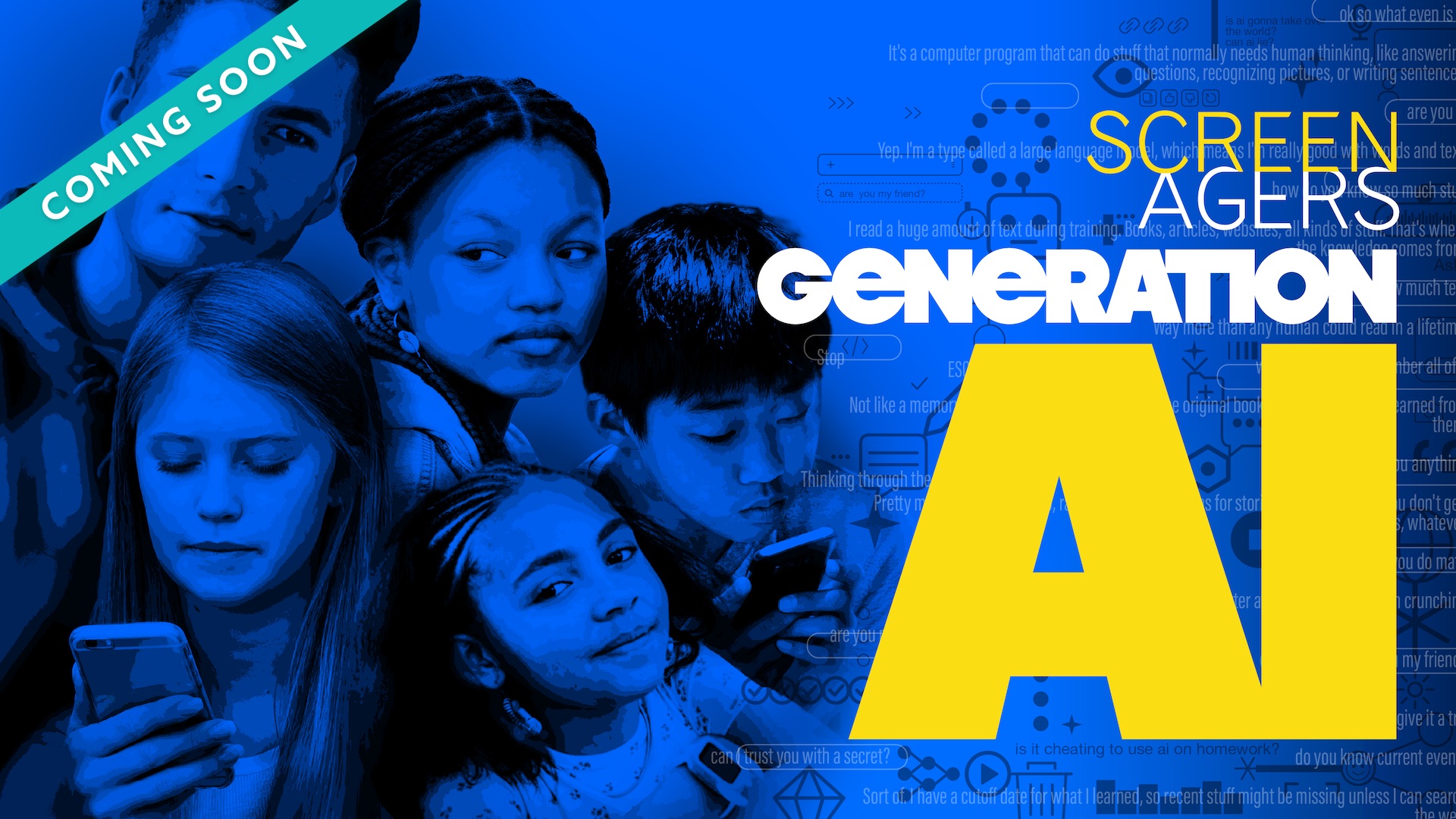
Releasing this coming September, Screenagers: Generation AI explores what can be done to mitigate the risks artificial intelligence poses to young people's learning, relationships, and mental health.

We wrote about the movie in this recent blog and on the movie's page here.

If your interested in bringing this movie to your school or community in the fall, you can register your interest at this page.

host a screening

Learn more about showing our movies in your school or community!

Podcast

Join Screenagers filmmaker Delaney Ruston MD for our latest Podcast

Learn more about our Screen-Free Sleep campaign at the website!

Screenagers elementary edition

Our movie made for parents and educators of younger kids

Podcast

Join Screenagers filmmaker Delaney Ruston MD for our latest Podcast

Screenagers:
Generation AI

Register your interest in bringing our new movie to your school or community

This week on YouTube

Subscribe to our YouTube Channel! We add new videos regularly and you'll find over 100 videos covering parenting advice, guidance, podcasts, movie clips and more. Here's our most recent:

Get our latest posts and practical advice in your inbox, weekly.

You have subscribed to our emails. Thank you!
Oops! Something went wrong while submitting the form.

We respect your privacy.

More Like This

Mental Health & Wellbeing

Movement Breaks, Screen Time, and Talking to Kids About It All

Delaney Ruston, MD
Lisa Tabb smiling to camera (Screenagers Producer)
Lisa Tabb
June 2, 2026

As we’re about to celebrate 10 years of Screenagers, we want to hear what’s been most helpful and what you’d like to see next.

Please click here to share your thoughts with us in our community survey. It only takes 5–10 minutes, and everyone who completes it will be entered to win one of five $50 Amazon vouchers.

I recently had the pleasure of sitting down with Manoush Zomorodi, the brilliant tech journalist and host of TED Radio Hour, to talk about her new book Body Electric. (Listen to our conversation here in my latest podcast episode)

Manoush has spent years helping people think critically about their relationship with technology, from her early days at New Tech City and Note to Self to her "Bored and Brilliant" experiment with NPR listeners. She's the kind of thinker who doesn't just report on a problem; she builds a community around solving it. 

Her latest focus is something that affects every single one of us who spends long hours in front of a screen: what all that sitting is actually doing to our bodies, and what we can do about it.

It started when Manoush heard about research by Dr. Keith Diaz, a physiologist at Columbia University Medical Center, regarding the minimum amount of movement the human body needs to avoid serious health consequences. 

His lab found that five minutes of movement, such as walking, for every thirty minutes of sitting had outsized benefits. He found it cut blood glucose levels, lowered blood pressure, restored focus, and boosted mood and energy. 

Inspired, Manoush partnered with Dr. Diaz and NPR to launch a massive citizen science experiment called Body Electric. They enrolled 20,000 people across three groups: movement breaks every 30 minutes, every hour, or every two hours. The results were striking.
Join
443
others who have made the pledge!
Thank you for making the pledge!
Please try again
Book page button

Available now - Parenting in the Screen Age, from Screenagers filmmaker Delaney Ruston MD

Order Here
Find A screening Button

Find a Screening - Find a screening of our movies in your local community

Learn More
Smiling woman with long blonde hair wearing a dark teal sweater, next to text: The Screenagers Podcast with Delaney Ruston, MD.

Screenagers Podcast - Join Screenagers filmmaker Delaney Ruston MD for the latest Podcast

Learn More
Book page button

Available now - Parenting in the Screen Age, from Screenagers filmmaker Delaney Ruston MD

Learn More
Host a Screening Button

Community Screenings - Learn more about hosting your own Screenagers community screening event!

Learn More
Parenting In The Screen Age Book Cover

Free Book Preview - Download a free preview of "Parenting In The Screen Age" by Delaney Ruston, MD

Learn More
The Screenagers Project title in bold white text on a dark blue background with teal underline and partially visible screenshots of a website behind.

Join Today - Members can screen and view our movies year-round, access new lesson plans, resources and much more!

Learn More
Screenagers Under The Influence Banner

Our New Movie - Learn more about the third movie in the Screenagers Trilogy

Learn More
YouTube play button icon next to the text 'SCREENAGERS YOUTUBE' on a dark blue background with images of web pages around the edges.

The Screenagers YouTube Channel - Subscribe for new videos and content from our team weekly!

Learn More

Fatigue dropped by up to 28% for those taking the most frequent breaks, and even those who took a break every two hours saw a 23% drop. 80% of participants stuck with it, 82% actually enjoyed the breaks, and productivity slightly improved rather than declined. The study has since been accepted for scientific publication.

So how do we bring this into our conversations with kids and teens without the eye rolls? Here are a few approaches I took away from my conversation with Manoush:

  1. Reframe movement as something they get to do, not something they have to do. Instead of "you need to go exercise," try "did you get to move today?" That small shift from obligation to opportunity changes the whole tone.
  2. Swap a screen question for a movement one. Rather than leading with "you've been on that screen too long," pivot to "what does your body need right now?" It keeps the focus positive.
  3. Make it about curiosity and self-discovery. Manoush gave her son a simple nightly questionnaire during the pandemic that asked questions like whether he ate well, slept okay, and moved around during the day. She never even read his answers; the point was for him to start noticing his own patterns and how his body felt based on how he treated it.
  4. Use destinations and experiments to make movement low-key. "Let's go check on those geese at the end of the block," rather than  "Let's go for a walk." And framing it as an experiment like "Let’s rate how we feel before and after,” makes kids scientists of their own experience.
  5. Model it unabashedly, even when it's embarrassing. Manoush and I both admit we've exercised at airports while our kids cringed. But we both agreed that when kids see us doing something good for ourselves, they absorb that it's normal. Her teenage kids now regularly take themselves out for walks, completely on their own. And so do mine. And my kids don’t bat an eye if they see me doing push-ups in odd places.


Our New Movie - Screenagers: Generation AI

Releasing this coming September, Screenagers: Generation AI explores what can be done to mitigate the risks artificial intelligence poses to young people's learning, relationships, and mental health.

We wrote about the movie in this recent blog and on the movie's page here.

If your interested in bringing this movie to your school or community in the fall, you can register your interest at this page.

Host a Screening Button

Community Screenings - Learn more about hosting your own Screenagers community screening event!

Learn More
Find A screening Button

Find a Screening - Find a screening of our movies in your local community

Learn More
Smiling woman with long blonde hair wearing a dark teal sweater, next to text: The Screenagers Podcast with Delaney Ruston, MD.

Screenagers Podcast - Join Screenagers filmmaker Delaney Ruston MD for the latest Podcast

Learn More
Book page button

Available now - Parenting in the Screen Age, from Screenagers filmmaker Delaney Ruston MD

Learn More
Host a Screening Button

Community Screenings - Learn more about hosting your own Screenagers community screening event!

Learn More
Parenting In The Screen Age Book Cover

Free Book Preview - Download a free preview of "Parenting In The Screen Age" by Delaney Ruston, MD

Learn More
The Screenagers Project title in bold white text on a dark blue background with teal underline and partially visible screenshots of a website behind.

Join Today - Members can screen and view our movies year-round, access new lesson plans, resources and much more!

Learn More
Screenagers Under The Influence Banner

Our New Movie - Learn more about the third movie in the Screenagers Trilogy

Learn More
YouTube play button icon next to the text 'SCREENAGERS YOUTUBE' on a dark blue background with images of web pages around the edges.

The Screenagers YouTube Channel - Subscribe for new videos and content from our team weekly!

Learn More

This week on YouTube

Subscribe to our YouTube Channel! We add new videos regularly and you'll find over 100 videos covering parenting advice, guidance, podcasts, movie clips and more. Here's our most recent:

Thank you! Your submission has been received!
Oops! Something went wrong while submitting the form.

We respect your privacy.

Book page button

Available now - Parenting in the Screen Age, from Screenagers filmmaker Delaney Ruston MD

Order Here
Find A screening Button

Find a Screening - Find a screening of our movies in your local community

Learn More
Smiling woman with long blonde hair wearing a dark teal sweater, next to text: The Screenagers Podcast with Delaney Ruston, MD.

Screenagers Podcast - Join Screenagers filmmaker Delaney Ruston MD for the latest Podcast

Learn More
Book page button

Available now - Parenting in the Screen Age, from Screenagers filmmaker Delaney Ruston MD

Learn More
Host a Screening Button

Community Screenings - Learn more about hosting your own Screenagers community screening event!

Learn More
Parenting In The Screen Age Book Cover

Free Book Preview - Download a free preview of "Parenting In The Screen Age" by Delaney Ruston, MD

Learn More
The Screenagers Project title in bold white text on a dark blue background with teal underline and partially visible screenshots of a website behind.

Join Today - Members can screen and view our movies year-round, access new lesson plans, resources and much more!

Learn More
Screenagers Under The Influence Banner

Learn more about the third movie in the Screenagers movie series

Learn More
YouTube play button icon next to the text 'SCREENAGERS YOUTUBE' on a dark blue background with images of web pages around the edges.

The Screenagers YouTube Channel - Subscribe for new videos and content from our team weekly!

Learn More
Six children standing outdoors using tablets and smartphones, with text overlay 'SCREEN AGERS ELEMENTARY SCHOOL AGE EDITION'.

Screenagers: Elementary School Age Edition - Learn more about our latest movie.

Learn More
Child sleeping peacefully in bed under a gray blanket with text saying 'Screen-Free Sleep' and cartoon purple Z's.

Learn more about the Screen-Free Sleep campaign at the website!

Visit Website
Host a Screening Button

Community Screenings - Learn more about hosting your own Screenagers community screening event!

Learn More
Find A screening Button

Find a Screening - Find a screening of our movies in your local community

Learn More
Smiling woman with long blonde hair wearing a dark teal sweater, next to text: The Screenagers Podcast with Delaney Ruston, MD.

Screenagers Podcast - Join Screenagers filmmaker Delaney Ruston MD for the latest Podcast

Learn More
Book page button

Available now - Parenting in the Screen Age, from Screenagers filmmaker Delaney Ruston MD

Learn More
Host a Screening Button

Community Screenings - Learn more about hosting your own Screenagers community screening event!

Learn More
Parenting In The Screen Age Book Cover

Free Book Preview - Download a free preview of "Parenting In The Screen Age" by Delaney Ruston, MD

Learn More
The Screenagers Project title in bold white text on a dark blue background with teal underline and partially visible screenshots of a website behind.

Join Today - Members can screen and view our movies year-round, access new lesson plans, resources and much more!

Learn More
Screenagers Under The Influence Banner

Screenagers Under The Influence - Learn more about this movie and watch the trailer.

Learn More
YouTube play button icon next to the text 'SCREENAGERS YOUTUBE' on a dark blue background with images of web pages around the edges.

The Screenagers YouTube Channel - Subscribe for new videos and content from our team weekly!

Learn More
Six children standing outdoors using tablets and smartphones, with text overlay 'SCREEN AGERS ELEMENTARY SCHOOL AGE EDITION'.

Screenagers: Elementary School Age Edition - Learn more about our latest movie.

Learn More
Child sleeping peacefully in bed under a gray blanket with text saying 'Screen-Free Sleep' and cartoon purple Z's.

Learn more about the Screen-Free Sleep campaign at the website!

Visit Website
Mental Health & Wellbeing

Movement Breaks, Screen Time, and Talking to Kids About It All

Delaney Ruston, MD
June 2, 2026

I recently had the pleasure of sitting down with Manoush Zomorodi, the brilliant tech journalist and host of TED Radio Hour, to talk about her new book Body Electric. (Listen to our conversation here in my latest podcast episode)

Manoush has spent years helping people think critically about their relationship with technology, from her early days at New Tech City and Note to Self to her "Bored and Brilliant" experiment with NPR listeners. She's the kind of thinker who doesn't just report on a problem; she builds a community around solving it. 

Her latest focus is something that affects every single one of us who spends long hours in front of a screen: what all that sitting is actually doing to our bodies, and what we can do about it.

It started when Manoush heard about research by Dr. Keith Diaz, a physiologist at Columbia University Medical Center, regarding the minimum amount of movement the human body needs to avoid serious health consequences. 

His lab found that five minutes of movement, such as walking, for every thirty minutes of sitting had outsized benefits. He found it cut blood glucose levels, lowered blood pressure, restored focus, and boosted mood and energy. 

Inspired, Manoush partnered with Dr. Diaz and NPR to launch a massive citizen science experiment called Body Electric. They enrolled 20,000 people across three groups: movement breaks every 30 minutes, every hour, or every two hours. The results were striking.

More Like This

The Rebel's Code: Helping Kids Resist Tech That Tries to Control Them
January 13, 2026
Mental Health & Wellbeing

The Rebel's Code: Helping Kids Resist Tech That Tries to Control Them

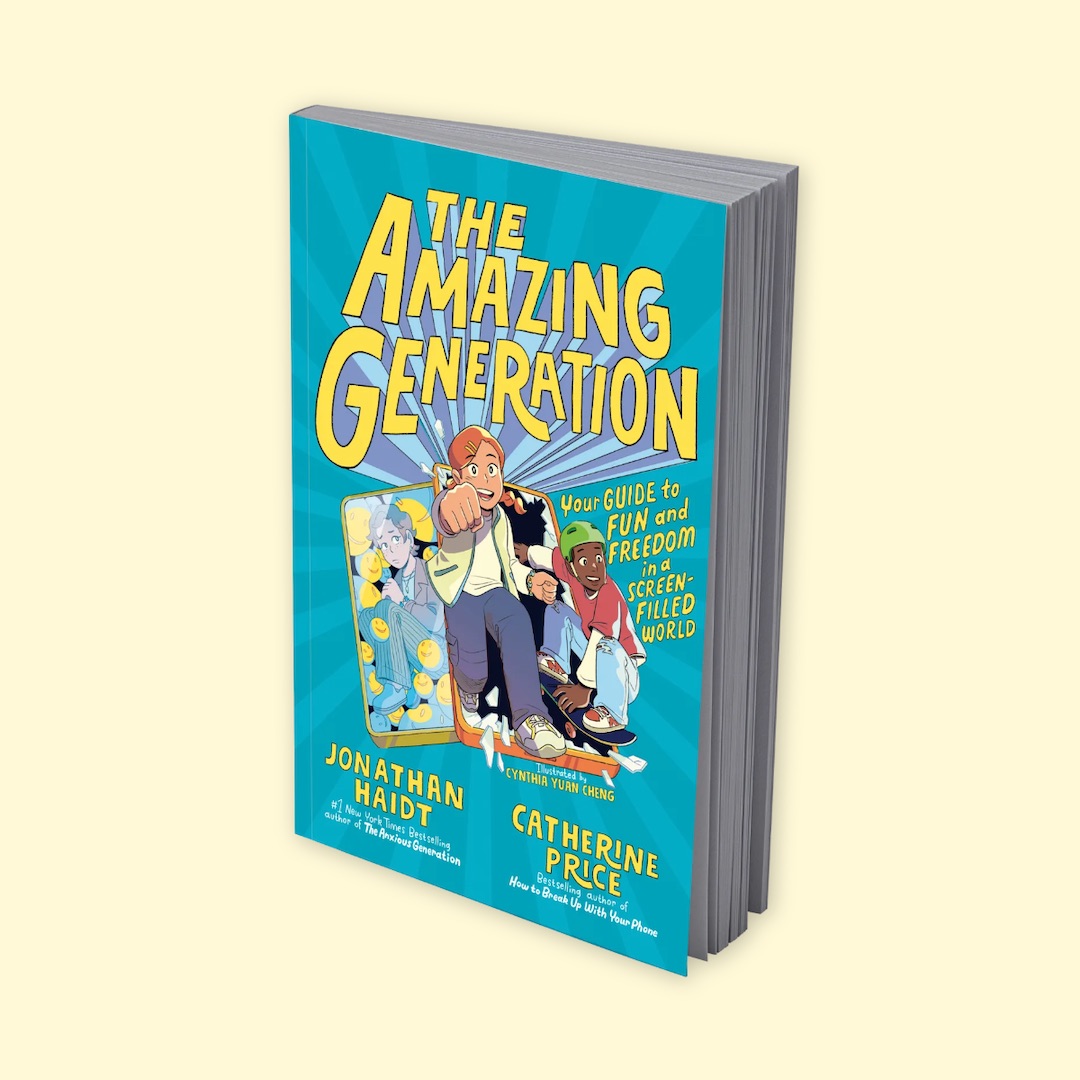
Catherine Price’s “Rebel's Code” focuses on intentional technology use and prioritizing real-world friendship, freedom, and fun. Her book The Amazing Generation, co-written with Jonathan Haidt, introduces these concepts to children through interactive formats and teen perspectives. Research indicates that when adolescents understand how platforms are designed to exploit attention, they show greater motivation to limit their social media use.

READ MORE >
Sleeping Next to Your Phone? What Parents Should Know
November 4, 2025
Mental Health & Wellbeing

Sleeping Next to Your Phone? What Parents Should Know

Many adults keep their phones by the bed — it feels harmless, even necessary. But what if that habit is quietly affecting our sleep and the example we set for our kids? In this week’s blog, Dr. Ruston shares two key things every parent should know about sleeping next to a phone, and how small nighttime tech changes can make a big difference for the whole family.

READ MORE >

parenting in the screen age

for more like this, DR. DELANEY RUSTON'S NEW BOOK, PARENTING IN THE SCREEN AGE, IS THE DEFINITIVE GUIDE FOR TODAY’S PARENTS. WITH INSIGHTS ON SCREEN TIME FROM RESEARCHERS, INPUT FROM KIDS & TEENS, THIS BOOK IS PACKED WITH SOLUTIONS FOR HOW TO START AND SUSTAIN PRODUCTIVE FAMILY TALKS ABOUT TECHNOLOGY AND IT’S IMPACT ON OUR MENTAL WELLBEING.  

ORDER HERE
Parenting in the Screen Age book cover