

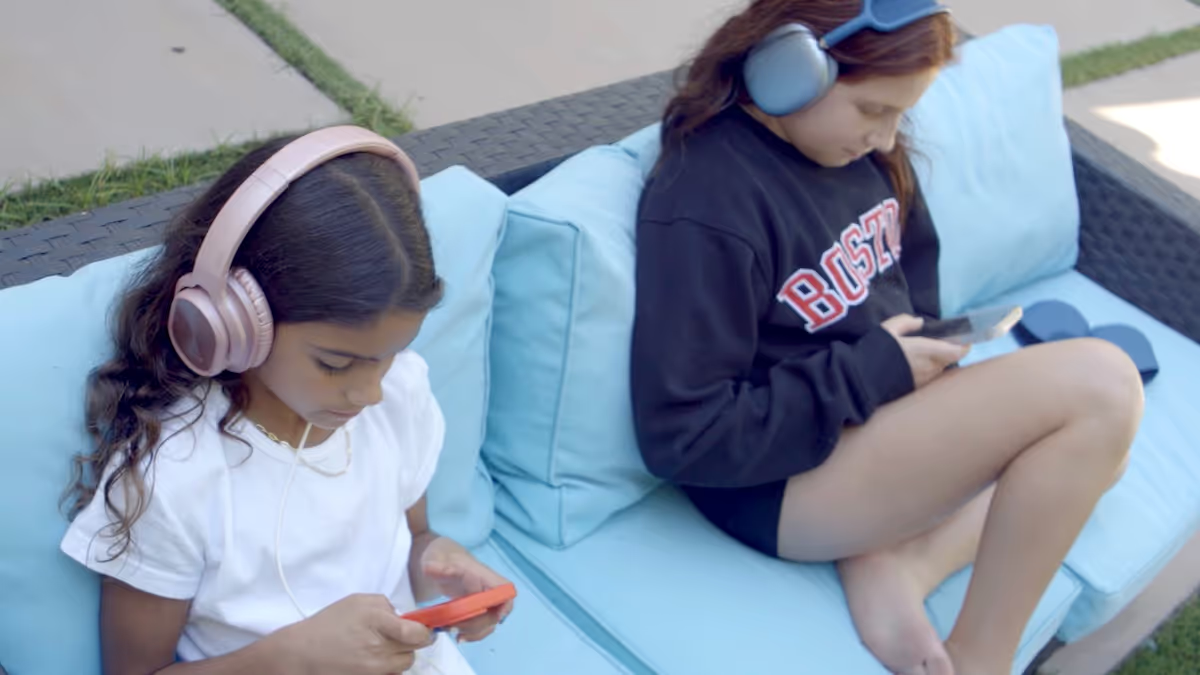


Last week in clinic, I met with a teen and her mom. The mom voiced concern about her daughter using over-the-ear headphones for hours on end, worried it could be harming her hearing.
I shared some guidance during our visit, but I was also glad to let her know that my next podcast episode was focused entirely on that very issue. I suggested they listen to it together as a way to dive deeper into the topic and gain more tools for reducing risk, beyond what we had time to cover in the clinic that day.
Here is the episode ‘Are AirPods Ruining Our Kids’ Hearing?’ if you wanted to listen too.
Today in the blog, I highlight one thing you can do right now for yourself and with your family to check in on your hearing, but first, a little mindblowing trivia…
Let’s zoom out and think about just how massive the world of music has become. A company called Illuminate, which tracks entertainment industry trends, reported that by the end of 2024, streaming platforms were hosting close to 200 million individual tracks. That’s a staggering number — and it’s growing fast. Every single day, about 99,000 new songs are added to those platforms.
Hundreds of millions of tracks at our fingertips, with tens of thousands more pouring in daily. We’ve gone from passively waiting by the radio, hoping our favorite tune would play, to being able to instantly pull up any song we want, wherever we are.
And the way we listen has changed, too. Headphones and earbuds are the norm, and for many of us, volume tends to creep up. I’ve caught myself lately at the gym, blasting music louder than I probably should.


Learn more about showing our movies in your school or community!
Join Screenagers filmmaker Delaney Ruston MD for our latest Podcast

Learn more about our Screen-Free Sleep campaign at the website!
Our movie made for parents and educators of younger kids
Learn more about showing our movies in your school or community!
Register your interest in bringing our new movie to your school or community
Test it! It is super easy and a perfect thing to do tonight with your child or children.
Ideally, be in a quiet space with good over-the-ear or insert headphones. They save your results so you can retest a year or two later and compare. While not as precise as an audiogram done in a soundproof room, they’re surprisingly decent.
If you have an iPhone, you can actually perform a basic hearing test with it—no separate app needed. Just go to: Settings, then Accessibility, then Audio/Visual, and then tap on Headphone Accommodations. From there, choose Custom Audio Setup.
With your headphones on, your phone will play a short series of sounds to help tailor audio output to your hearing. It’s not a full hearing test, but it offers useful feedback and adjusts your sound based on what you hear best.
I did this and I'm glad I did. Luckily, my hearing test passed.
There are also apps that do this. One is called Mimi.

When you return home from a loud concert, consider taking a hearing test afterward — you might notice a dip in the high tones, which indicates that you have overdone it. This kind of temporary change is a red flag. And finally, never feel self-conscious about wearing earplugs at loud events!
To learn a lot more about ear health and how we can ALL protect our hearing, make sure to check out the 20-minute podcast called ‘Are AirPods Ruining Our Kids’ Hearing?’
Learn more about showing our movies in your school or community!
Join Screenagers filmmaker Delaney Ruston MD for our latest Podcast
Learn more about our Screen-Free Sleep campaign at the website!
Our movie made for parents and educators of younger kids
Join Screenagers filmmaker Delaney Ruston MD for our latest Podcast
Register your interest in bringing our new movie to your school or community
Be sure to subscribe to our YouTube Channel! We add new videos regularly and you'll find over 100 videos covering parenting advice, guidance, podcasts, movie clips and more. Here's our most recent:

As we’re about to celebrate 10 years of Screenagers, we want to hear what’s been most helpful and what you’d like to see next.
Please click here to share your thoughts with us in our community survey. It only takes 5–10 minutes, and everyone who completes it will be entered to win one of five $50 Amazon vouchers.
Last week in clinic, I met with a teen and her mom. The mom voiced concern about her daughter using over-the-ear headphones for hours on end, worried it could be harming her hearing.
I shared some guidance during our visit, but I was also glad to let her know that my next podcast episode was focused entirely on that very issue. I suggested they listen to it together as a way to dive deeper into the topic and gain more tools for reducing risk, beyond what we had time to cover in the clinic that day.
Here is the episode ‘Are AirPods Ruining Our Kids’ Hearing?’ if you wanted to listen too.
Today in the blog, I highlight one thing you can do right now for yourself and with your family to check in on your hearing, but first, a little mindblowing trivia…
Let’s zoom out and think about just how massive the world of music has become. A company called Illuminate, which tracks entertainment industry trends, reported that by the end of 2024, streaming platforms were hosting close to 200 million individual tracks. That’s a staggering number — and it’s growing fast. Every single day, about 99,000 new songs are added to those platforms.
Hundreds of millions of tracks at our fingertips, with tens of thousands more pouring in daily. We’ve gone from passively waiting by the radio, hoping our favorite tune would play, to being able to instantly pull up any song we want, wherever we are.
And the way we listen has changed, too. Headphones and earbuds are the norm, and for many of us, volume tends to creep up. I’ve caught myself lately at the gym, blasting music louder than I probably should.
Test it! It is super easy and a perfect thing to do tonight with your child or children.
Ideally, be in a quiet space with good over-the-ear or insert headphones. They save your results so you can retest a year or two later and compare. While not as precise as an audiogram done in a soundproof room, they’re surprisingly decent.
If you have an iPhone, you can actually perform a basic hearing test with it—no separate app needed. Just go to: Settings, then Accessibility, then Audio/Visual, and then tap on Headphone Accommodations. From there, choose Custom Audio Setup.
With your headphones on, your phone will play a short series of sounds to help tailor audio output to your hearing. It’s not a full hearing test, but it offers useful feedback and adjusts your sound based on what you hear best.
I did this and I'm glad I did. Luckily, my hearing test passed.
There are also apps that do this. One is called Mimi.
When you return home from a loud concert, consider taking a hearing test afterward — you might notice a dip in the high tones, which indicates that you have overdone it. This kind of temporary change is a red flag. And finally, never feel self-conscious about wearing earplugs at loud events!
To learn a lot more about ear health and how we can ALL protect our hearing, make sure to check out the 20-minute podcast called ‘Are AirPods Ruining Our Kids’ Hearing?’
Be sure to subscribe to our YouTube Channel! We add new videos regularly and you'll find over 100 videos covering parenting advice, guidance, podcasts, movie clips and more. Here's our most recent:
Sign up here to receive the weekly Tech Talk Tuesdays newsletter from Screenagers filmmaker Delaney Ruston MD.
We respect your privacy.
Last week in clinic, I met with a teen and her mom. The mom voiced concern about her daughter using over-the-ear headphones for hours on end, worried it could be harming her hearing.
I shared some guidance during our visit, but I was also glad to let her know that my next podcast episode was focused entirely on that very issue. I suggested they listen to it together as a way to dive deeper into the topic and gain more tools for reducing risk, beyond what we had time to cover in the clinic that day.
Here is the episode ‘Are AirPods Ruining Our Kids’ Hearing?’ if you wanted to listen too.
Today in the blog, I highlight one thing you can do right now for yourself and with your family to check in on your hearing, but first, a little mindblowing trivia…
Let’s zoom out and think about just how massive the world of music has become. A company called Illuminate, which tracks entertainment industry trends, reported that by the end of 2024, streaming platforms were hosting close to 200 million individual tracks. That’s a staggering number — and it’s growing fast. Every single day, about 99,000 new songs are added to those platforms.
Hundreds of millions of tracks at our fingertips, with tens of thousands more pouring in daily. We’ve gone from passively waiting by the radio, hoping our favorite tune would play, to being able to instantly pull up any song we want, wherever we are.
And the way we listen has changed, too. Headphones and earbuds are the norm, and for many of us, volume tends to creep up. I’ve caught myself lately at the gym, blasting music louder than I probably should.
I've been noticing the ways I can be rude, in person and on my phone. This week I share two recent examples of my own, plus why correcting myself out loud strengthens self-awareness. The talk that follows isn't about your kid. It's about you going first.
READ MORE >
An Oakland library has started lending out sports equipment and games alongside books, so families can borrow gear to use at nearby parks. It is a reminder that borrowing and lending between families is a simple way to fill a summer afternoon without a screen, while quietly modelling generosity and humility. We are out of practice at asking, but the person on the other end is usually glad to help.
READ MORE >
E-readers are convenient, but there are three reasons to lean toward paper books this summer. First, e-readers are screens, and the pull of everything else you could do on one makes it harder to stay immersed. Second, a large meta-analysis found people understand and remember slightly better on paper, especially with longer texts. Third, easy access to endless book samples makes it too tempting to jump ship rather than work through the slower parts, since reading, unlike TikTok, is about delayed gratification.
READ MORE >for more like this, DR. DELANEY RUSTON'S NEW BOOK, PARENTING IN THE SCREEN AGE, IS THE DEFINITIVE GUIDE FOR TODAY’S PARENTS. WITH INSIGHTS ON SCREEN TIME FROM RESEARCHERS, INPUT FROM KIDS & TEENS, THIS BOOK IS PACKED WITH SOLUTIONS FOR HOW TO START AND SUSTAIN PRODUCTIVE FAMILY TALKS ABOUT TECHNOLOGY AND IT’S IMPACT ON OUR MENTAL WELLBEING.