


Today I am writing about ways that kids, teens, and college-age youth can safely help others via tech, and tech-free, during our world's intense COVID-19 crisis.
Kids and teens get so many positive emotions when they feel that they matter and that they are making a difference in someone's life or a situation. Being able to take action to support and help others fosters resilience.
Our tech revolution provides many ways people can help others. One of the major goals of both Screenagers movies is to promote conversations about how we as a society help youth use screen time as a positive force in their lives and in others. Now with COVID-19, this is more relevant than ever.
Some of my favorite stories in Screenagers NEXT CHAPTER have to do with teens doing things to help their peers, like teaching resiliency skills. Through all these interviews with youth, I learned to appreciate the joy they feel when able to support people close to their own age. This really hit home with my daughter Tessa who is in the film too. When the film was in rough-cut form, I asked her to watch and be sure she wanted to be in the film or not. It was important to me that she was really sure. After viewing it she said, “When I watch the other teens in the film tell their stories, it helps me so much that I absolutely want to help others by sharing my story.” Similarly, many of the other teens in the film told me that they wanted to be in it to be able to help others.
I have reached out to youth and adults over the past few days to quickly create this list of ideas of what kids and teens can do right now — some of it is on screens and some off. But, all the ideas are with the acknowledgment that physical distancing is still a must.
** Please be aware that scams are happening on the Internet. Be extra sure that any place you are trying to help is who they say they are.
** Some of these things below are meant for college-age, and others should be done with parental help if kids are young.
** Below I’m talking directly to kids and teens.
Everyone is experiencing an emotional seesaw right now. A person's sense of fear, of hope, of sadness, can change day to day, hour to hour, minute to minute. And, certain times of days are harder than others — some people feel sadder in the evenings. As time goes on, your peers who were doing well might start to feel worse and vice versa. There is no way to know unless they tell you or if you ask.
Consider these types of questions to ask your friends via online communication, including Facetime.
Question: Is there any time of the day that is the hardest for you?
Action: And from there, you can try to make sure to reach out at those times for that friend.
Question: What is helping you feel better when you are feeling bummed about all this?
Action: Consider reminding them of that later when they might be feeling low — they will love that you remembered.
One high school senior boy from New Jersey wrote,
"I like to Facetime my friends to have social interaction during these times. It helps me feel more productive and positive in my day."
Garage Band is a fun way to create a song. Maybe you have a memory of a grandparent and then you’ll send it to them. Or maybe create an opening melody, and put it at the front of an audio card.
Consider creating a video montage to make others smile. For example, a 16-year-old, Andy, recently wrote this,
"My girlfriend's mom is the administrator of an assisted living center, and she asked us to do something to bring some happiness to the residents."
Andy made a funny video of his dog and put it to music that he thought the residents would like.
Andy went on to write:
"Our idea is to have the residents come up with a song list, and our plan going forward is to give our friends with dogs a song so we will have a whole playlist for the residents with a variety of dogs."
Consider making a video to educate others. The University of Washington student Neha Krishnam, who is interested in being a medical correspondent, created this short video, called COVID-19 Facts from the Epicentre.
Consider creating an online photo album from favorite photos and include captions.
Find new ways to become better informed such as watching this very cool video by Represent Us with Jennifer Lawrence (my teens love it). The organization is not affiliated with any specific political party, but rather it is about improving political processes locally and nationally. The website has many actionable ideas that can be done from home.
Write letters for change. Common purpose is similar to Represent Us in that it is not about any specific party but rather to improve how our democracy works. Right now, there is a significant push to increase the number of states that allow voting to occur through the mail, rather than requiring people to go to polling centers. Only five states, including Washington where I live, allow this right now.
Learning how to help in one's specific neighborhood by using an app, such as Nextdoor. This App has problems such as many ads, but in this time of crisis, it can be a helpful resource.
Recently, my college-age son, Chase, learned how he could help at the local food bank on Nextdoor, and really enjoyed it. It was very safe with minimal close contact with others.
Another thing is to think of those you know who live alone and are at risk of feeling isolated. If you don’t know how to reach them, how about writing a note saying that your family would love to be in contact to say hi and see ways you might help them and then just leave it in their mailbox. And then leave your parents' contact.
Consider small financial donations, even $5. Very small online cash donations actually make a difference for several reasons. Number one is that all small donations add up. Number two, often when people donate they are more likely to spread the word to others which helps generate other donations. Finally, organizations want to be able to tell others, including foundations that might fund them, the number of people who have made donations, irrespective of the dollar amount.
Rachel Kisela, a UW student who helped in the making of Screenagers NEXT CHAPTER, wrote this,
"I know one thing that has made me feel helpful during this time is using the Internet to find places to donate money. A lot of my favorite social media influencers are directing their viewers to donate to various charities, and donating even a little has made me feel helpful during this time."
The Internet is a wonderful way to find places that need non-financial donations, such as food banks that are trying to get more items to distribute to those in need.
Rachel, the UW student from above, went on to say something that she has done,
"Also, posting on social media about looking in your garage for spare masks to donate to local hospitals and offering to pick them up to donate them."
I recently wrote a blog about using tech for good and mentioned, FREE RICE, an online game where one learns a subject while simultaneously the time on the game results in food getting donated to people in need, which includes a COVID-19 section.
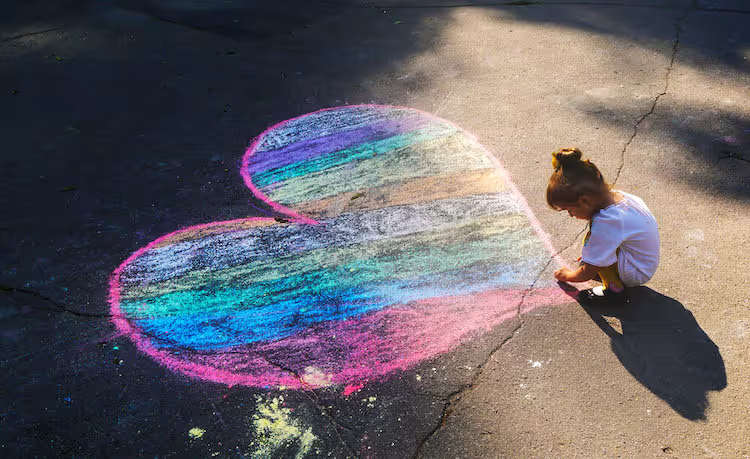
Consider creating art. The other day one young girl was making beautiful chalk art, and it gave me such a smile. I know others would be uplifted too. You can order big chalk online. I plan to do sidewalk art with my teens. I have since seen the art in more places, and many teens are saying that they are doing and seeing this around the country. I would love to see any art created by your youth as well. My family also had an artist outline a mural on our garage, and we had many friends to help us paint it this past summer.
Consider creating smiles — make it a game. When it comes to taking walks in the neighborhood, it is a confusing and surreal time. We all move to the side, and so often smiles and greetings are lacking. Consider doing this challenge: smile and say "hi" or wave to people when you go on a walk and see how many of them smile or wave back. No matter if they respond to your kind gesture, you can feel good knowing that you are spreading good cheer. And then you can see if on another day you can get more waves back. Just an idea.:)
Consider sending cards to friends in the mail. In February, I sent friendship themed cards with notes in them to several of my closest girlfriends. I told them it was Valentine's Day/ Month, and it was such fun to think about my dear friends (and to eat chocolate). My friends all texted or called me to say how jazzed they were to get something fun in the mail.
Consider random acts of kindness for a family member. Create a funny costume for a younger sibling's stuffed animal, make a sibling breakfast in bed, make their bed … the list goes one.
Think of new ways to help around the home. One 6th grader wrote me the following,
"I have been helping my parents with yard work. Last week I spread out 90 bags of mulch and cut my whole yard."
He went on to say that he was also helping others in his community,
"I have also been helping the older neighbors with their yard work since they haven't been outside as much."
I have been so impressed with the number of teens who have been reaching out to teachers to say how much they appreciate them and miss their in-person classes.
As a teacher myself (to medical students and residents), I have told my teens a bunch that they will never know until they are adult teachers, how good it makes us feel when we hear appreciation, no matter the size of it, from our past students.
One teen, Meleah, the daughter of my Co-Producer, recently wrote a letter and the local newspaper paper ran it. Here's an excerpt:
"I am currently a junior at Drake High School and a student of Kendall Galli. After seeing her [Mrs Galli’s] comments in an article published… regarding school closures, I felt inspired to write to my teacher thanking her… While online school is far better than nothing at all, it is simply not the same."
I would love to hear ideas you and your family might have. Please contact me at delaney@screenagersmovie.com or leave a comment in the section below.
Here are some discussion questions to get the discussion going this week:


Learn more about showing our movies in your school or community!
Join Screenagers filmmaker Delaney Ruston MD for our latest Podcast

Learn more about our Screen-Free Sleep campaign at the website!
Our movie made for parents and educators of younger kids
Learn more about showing our movies in your school or community!
Register your interest in bringing our new movie to your school or community
Learn more about showing our movies in your school or community!
Join Screenagers filmmaker Delaney Ruston MD for our latest Podcast
Learn more about our Screen-Free Sleep campaign at the website!
Our movie made for parents and educators of younger kids
Join Screenagers filmmaker Delaney Ruston MD for our latest Podcast
Register your interest in bringing our new movie to your school or community

As we’re about to celebrate 10 years of Screenagers, we want to hear what’s been most helpful and what you’d like to see next.
Please click here to share your thoughts with us in our community survey. It only takes 5–10 minutes, and everyone who completes it will be entered to win one of five $50 Amazon vouchers.
Today I am writing about ways that kids, teens, and college-age youth can safely help others via tech, and tech-free, during our world's intense COVID-19 crisis.
Kids and teens get so many positive emotions when they feel that they matter and that they are making a difference in someone's life or a situation. Being able to take action to support and help others fosters resilience.
Our tech revolution provides many ways people can help others. One of the major goals of both Screenagers movies is to promote conversations about how we as a society help youth use screen time as a positive force in their lives and in others. Now with COVID-19, this is more relevant than ever.
Some of my favorite stories in Screenagers NEXT CHAPTER have to do with teens doing things to help their peers, like teaching resiliency skills. Through all these interviews with youth, I learned to appreciate the joy they feel when able to support people close to their own age. This really hit home with my daughter Tessa who is in the film too. When the film was in rough-cut form, I asked her to watch and be sure she wanted to be in the film or not. It was important to me that she was really sure. After viewing it she said, “When I watch the other teens in the film tell their stories, it helps me so much that I absolutely want to help others by sharing my story.” Similarly, many of the other teens in the film told me that they wanted to be in it to be able to help others.
I have reached out to youth and adults over the past few days to quickly create this list of ideas of what kids and teens can do right now — some of it is on screens and some off. But, all the ideas are with the acknowledgment that physical distancing is still a must.
** Please be aware that scams are happening on the Internet. Be extra sure that any place you are trying to help is who they say they are.
** Some of these things below are meant for college-age, and others should be done with parental help if kids are young.
** Below I’m talking directly to kids and teens.
Everyone is experiencing an emotional seesaw right now. A person's sense of fear, of hope, of sadness, can change day to day, hour to hour, minute to minute. And, certain times of days are harder than others — some people feel sadder in the evenings. As time goes on, your peers who were doing well might start to feel worse and vice versa. There is no way to know unless they tell you or if you ask.
Consider these types of questions to ask your friends via online communication, including Facetime.
Question: Is there any time of the day that is the hardest for you?
Action: And from there, you can try to make sure to reach out at those times for that friend.
Question: What is helping you feel better when you are feeling bummed about all this?
Action: Consider reminding them of that later when they might be feeling low — they will love that you remembered.
One high school senior boy from New Jersey wrote,
"I like to Facetime my friends to have social interaction during these times. It helps me feel more productive and positive in my day."
Garage Band is a fun way to create a song. Maybe you have a memory of a grandparent and then you’ll send it to them. Or maybe create an opening melody, and put it at the front of an audio card.
Consider creating a video montage to make others smile. For example, a 16-year-old, Andy, recently wrote this,
"My girlfriend's mom is the administrator of an assisted living center, and she asked us to do something to bring some happiness to the residents."
Andy made a funny video of his dog and put it to music that he thought the residents would like.
Andy went on to write:
"Our idea is to have the residents come up with a song list, and our plan going forward is to give our friends with dogs a song so we will have a whole playlist for the residents with a variety of dogs."
Consider making a video to educate others. The University of Washington student Neha Krishnam, who is interested in being a medical correspondent, created this short video, called COVID-19 Facts from the Epicentre.
Consider creating an online photo album from favorite photos and include captions.
Find new ways to become better informed such as watching this very cool video by Represent Us with Jennifer Lawrence (my teens love it). The organization is not affiliated with any specific political party, but rather it is about improving political processes locally and nationally. The website has many actionable ideas that can be done from home.
Write letters for change. Common purpose is similar to Represent Us in that it is not about any specific party but rather to improve how our democracy works. Right now, there is a significant push to increase the number of states that allow voting to occur through the mail, rather than requiring people to go to polling centers. Only five states, including Washington where I live, allow this right now.
Learning how to help in one's specific neighborhood by using an app, such as Nextdoor. This App has problems such as many ads, but in this time of crisis, it can be a helpful resource.
Recently, my college-age son, Chase, learned how he could help at the local food bank on Nextdoor, and really enjoyed it. It was very safe with minimal close contact with others.
Another thing is to think of those you know who live alone and are at risk of feeling isolated. If you don’t know how to reach them, how about writing a note saying that your family would love to be in contact to say hi and see ways you might help them and then just leave it in their mailbox. And then leave your parents' contact.
Consider small financial donations, even $5. Very small online cash donations actually make a difference for several reasons. Number one is that all small donations add up. Number two, often when people donate they are more likely to spread the word to others which helps generate other donations. Finally, organizations want to be able to tell others, including foundations that might fund them, the number of people who have made donations, irrespective of the dollar amount.
Rachel Kisela, a UW student who helped in the making of Screenagers NEXT CHAPTER, wrote this,
"I know one thing that has made me feel helpful during this time is using the Internet to find places to donate money. A lot of my favorite social media influencers are directing their viewers to donate to various charities, and donating even a little has made me feel helpful during this time."
The Internet is a wonderful way to find places that need non-financial donations, such as food banks that are trying to get more items to distribute to those in need.
Rachel, the UW student from above, went on to say something that she has done,
"Also, posting on social media about looking in your garage for spare masks to donate to local hospitals and offering to pick them up to donate them."
I recently wrote a blog about using tech for good and mentioned, FREE RICE, an online game where one learns a subject while simultaneously the time on the game results in food getting donated to people in need, which includes a COVID-19 section.
Consider creating art. The other day one young girl was making beautiful chalk art, and it gave me such a smile. I know others would be uplifted too. You can order big chalk online. I plan to do sidewalk art with my teens. I have since seen the art in more places, and many teens are saying that they are doing and seeing this around the country. I would love to see any art created by your youth as well. My family also had an artist outline a mural on our garage, and we had many friends to help us paint it this past summer.
Consider creating smiles — make it a game. When it comes to taking walks in the neighborhood, it is a confusing and surreal time. We all move to the side, and so often smiles and greetings are lacking. Consider doing this challenge: smile and say "hi" or wave to people when you go on a walk and see how many of them smile or wave back. No matter if they respond to your kind gesture, you can feel good knowing that you are spreading good cheer. And then you can see if on another day you can get more waves back. Just an idea.:)
Consider sending cards to friends in the mail. In February, I sent friendship themed cards with notes in them to several of my closest girlfriends. I told them it was Valentine's Day/ Month, and it was such fun to think about my dear friends (and to eat chocolate). My friends all texted or called me to say how jazzed they were to get something fun in the mail.
Consider random acts of kindness for a family member. Create a funny costume for a younger sibling's stuffed animal, make a sibling breakfast in bed, make their bed … the list goes one.
Think of new ways to help around the home. One 6th grader wrote me the following,
"I have been helping my parents with yard work. Last week I spread out 90 bags of mulch and cut my whole yard."
He went on to say that he was also helping others in his community,
"I have also been helping the older neighbors with their yard work since they haven't been outside as much."
I have been so impressed with the number of teens who have been reaching out to teachers to say how much they appreciate them and miss their in-person classes.
As a teacher myself (to medical students and residents), I have told my teens a bunch that they will never know until they are adult teachers, how good it makes us feel when we hear appreciation, no matter the size of it, from our past students.
One teen, Meleah, the daughter of my Co-Producer, recently wrote a letter and the local newspaper paper ran it. Here's an excerpt:
"I am currently a junior at Drake High School and a student of Kendall Galli. After seeing her [Mrs Galli’s] comments in an article published… regarding school closures, I felt inspired to write to my teacher thanking her… While online school is far better than nothing at all, it is simply not the same."
I would love to hear ideas you and your family might have. Please contact me at delaney@screenagersmovie.com or leave a comment in the section below.
Here are some discussion questions to get the discussion going this week:
Sign up here to receive the weekly Tech Talk Tuesdays newsletter from Screenagers filmmaker Delaney Ruston MD.
We respect your privacy.
Today I am writing about ways that kids, teens, and college-age youth can safely help others via tech, and tech-free, during our world's intense COVID-19 crisis.
Kids and teens get so many positive emotions when they feel that they matter and that they are making a difference in someone's life or a situation. Being able to take action to support and help others fosters resilience.
Our tech revolution provides many ways people can help others. One of the major goals of both Screenagers movies is to promote conversations about how we as a society help youth use screen time as a positive force in their lives and in others. Now with COVID-19, this is more relevant than ever.
Some of my favorite stories in Screenagers NEXT CHAPTER have to do with teens doing things to help their peers, like teaching resiliency skills. Through all these interviews with youth, I learned to appreciate the joy they feel when able to support people close to their own age. This really hit home with my daughter Tessa who is in the film too. When the film was in rough-cut form, I asked her to watch and be sure she wanted to be in the film or not. It was important to me that she was really sure. After viewing it she said, “When I watch the other teens in the film tell their stories, it helps me so much that I absolutely want to help others by sharing my story.” Similarly, many of the other teens in the film told me that they wanted to be in it to be able to help others.
I have reached out to youth and adults over the past few days to quickly create this list of ideas of what kids and teens can do right now — some of it is on screens and some off. But, all the ideas are with the acknowledgment that physical distancing is still a must.
** Please be aware that scams are happening on the Internet. Be extra sure that any place you are trying to help is who they say they are.
** Some of these things below are meant for college-age, and others should be done with parental help if kids are young.
** Below I’m talking directly to kids and teens.
Everyone is experiencing an emotional seesaw right now. A person's sense of fear, of hope, of sadness, can change day to day, hour to hour, minute to minute. And, certain times of days are harder than others — some people feel sadder in the evenings. As time goes on, your peers who were doing well might start to feel worse and vice versa. There is no way to know unless they tell you or if you ask.
Consider these types of questions to ask your friends via online communication, including Facetime.
Question: Is there any time of the day that is the hardest for you?
Action: And from there, you can try to make sure to reach out at those times for that friend.
Question: What is helping you feel better when you are feeling bummed about all this?
Action: Consider reminding them of that later when they might be feeling low — they will love that you remembered.
One high school senior boy from New Jersey wrote,
"I like to Facetime my friends to have social interaction during these times. It helps me feel more productive and positive in my day."
Garage Band is a fun way to create a song. Maybe you have a memory of a grandparent and then you’ll send it to them. Or maybe create an opening melody, and put it at the front of an audio card.
Consider creating a video montage to make others smile. For example, a 16-year-old, Andy, recently wrote this,
"My girlfriend's mom is the administrator of an assisted living center, and she asked us to do something to bring some happiness to the residents."
Andy made a funny video of his dog and put it to music that he thought the residents would like.
Andy went on to write:
"Our idea is to have the residents come up with a song list, and our plan going forward is to give our friends with dogs a song so we will have a whole playlist for the residents with a variety of dogs."
Consider making a video to educate others. The University of Washington student Neha Krishnam, who is interested in being a medical correspondent, created this short video, called COVID-19 Facts from the Epicentre.
Consider creating an online photo album from favorite photos and include captions.
Find new ways to become better informed such as watching this very cool video by Represent Us with Jennifer Lawrence (my teens love it). The organization is not affiliated with any specific political party, but rather it is about improving political processes locally and nationally. The website has many actionable ideas that can be done from home.
Write letters for change. Common purpose is similar to Represent Us in that it is not about any specific party but rather to improve how our democracy works. Right now, there is a significant push to increase the number of states that allow voting to occur through the mail, rather than requiring people to go to polling centers. Only five states, including Washington where I live, allow this right now.
Learning how to help in one's specific neighborhood by using an app, such as Nextdoor. This App has problems such as many ads, but in this time of crisis, it can be a helpful resource.
Recently, my college-age son, Chase, learned how he could help at the local food bank on Nextdoor, and really enjoyed it. It was very safe with minimal close contact with others.
Another thing is to think of those you know who live alone and are at risk of feeling isolated. If you don’t know how to reach them, how about writing a note saying that your family would love to be in contact to say hi and see ways you might help them and then just leave it in their mailbox. And then leave your parents' contact.
Consider small financial donations, even $5. Very small online cash donations actually make a difference for several reasons. Number one is that all small donations add up. Number two, often when people donate they are more likely to spread the word to others which helps generate other donations. Finally, organizations want to be able to tell others, including foundations that might fund them, the number of people who have made donations, irrespective of the dollar amount.
Rachel Kisela, a UW student who helped in the making of Screenagers NEXT CHAPTER, wrote this,
"I know one thing that has made me feel helpful during this time is using the Internet to find places to donate money. A lot of my favorite social media influencers are directing their viewers to donate to various charities, and donating even a little has made me feel helpful during this time."
The Internet is a wonderful way to find places that need non-financial donations, such as food banks that are trying to get more items to distribute to those in need.
Rachel, the UW student from above, went on to say something that she has done,
"Also, posting on social media about looking in your garage for spare masks to donate to local hospitals and offering to pick them up to donate them."
I recently wrote a blog about using tech for good and mentioned, FREE RICE, an online game where one learns a subject while simultaneously the time on the game results in food getting donated to people in need, which includes a COVID-19 section.
Consider creating art. The other day one young girl was making beautiful chalk art, and it gave me such a smile. I know others would be uplifted too. You can order big chalk online. I plan to do sidewalk art with my teens. I have since seen the art in more places, and many teens are saying that they are doing and seeing this around the country. I would love to see any art created by your youth as well. My family also had an artist outline a mural on our garage, and we had many friends to help us paint it this past summer.
Consider creating smiles — make it a game. When it comes to taking walks in the neighborhood, it is a confusing and surreal time. We all move to the side, and so often smiles and greetings are lacking. Consider doing this challenge: smile and say "hi" or wave to people when you go on a walk and see how many of them smile or wave back. No matter if they respond to your kind gesture, you can feel good knowing that you are spreading good cheer. And then you can see if on another day you can get more waves back. Just an idea.:)
Consider sending cards to friends in the mail. In February, I sent friendship themed cards with notes in them to several of my closest girlfriends. I told them it was Valentine's Day/ Month, and it was such fun to think about my dear friends (and to eat chocolate). My friends all texted or called me to say how jazzed they were to get something fun in the mail.
Consider random acts of kindness for a family member. Create a funny costume for a younger sibling's stuffed animal, make a sibling breakfast in bed, make their bed … the list goes one.
Think of new ways to help around the home. One 6th grader wrote me the following,
"I have been helping my parents with yard work. Last week I spread out 90 bags of mulch and cut my whole yard."
He went on to say that he was also helping others in his community,
"I have also been helping the older neighbors with their yard work since they haven't been outside as much."
I have been so impressed with the number of teens who have been reaching out to teachers to say how much they appreciate them and miss their in-person classes.
As a teacher myself (to medical students and residents), I have told my teens a bunch that they will never know until they are adult teachers, how good it makes us feel when we hear appreciation, no matter the size of it, from our past students.
One teen, Meleah, the daughter of my Co-Producer, recently wrote a letter and the local newspaper paper ran it. Here's an excerpt:
"I am currently a junior at Drake High School and a student of Kendall Galli. After seeing her [Mrs Galli’s] comments in an article published… regarding school closures, I felt inspired to write to my teacher thanking her… While online school is far better than nothing at all, it is simply not the same."
I would love to hear ideas you and your family might have. Please contact me at delaney@screenagersmovie.com or leave a comment in the section below.
Here are some discussion questions to get the discussion going this week:
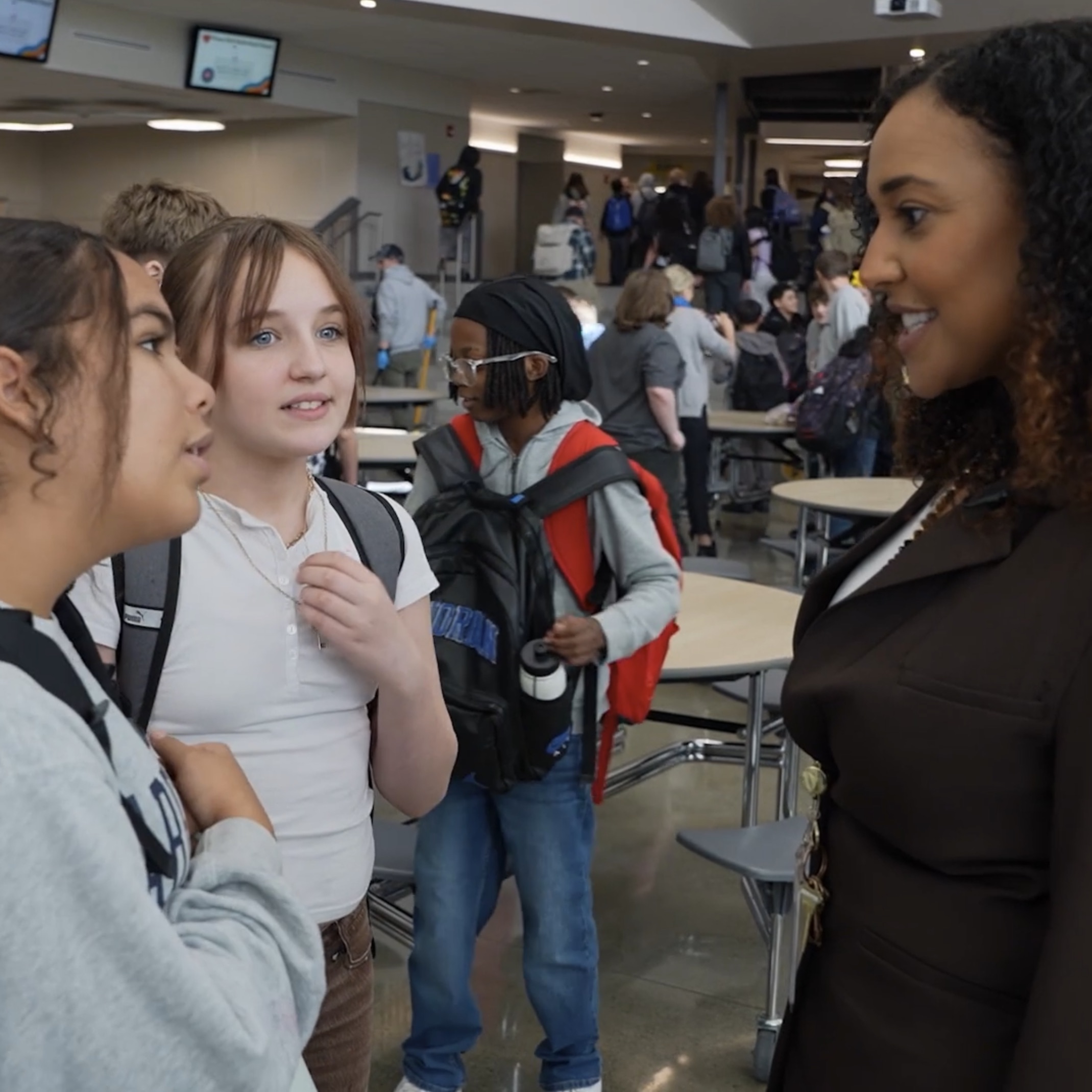
Many kids have nothing to do after school, so they go home to screens and, increasingly, AI chatbots. Spokane Public Schools tackled this by hiring "Engagement Navigators" who proactively find these students and help them get involved, a program we feature in Screenagers: Generation AI. I also share a patient's story, advice for parents whose teens refuse activities, and ways to help other kids get involved.
READ MORE >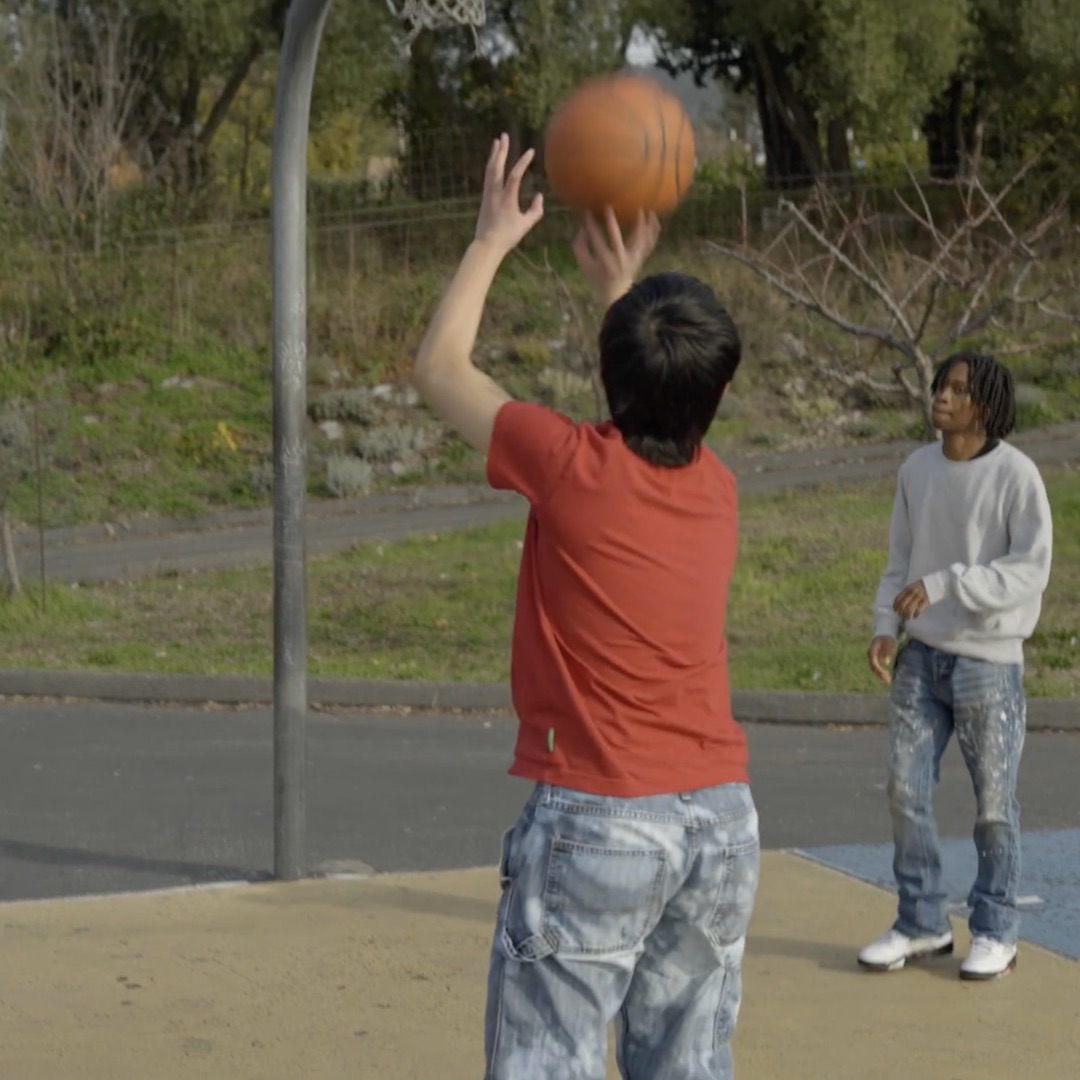
Tech journalist Manoush Zomorodi recently shared with Delaney the story behind her new book Body Electric and the citizen science experiment she ran with NPR and Dr. Keith Diaz of Columbia. The 20,000-person study found that five minutes of movement for every thirty minutes of sitting dropped fatigue by up to 28%, lowered blood glucose and blood pressure, and improved focus and mood. Plus, five practical reframes for talking to kids about movement without the eye rolls.
READ MORE >
for more like this, DR. DELANEY RUSTON'S NEW BOOK, PARENTING IN THE SCREEN AGE, IS THE DEFINITIVE GUIDE FOR TODAY’S PARENTS. WITH INSIGHTS ON SCREEN TIME FROM RESEARCHERS, INPUT FROM KIDS & TEENS, THIS BOOK IS PACKED WITH SOLUTIONS FOR HOW TO START AND SUSTAIN PRODUCTIVE FAMILY TALKS ABOUT TECHNOLOGY AND IT’S IMPACT ON OUR MENTAL WELLBEING.