


The first of 1,200+ school district lawsuits against social media companies just settled, with Meta, YouTube, Snap, and TikTok all paying out rather than face a jury. Meta points to its Teen Accounts feature as proof of safety, but a study by former Meta safety lead Arturo Bejar found only 8 of 47 advertised features actually work as described.
Look, we can't make the future better without helping to raise a generation of empathic and discerning young people. Period.
This is what keeps me writing this blog year after year, not only to help parents learn savvy skills, but particularly to spark conversations with youth that help them be critical thinkers about the screen-consuming economy they are steeped in.
So please share this one with the young people in your life.
The first of more than 1,200 school district lawsuits against social media companies has now been settled.
Breathitt County Schools, a small, rural district in Appalachia, sued Meta, YouTube, Snap, and TikTok, claiming these companies deliberately designed their platforms to be addictive to young people, fueling anxiety, depression, and self-harm among students, and leaving schools to deal with the wreckage.
The district was asking for more than $60 million to fund fifteen years of mental health services for its kids.
Rather than face a jury, all four companies settled out of court. We don't know what the school district actually received because the financial terms were kept confidential. But the case was significant. It had been chosen as a "bellwether" out of over 1,200 similar lawsuits, essentially a test run to see how the evidence would land with a jury before potentially thousands of other cases went to trial.
The companies settled before that could happen.
I am proud that Seattle Public Schools (where my kids went) was the first school district in the nation to sue social media platforms.
Meta put out a statement, and it's the kind of polished corporate language that I have heard so many times. It makes me genuinely angry. They pointed to their Teen Instagram Accounts feature as proof of their commitment to keeping kids safe online.
They say the same thing over and over.
And everywhere I turn, there are ads for Instagram Teen Accounts, blanketing airports, playing in my podcasts, and so on. The marketing is relentless.
But here is the reality: Arturo Bejar, a former high-level safety expert at Meta who left the company and became a whistleblower, led a study with the Heat Initiative and other researchers called Teen Accounts and Broken Promises. It examined 47 of Meta's stated safety features. Of those 47 features, only 8 were worked as described. Only 8!
The gap between Meta's advertising and the actual protection their products offer young people is not a minor discrepancy… it’s a freaking chasm.


Learn more about showing our movies in your school or community!
Join Screenagers filmmaker Delaney Ruston MD for our latest Podcast

Learn more about our Screen-Free Sleep campaign at the website!
Our movie made for parents and educators of younger kids
Learn more about showing our movies in your school or community!
Register your interest in bringing our new movie to your school or community
Honestly my first reaction was disappointment that this didn't go to a jury.
Jury trials, like the landmark case earlier this year in Los Angeles, (where Meta and YouTube were found liable for designing addictive features and harming a young woman who had been on their platforms since age six), generate massive news coverage. They reach Congress. They create public records that can't be buried in a confidential agreement.
When a jury says a company acted with malice toward children, that's a headline that moves legislation.
But settlements do have real impact. Companies don't settle cases they think they can win… especially not bellwether cases chosen specifically to test their strongest arguments.
The fact that all four defendants paid to make this go away tells us something important: they saw the evidence, they imagined the jury, and they blinked. And with still over a thousand school districts still in line behind Breathitt County, the financial and reputational pressure on these companies is not going away.
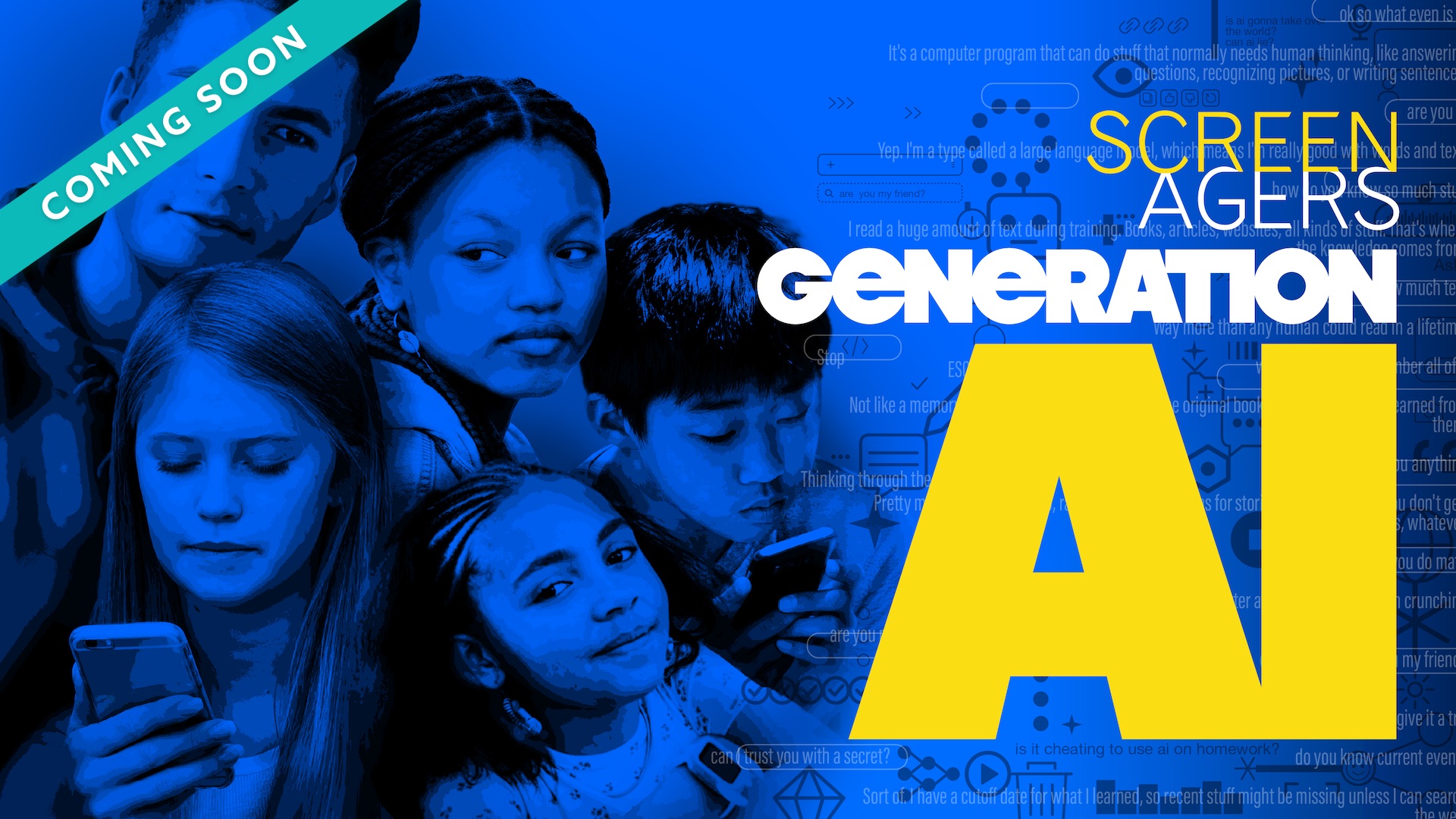
Releasing this coming September, Screenagers: Generation AI explores what can be done to mitigate the risks artificial intelligence poses to young people's learning, relationships, and mental health.
We wrote about the movie in this recent blog and on the movie's page here.
If your interested in bringing this movie to your school or community in the fall, you can register your interest at this page.
Learn more about showing our movies in your school or community!
Join Screenagers filmmaker Delaney Ruston MD for our latest Podcast
Learn more about our Screen-Free Sleep campaign at the website!
Our movie made for parents and educators of younger kids
Join Screenagers filmmaker Delaney Ruston MD for our latest Podcast
Register your interest in bringing our new movie to your school or community
Subscribe to our YouTube Channel! We add new videos regularly and you'll find over 100 videos covering parenting advice, guidance, podcasts, movie clips and more. Here's our most recent:

As we’re about to celebrate 10 years of Screenagers, we want to hear what’s been most helpful and what you’d like to see next.
Please click here to share your thoughts with us in our community survey. It only takes 5–10 minutes, and everyone who completes it will be entered to win one of five $50 Amazon vouchers.
Look, we can't make the future better without helping to raise a generation of empathic and discerning young people. Period.
This is what keeps me writing this blog year after year, not only to help parents learn savvy skills, but particularly to spark conversations with youth that help them be critical thinkers about the screen-consuming economy they are steeped in.
So please share this one with the young people in your life.
The first of more than 1,200 school district lawsuits against social media companies has now been settled.
Breathitt County Schools, a small, rural district in Appalachia, sued Meta, YouTube, Snap, and TikTok, claiming these companies deliberately designed their platforms to be addictive to young people, fueling anxiety, depression, and self-harm among students, and leaving schools to deal with the wreckage.
The district was asking for more than $60 million to fund fifteen years of mental health services for its kids.
Rather than face a jury, all four companies settled out of court. We don't know what the school district actually received because the financial terms were kept confidential. But the case was significant. It had been chosen as a "bellwether" out of over 1,200 similar lawsuits, essentially a test run to see how the evidence would land with a jury before potentially thousands of other cases went to trial.
The companies settled before that could happen.
I am proud that Seattle Public Schools (where my kids went) was the first school district in the nation to sue social media platforms.
Meta put out a statement, and it's the kind of polished corporate language that I have heard so many times. It makes me genuinely angry. They pointed to their Teen Instagram Accounts feature as proof of their commitment to keeping kids safe online.
They say the same thing over and over.
And everywhere I turn, there are ads for Instagram Teen Accounts, blanketing airports, playing in my podcasts, and so on. The marketing is relentless.
But here is the reality: Arturo Bejar, a former high-level safety expert at Meta who left the company and became a whistleblower, led a study with the Heat Initiative and other researchers called Teen Accounts and Broken Promises. It examined 47 of Meta's stated safety features. Of those 47 features, only 8 were worked as described. Only 8!
The gap between Meta's advertising and the actual protection their products offer young people is not a minor discrepancy… it’s a freaking chasm.
Honestly my first reaction was disappointment that this didn't go to a jury.
Jury trials, like the landmark case earlier this year in Los Angeles, (where Meta and YouTube were found liable for designing addictive features and harming a young woman who had been on their platforms since age six), generate massive news coverage. They reach Congress. They create public records that can't be buried in a confidential agreement.
When a jury says a company acted with malice toward children, that's a headline that moves legislation.
But settlements do have real impact. Companies don't settle cases they think they can win… especially not bellwether cases chosen specifically to test their strongest arguments.
The fact that all four defendants paid to make this go away tells us something important: they saw the evidence, they imagined the jury, and they blinked. And with still over a thousand school districts still in line behind Breathitt County, the financial and reputational pressure on these companies is not going away.
Releasing this coming September, Screenagers: Generation AI explores what can be done to mitigate the risks artificial intelligence poses to young people's learning, relationships, and mental health.
We wrote about the movie in this recent blog and on the movie's page here.
If your interested in bringing this movie to your school or community in the fall, you can register your interest at this page.
Subscribe to our YouTube Channel! We add new videos regularly and you'll find over 100 videos covering parenting advice, guidance, podcasts, movie clips and more. Here's our most recent:
Sign up here to receive the weekly Tech Talk Tuesdays newsletter from Screenagers filmmaker Delaney Ruston MD.
We respect your privacy.
Look, we can't make the future better without helping to raise a generation of empathic and discerning young people. Period.
This is what keeps me writing this blog year after year, not only to help parents learn savvy skills, but particularly to spark conversations with youth that help them be critical thinkers about the screen-consuming economy they are steeped in.
So please share this one with the young people in your life.
The first of more than 1,200 school district lawsuits against social media companies has now been settled.
Breathitt County Schools, a small, rural district in Appalachia, sued Meta, YouTube, Snap, and TikTok, claiming these companies deliberately designed their platforms to be addictive to young people, fueling anxiety, depression, and self-harm among students, and leaving schools to deal with the wreckage.
The district was asking for more than $60 million to fund fifteen years of mental health services for its kids.
Rather than face a jury, all four companies settled out of court. We don't know what the school district actually received because the financial terms were kept confidential. But the case was significant. It had been chosen as a "bellwether" out of over 1,200 similar lawsuits, essentially a test run to see how the evidence would land with a jury before potentially thousands of other cases went to trial.
The companies settled before that could happen.
I am proud that Seattle Public Schools (where my kids went) was the first school district in the nation to sue social media platforms.
Meta put out a statement, and it's the kind of polished corporate language that I have heard so many times. It makes me genuinely angry. They pointed to their Teen Instagram Accounts feature as proof of their commitment to keeping kids safe online.
They say the same thing over and over.
And everywhere I turn, there are ads for Instagram Teen Accounts, blanketing airports, playing in my podcasts, and so on. The marketing is relentless.
But here is the reality: Arturo Bejar, a former high-level safety expert at Meta who left the company and became a whistleblower, led a study with the Heat Initiative and other researchers called Teen Accounts and Broken Promises. It examined 47 of Meta's stated safety features. Of those 47 features, only 8 were worked as described. Only 8!
The gap between Meta's advertising and the actual protection their products offer young people is not a minor discrepancy… it’s a freaking chasm.
Meta's $17.1 billion settlement requires new safety measures for under-18 users, including a two-hour daily limit and blocking Instagram and Facebook overnight. I'm frustrated it took this long, and that an overnight block can falsely reassure parents when what we really need is a national push for screen-free sleep. I'm glad it happened. And with AI, we have to move much faster.
READ MORE >
The first of more than a thousand school district lawsuits against TikTok, Snapchat, Meta, and YouTube has settled, with a small Kentucky district awarded $27 million. Discovery records made public showed the companies designed to reach kids during the school day, from in-class alerts to keeping notifications on against safety teams' advice, while research finds students spend about 1.5 hours of a 6.5-hour school day on their phones.
READ MORE >
Teen psychologist Lisa Damour breaks down three manipulative tactics online games and apps use to push kids into spending: algorithms that time pitches to when kids are tired or bored, scarcity tactics like countdown timers that trigger impulse buys, and in-app currencies (gems, coins, tokens) designed to disguise real dollar costs. Research shows teens resist these tactics better once they understand them.
READ MORE >for more like this, DR. DELANEY RUSTON'S NEW BOOK, PARENTING IN THE SCREEN AGE, IS THE DEFINITIVE GUIDE FOR TODAY’S PARENTS. WITH INSIGHTS ON SCREEN TIME FROM RESEARCHERS, INPUT FROM KIDS & TEENS, THIS BOOK IS PACKED WITH SOLUTIONS FOR HOW TO START AND SUSTAIN PRODUCTIVE FAMILY TALKS ABOUT TECHNOLOGY AND IT’S IMPACT ON OUR MENTAL WELLBEING.